West Palm Beach - Where the Gulf Stream Comes Alive
West Palm Beach
Let ADM Read the Article for You
Whenever I am asked my single favorite place to dive, I often get some strange reactions. “You mean you would prefer West Palm Beach over Bonaire or Roatán?” The answer is absolutely. Being only a one-hour flight from where I live in western North Carolina, the ease of getting there is unmatched. West Palm Beach is situated in South Florida, roughly 50 miles north of Fort Lauderdale. While not as well known, the area offers fantastic diving for almost anything you can imagine. West Palm Beach is the closest North American landmass to the Gulf Stream. This proximity provides warm, clear water just minutes from shore. It creates rich coral reef habitats, attracts migratory species, and supports a large population of sharks, rays, and turtles. Diving in the area is almost always drift diving. While some may be intimidated by the fast-moving current, a few dives to get accustomed to it will settle those nerves and allow you to go with the flow smoothly. Visibility is usually around 40 to 50 feet but often exceeds 60 feet. As an underwater photographer who specializes in wide-angle photography, I absolutely love the abundance of large marine life that can be found on the reefs of West Palm. As amazing as the large marine life can be, the macro life can be just as impressive.
Reef Diving:
West Palm Beach and the surrounding areas have arguably the best reef diving in the United States. A short drive north to Jupiter or south to Boynton Beach also provides fantastic diving. West Palm has a plethora of quality dive operators in the area. On my latest trip, we used Walkers Dive Charters out of Riviera Beach Marina. Walkers has been in business for over 20 years and offers a top-notch boat and crew. We were fortunate to have flat seas and excellent visibility during our three-day dive trip. Because this trip was at the beginning of July, we were diving right in the middle of sea turtle nesting season. This is an excellent time to get up close and personal with loggerhead, green, and even leatherback turtles. The female turtles spend their nights laying eggs on the beach and their days resting on the reefs. This provides a fantastic opportunity to get extremely close and photograph them.
On our trip, I was happy to see no coral bleaching and an incredibly diverse array of marine life. While spotting more than 10 turtles on many dives, we were also pleased to see an abundance of trumpetfish, pufferfish, lemon sharks, moray eels, scorpionfish, spadefish, sea anemones, and much more. One of my favorite sightings was a group of resident goliath grouper that easily weighed more than 600 pounds each. The shipwrecks of West Palm and Jupiter are also home to the largest goliath grouper aggregation in the world. From late August through early October, it is common to see 20 to 30 groupers at a time as they prepare to spawn.
Another advantage of the area—and of Walkers Dive Charters—is blackwater diving. For those unfamiliar with it, these dives take place over extremely deep water where divers remain close to a lighted downline. The lights, positioned adjacent to the Gulf Stream, attract pelagic life that is rarely seen anywhere else.
Shark Diving:
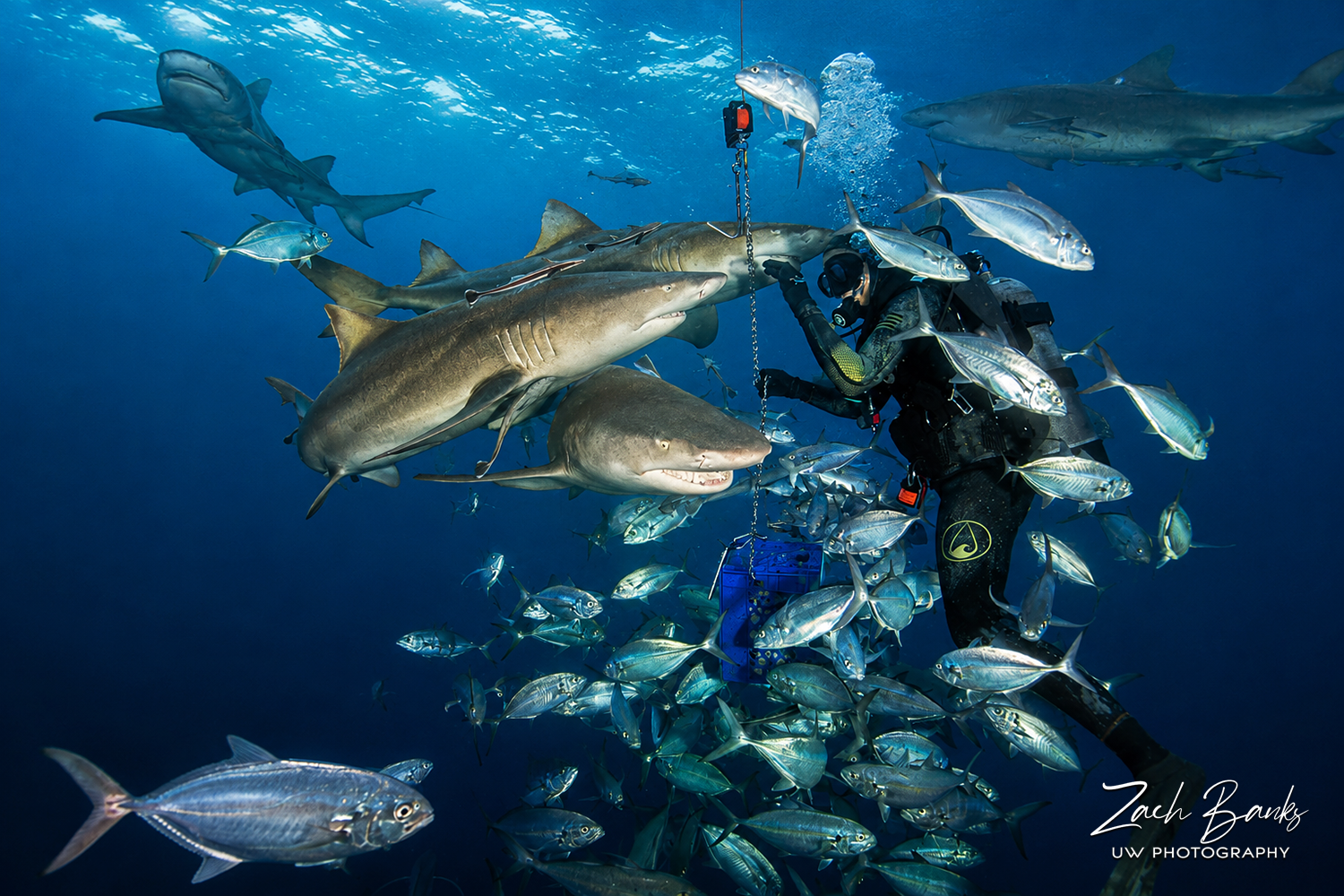
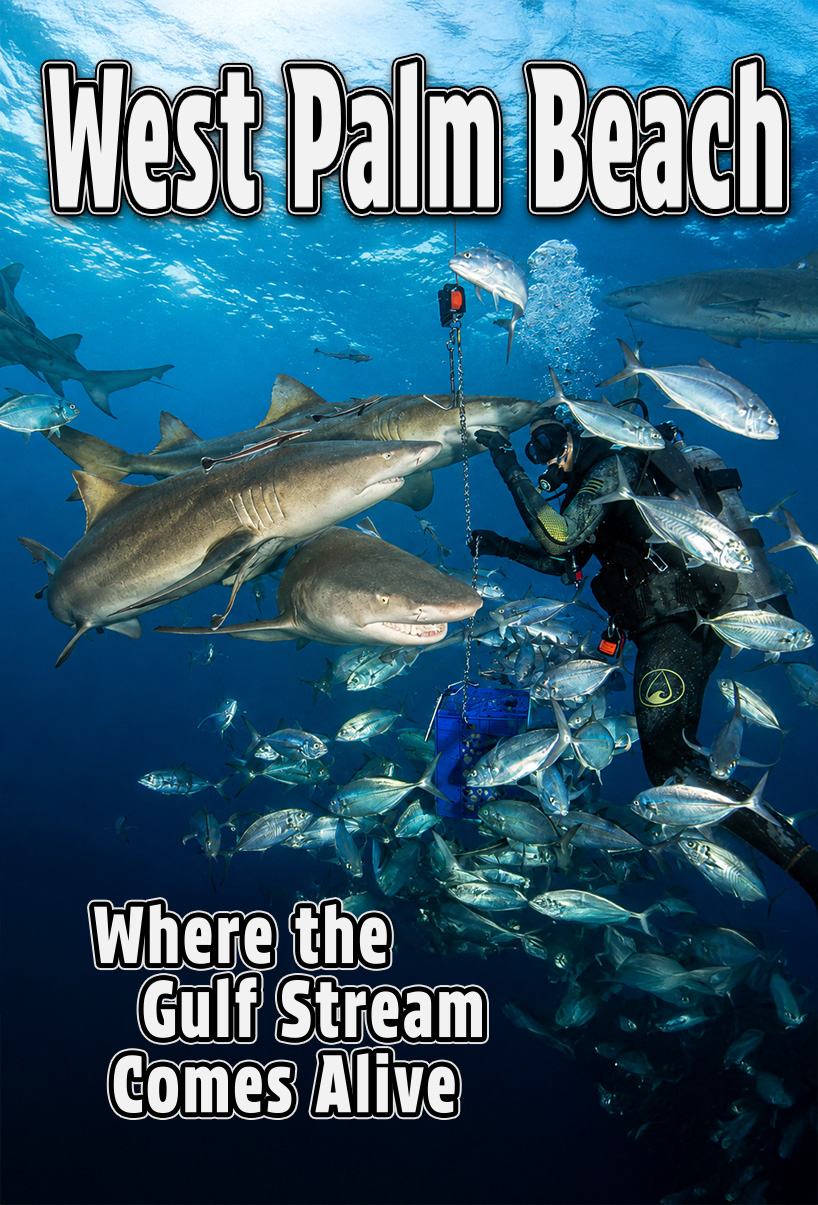
While I agree you might not get the same water visibility in West Palm as you will in Cozumel or Bonaire, you will experience something that neither destination can provide—a large population of sharks. South Florida is home to one of the largest shark populations in the world. Baited shark dives are available in both Jupiter and West Palm. These dives typically take place on local wrecks with a trained shark handler. The handler brings down a crate of fish and hand-feeds the sharks, allowing these normally timid animals to come close enough for excellent viewing and photography.
While many people disagree with feeding sharks, I believe it has been beneficial in demonstrating that sharks have no interest in harming humans. When conducted correctly, these dives are extremely safe. After more than 25 years of shark diving in the area, no divers have died or suffered major injuries. It is a humbling experience to come face to face with these apex predators only to realize they mean you no harm. It is a life-changing dive that challenges many of the misconceptions people have held about sharks throughout their lives.
In the Jupiter area, I can highly recommend Salty Divers. They operate an extremely safe and professional boat and consistently provide an outstanding three-tank dive day. Most dives begin at depths of 70 to 80 feet, allowing the sharks to pick up the scent of the chum and gather around the site. Over the course of the dive, the shark handler gradually ascends, making the final 30 minutes of the dive approximately 20 feet deep. This provides tremendous lighting for photographers and videographers. It is common practice to redirect sharks that get too close with a gentle swipe downward on the nose. During my shark dives in the area, I have been fortunate enough to encounter nurse, lemon, silky, sandbar, bull, and even a 13-foot tiger shark. The experience remains my all-time favorite type of diving and is something I believe every diver should experience.
Blue Heron Bridge:
Although I typically prefer diving from a boat, I cannot visit West Palm without taking a dive at one of the top shore dives in the world. Located at Phil Foster Park, Blue Heron Bridge is a world-renowned dive site famous for its incredible macro life. The bridge is surrounded by both natural and man-made structures that attract an astonishing variety of marine life. With an average depth of only about 15 feet, it is an easy dive that is perfect for beginners.
Some of the most common sightings include seahorses, frogfish, octopuses, nudibranchs, batfish, moray eels, stargazers, sea turtles, and spotted eagle rays. Because the bridge is located in the Intracoastal Waterway, all diving must be planned around the tide charts. High tide brings in clear ocean water, making it best to begin your dive 30 minutes to one hour before high tide. Be aware that parking fills quickly, so it is advisable to arrive several hours before high tide. Divers must also display a diver-down flag or other approved warning device while diving.
While many visitors come specifically to dive Blue Heron Bridge, I have always found it to be an excellent backup whenever the seas are too rough for reef diving. Either way, you are guaranteed to encounter an incredible variety of marine life.
( click on image to enlarge)
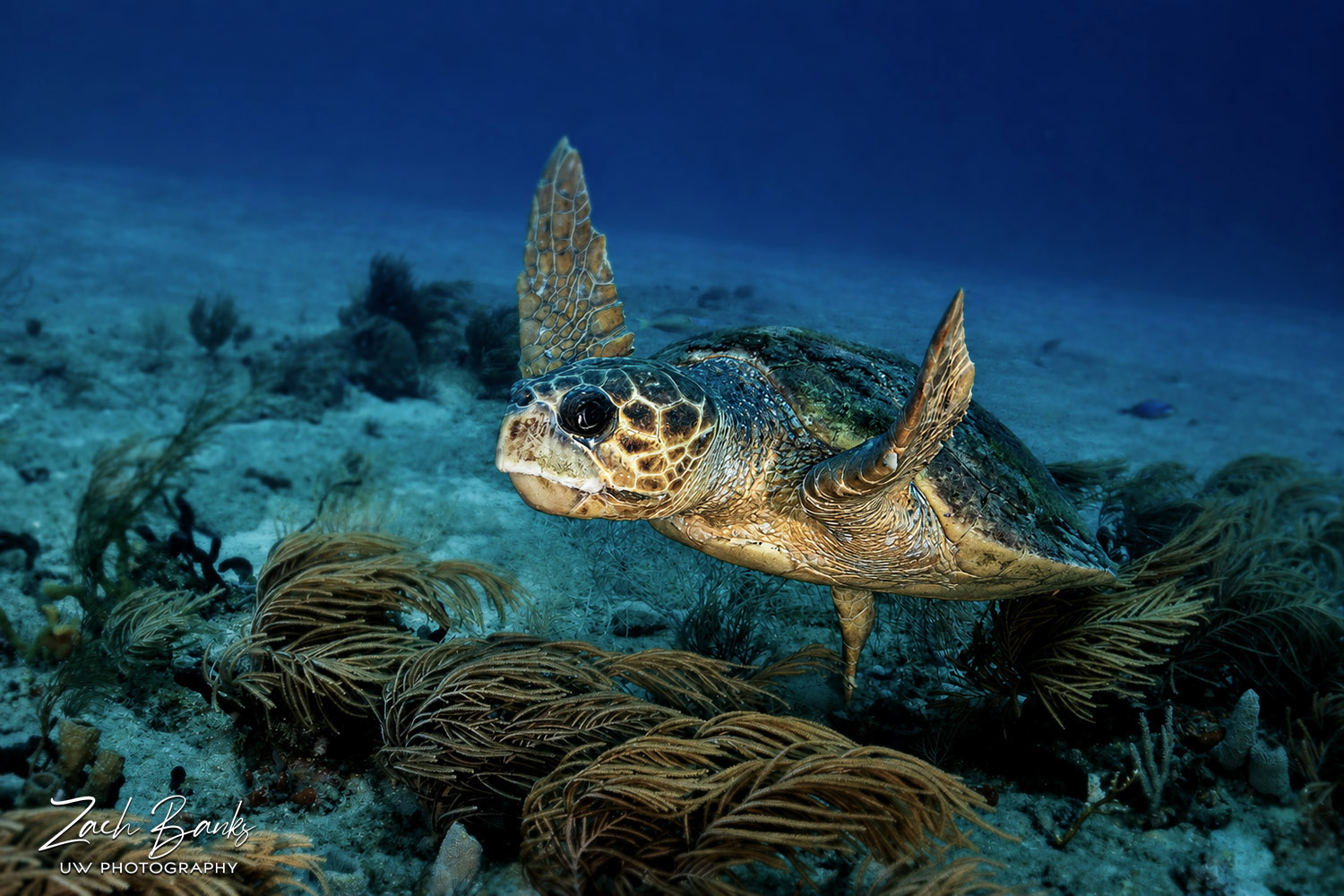
Cruising the Current: A loggerhead sea turtle (Caretta caretta) glides majestically across the reef after a long night of laying eggs. Adults commonly reach 3–4 ft (0.9–1.2 m) in shell length and can weigh up to 350 lb (160 kg).
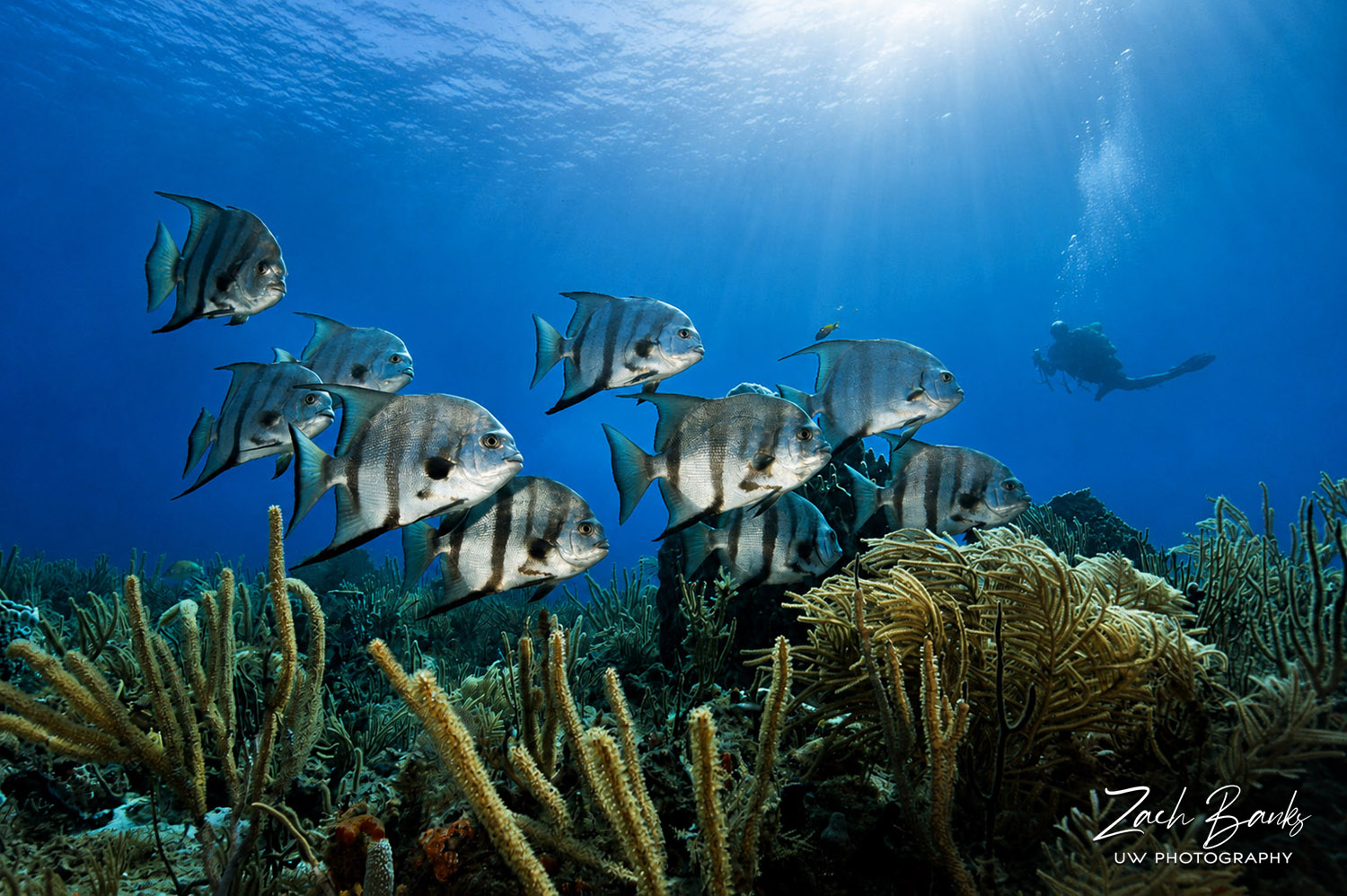
Silver Spades: A nice school of Atlantic spadefish (Chaetodipterus faber) greets divers over the reef. Adults typically grow to 18–24 in (45–60 cm) and are commonly found schooling over reefs and wrecks.
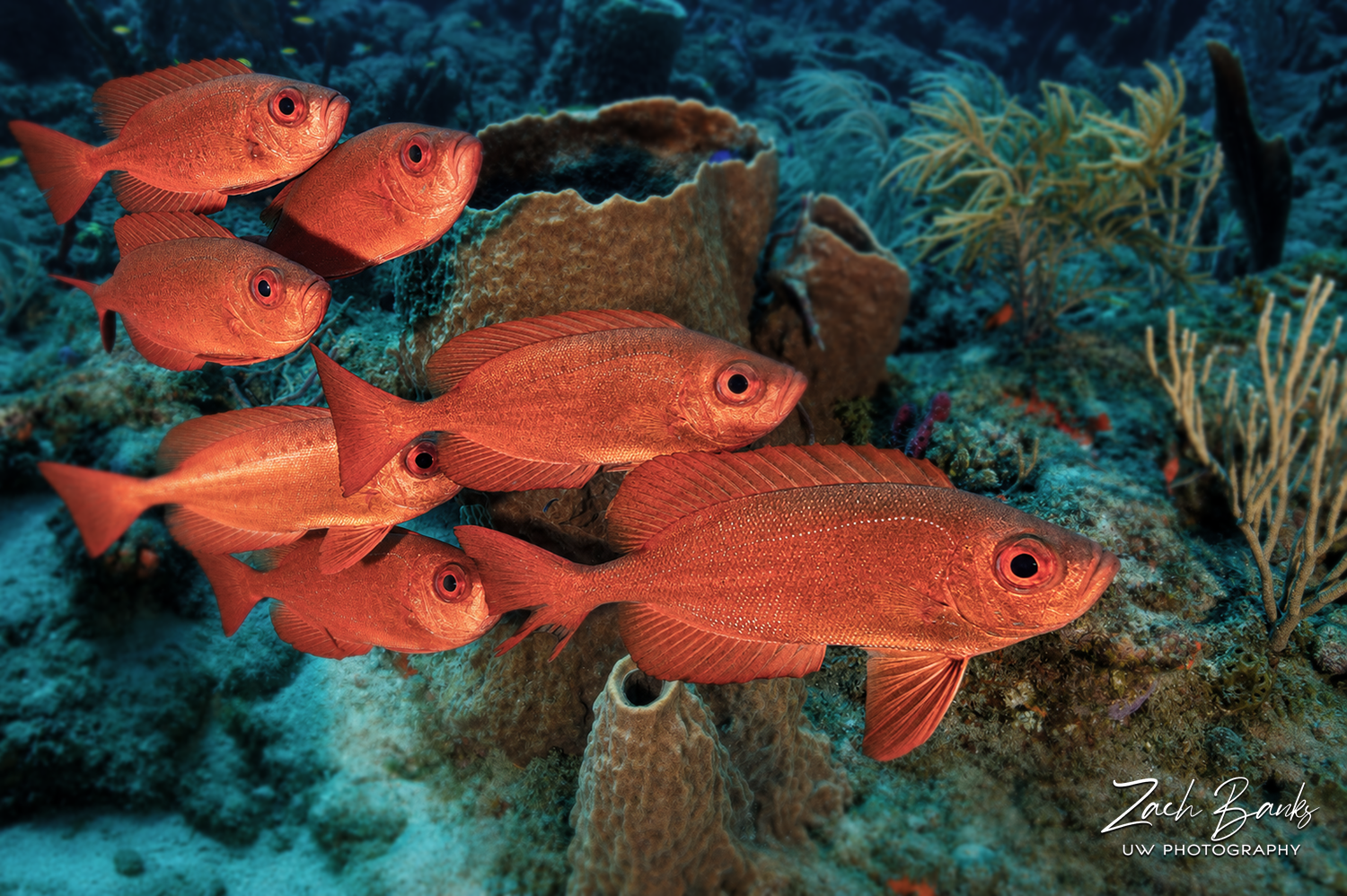
Red Eye: A cluster of Atlantic bigeyes (Priacanthus arenatus) hovers above a barrel sponge. These nocturnal reef fish typically reach 12–20 in (30–50 cm) in length.
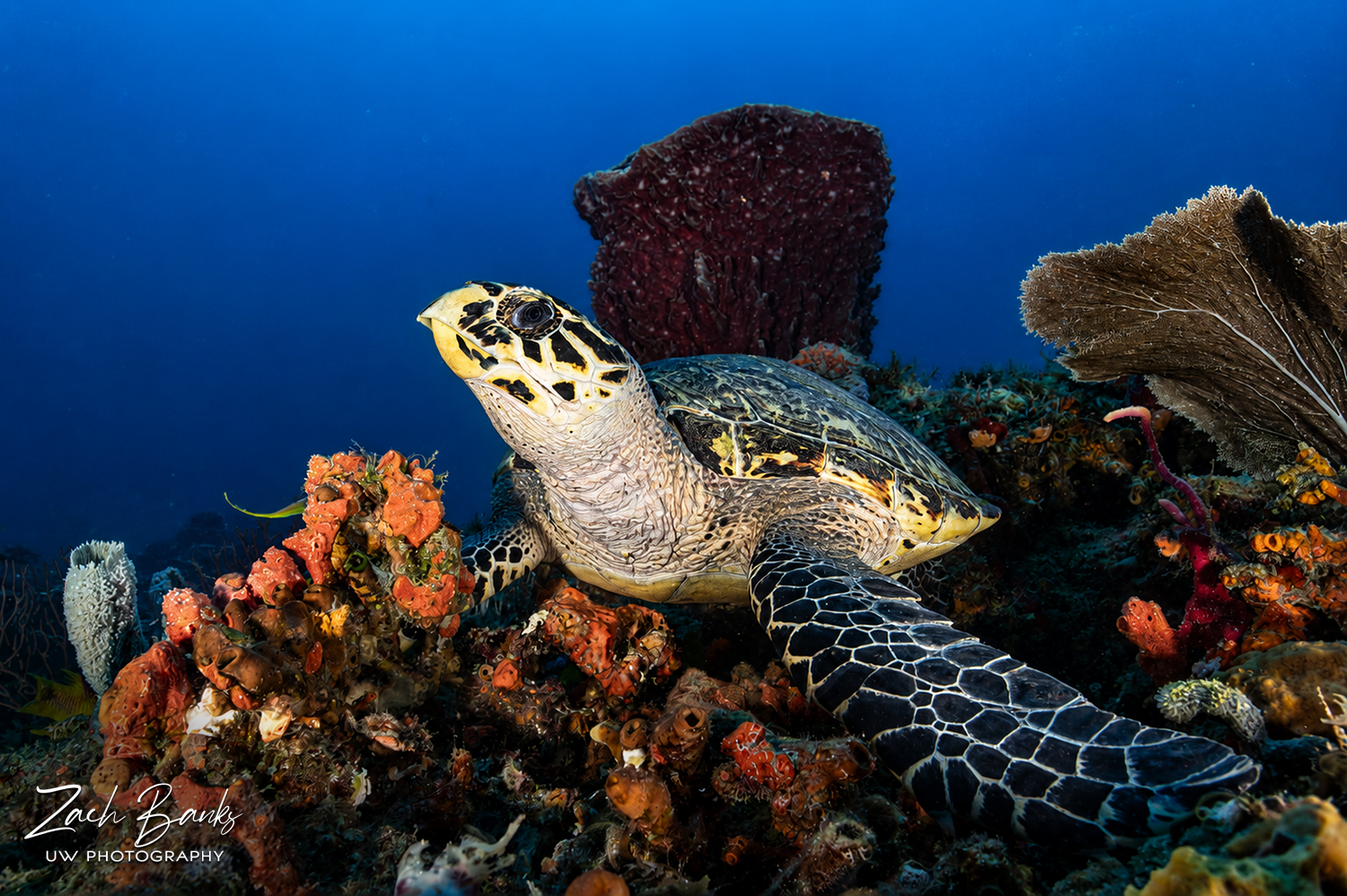
Coral Crunch: A beautiful hawksbill sea turtle (Eretmochelys imbricata) takes a quick pause from feeding on sponges and reef invertebrates to pose for my camera. Adults typically measure 2.5–3 ft (0.8–0.9 m) and weigh 100–180 lb (45–82 kg).
A Shiver: Shark handler Anne gently redirects lemon sharks (Negaprion brevirostris) away from the bait crate. Adults commonly reach 8–10 ft (2.4–3.0 m) and are among Florida's most frequently encountered large coastal sharks.
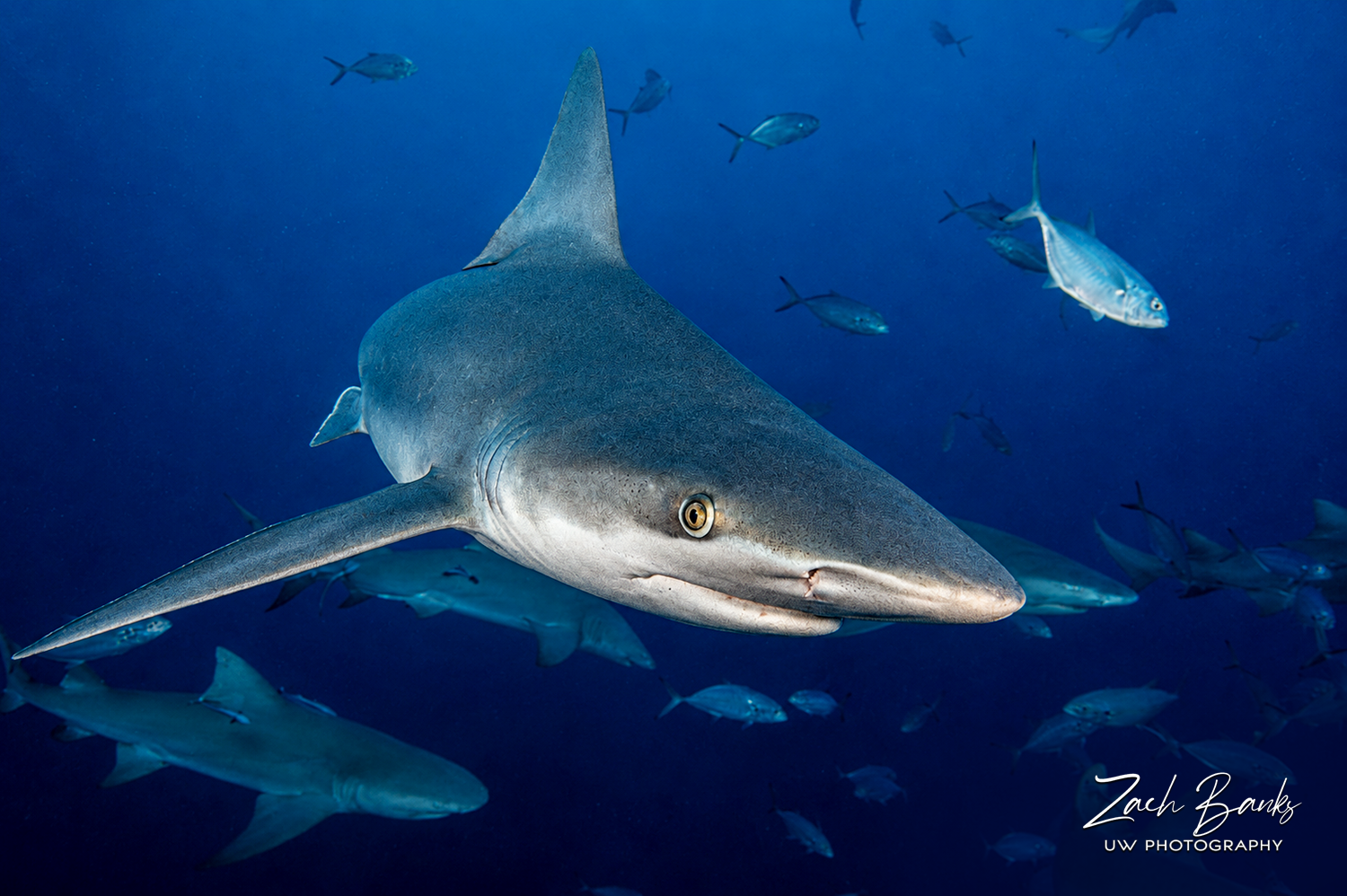
Coming in Close: A curious sandbar shark (Carcharhinus plumbeus) takes a closer look. Adults typically grow to 6–8 ft (1.8–2.4 m) and are easily recognized by their tall, triangular first dorsal fin.
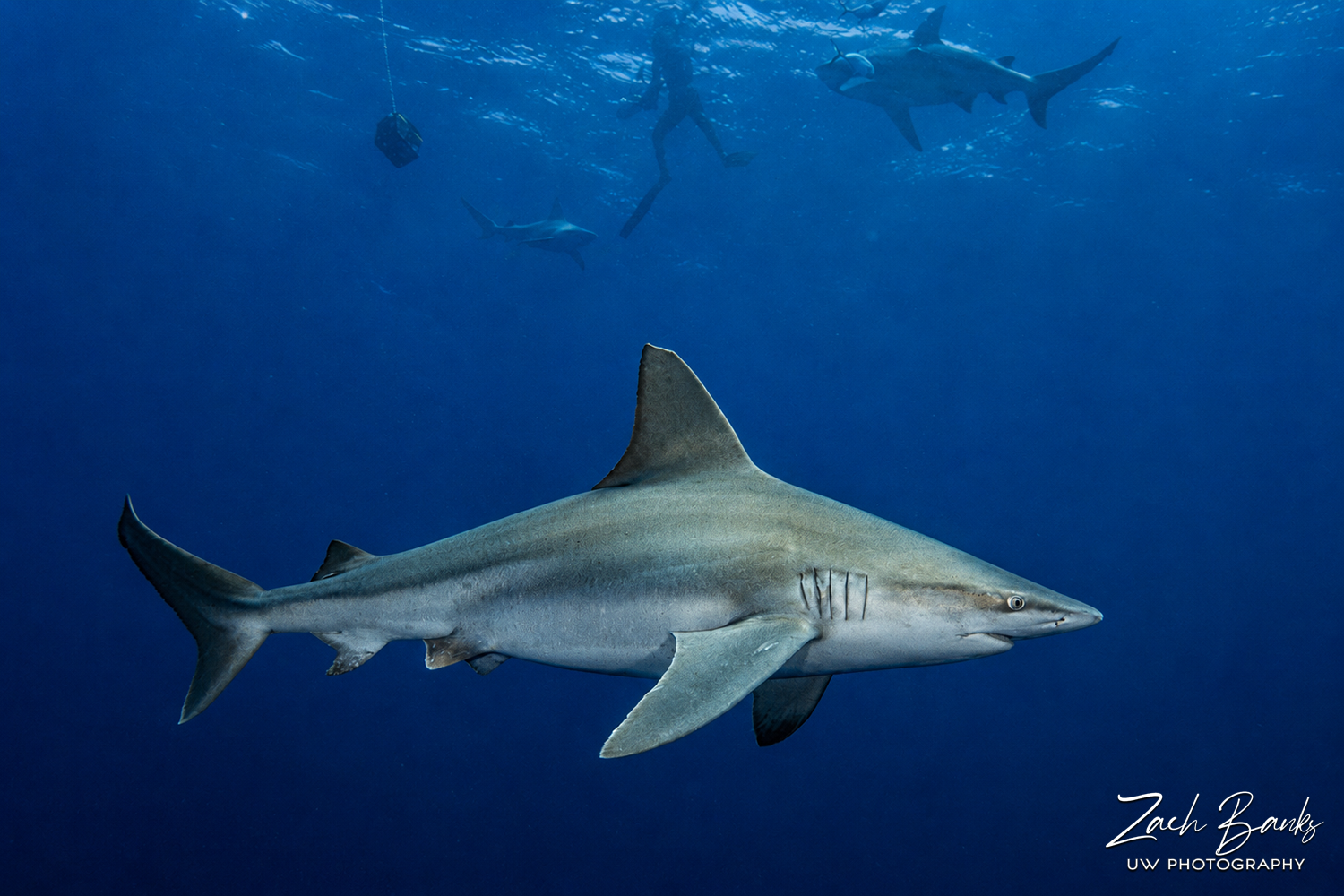
Sandbar Fly-By: A sandbar shark glides past while a snorkeler keeps an eye on a bull shark (Carcharhinus leucas) and a lemon shark at the surface. Bull sharks commonly reach 7–11 ft (2.1–3.4 m) and are one of the few shark species that regularly inhabit both saltwater and freshwater.
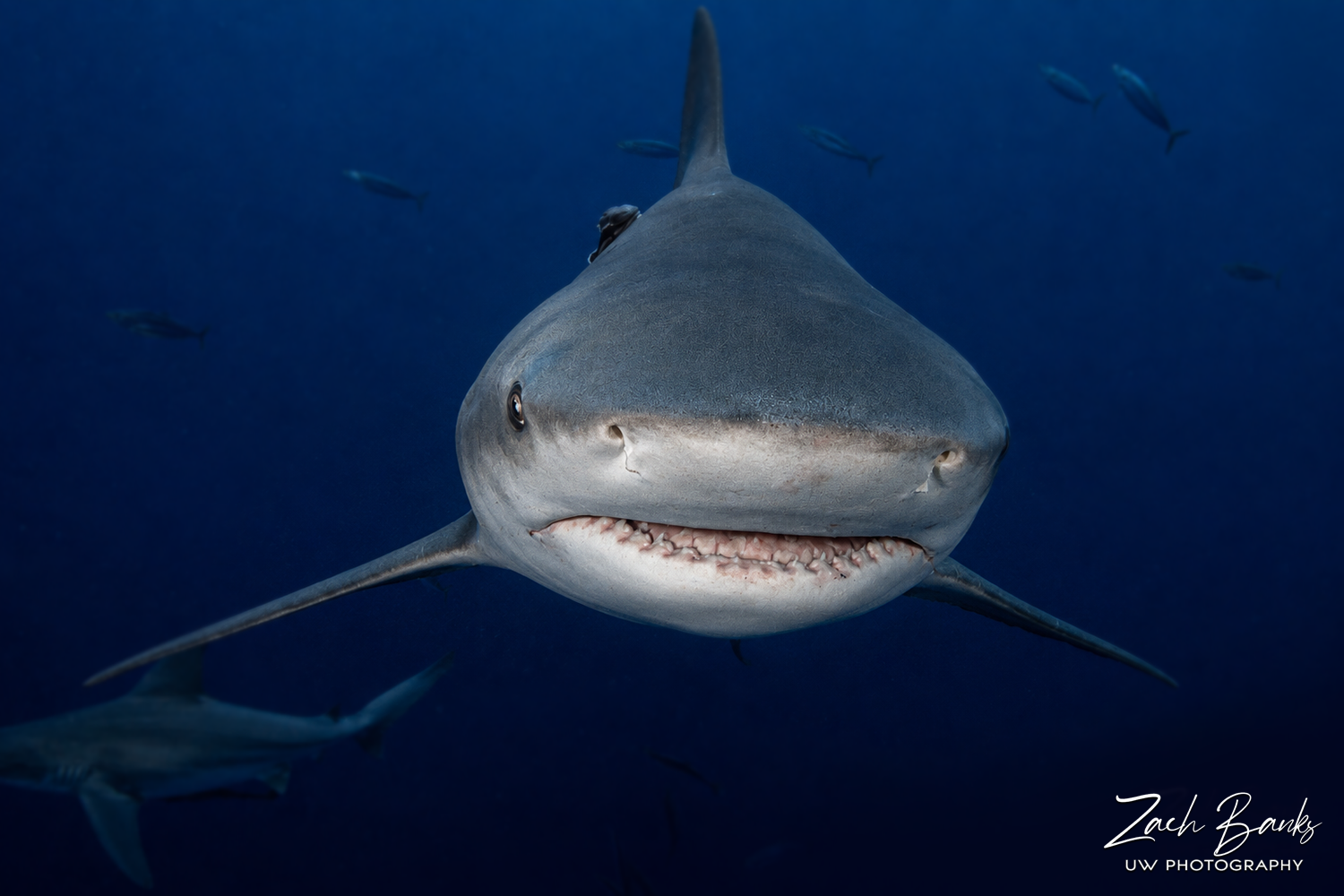
Dome Shark: A bull shark comes in to investigate after noticing its reflection in my camera dome. Adults are powerful apex predators capable of exceeding 11 ft (3.4 m) in length.
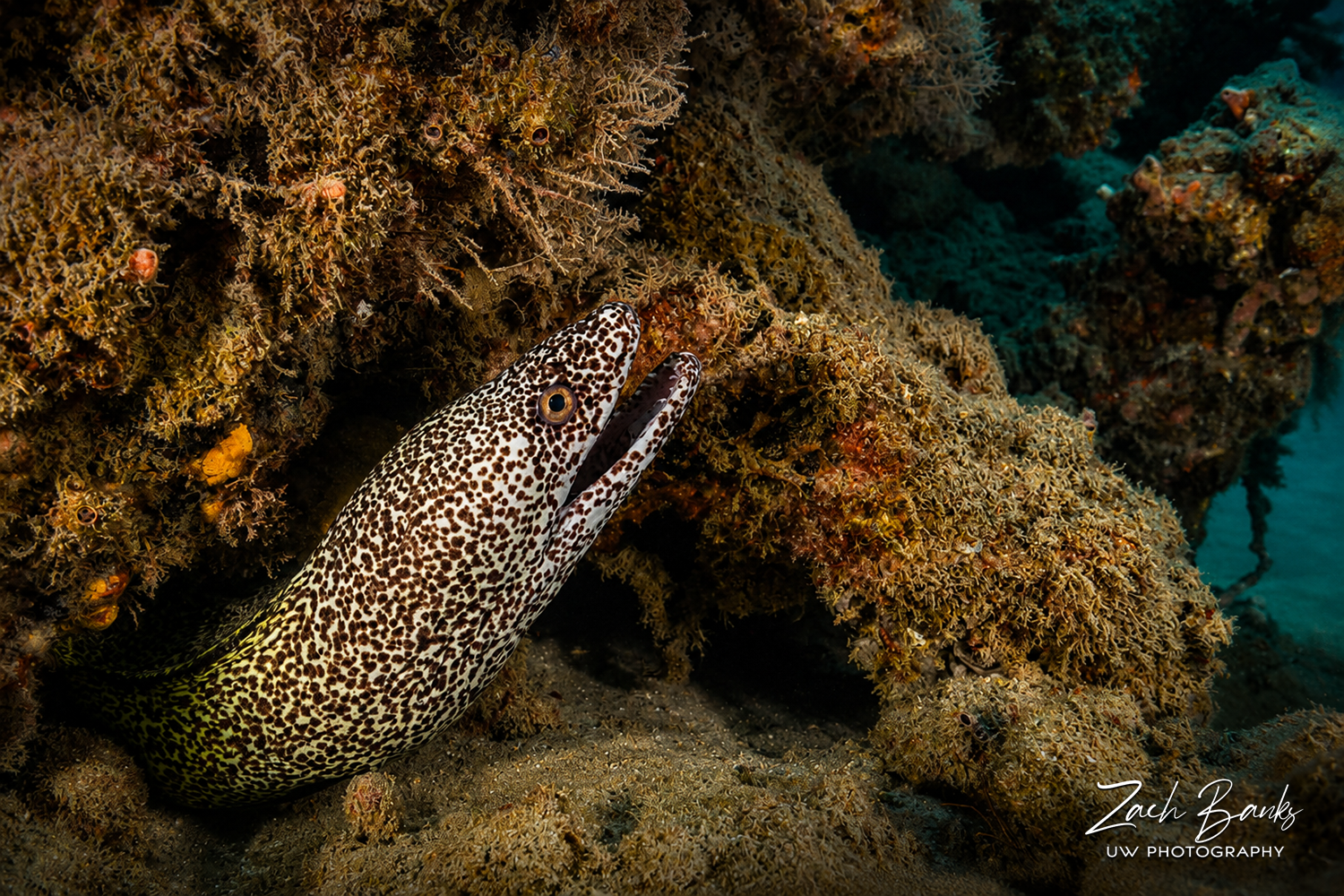
Smile for the Camera: A spotted moray (Gymnothorax moringa) comes out to greet me at Blue Heron Bridge. This common Atlantic eel grows to about 3–6 ft (0.9–1.8 m) and spends its days hidden in reef crevices.
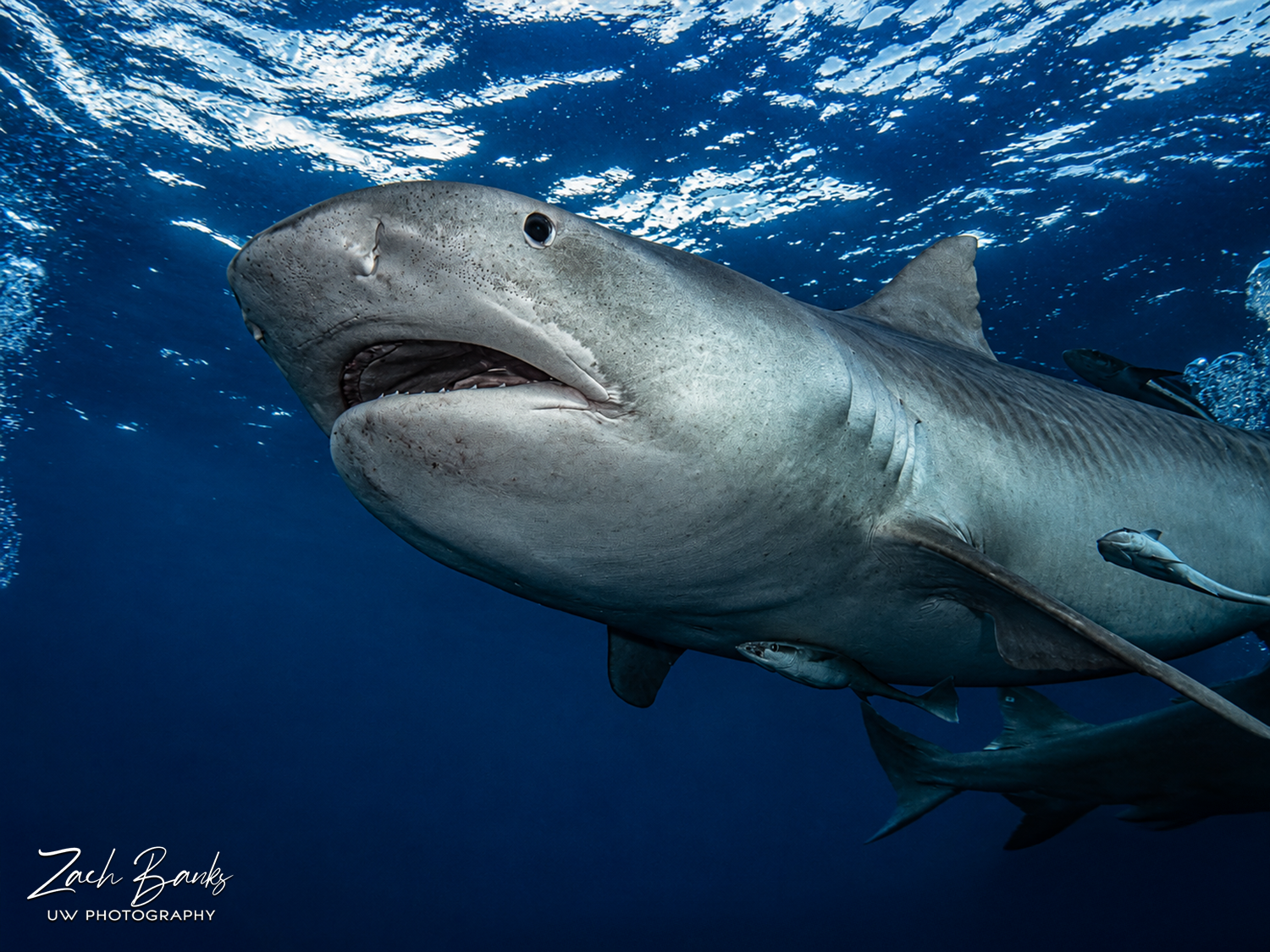
The Queen of Jupiter: The 13-foot (4.0 m) tiger shark (Galeocerdo cuvier) named Djenny, who changed everything I thought I knew about sharks. Tiger sharks are among the ocean's largest predatory sharks, reaching lengths of more than 16 ft (4.9 m).
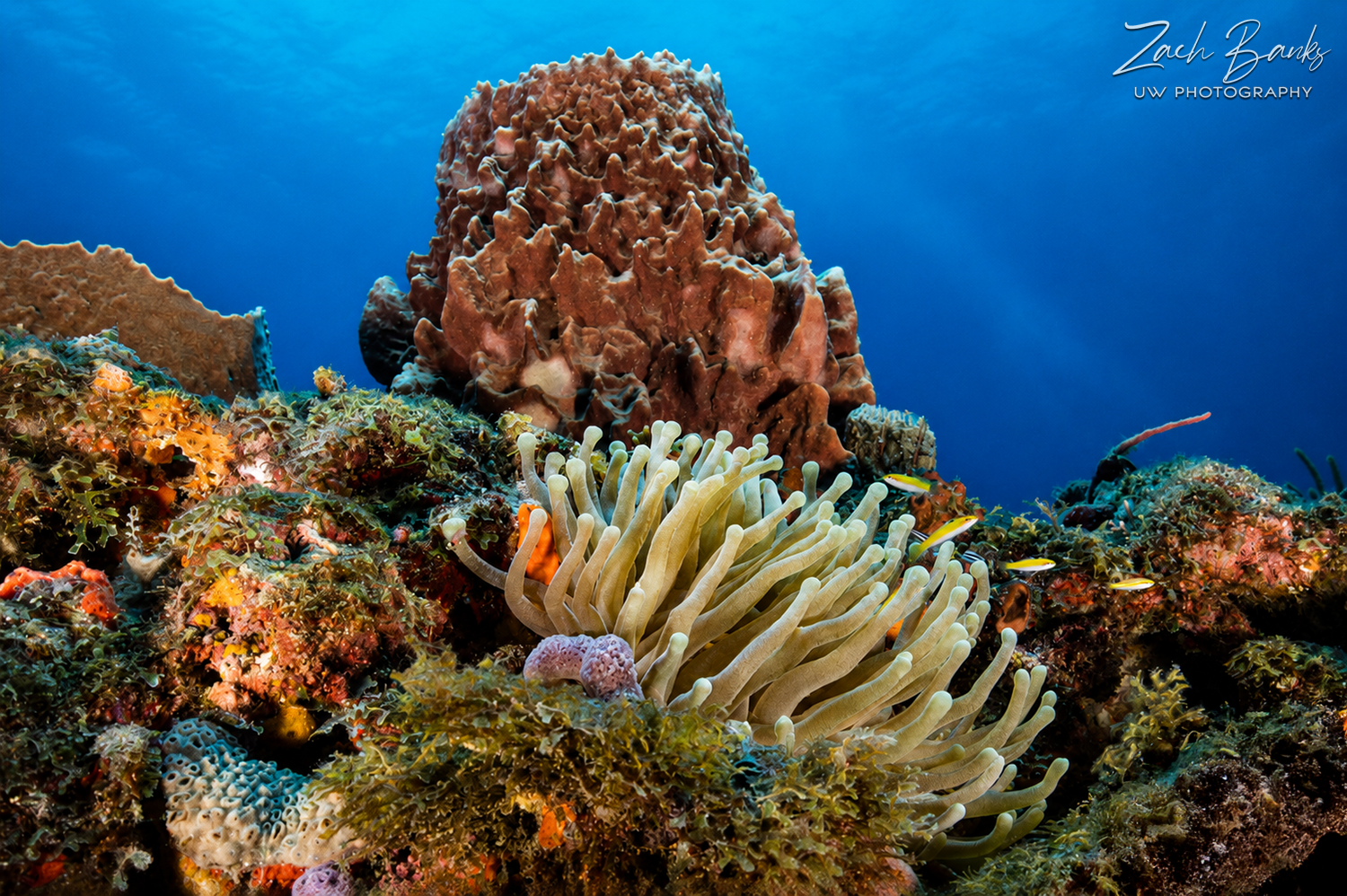
A Reef Masterpiece: A beautiful array of colors featuring a sea anemone, a juvenile wrasse, and a barrel sponge. Giant barrel sponges (Xestospongia muta) can exceed 6 ft (1.8 m) in diameter and may live for several hundred years.
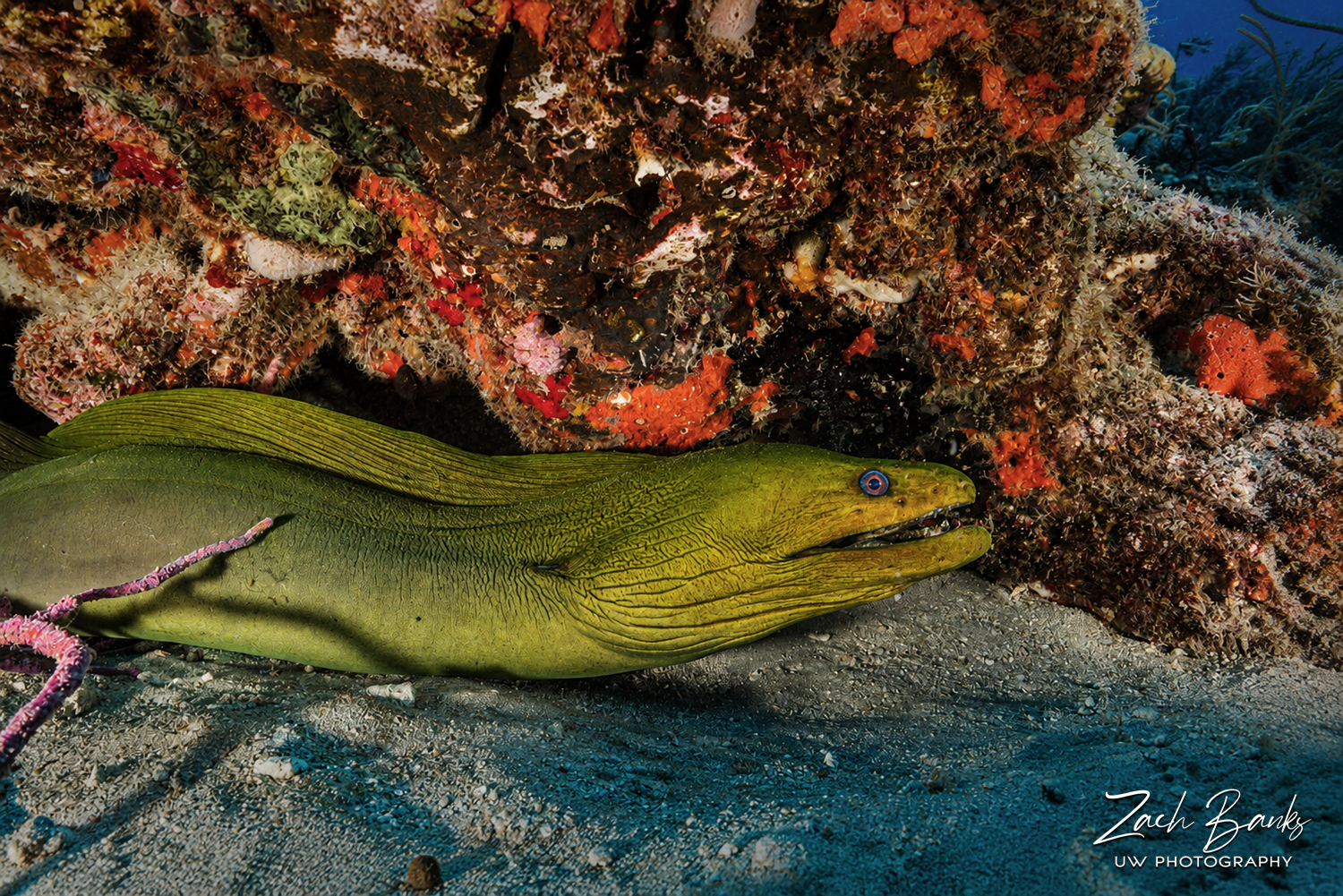
Under the Ledge: An extroverted green moray (Gymnothorax funebris) comes out to say hello. One of the Atlantic's largest morays, it commonly reaches 6–8 ft (1.8–2.4 m) in length.
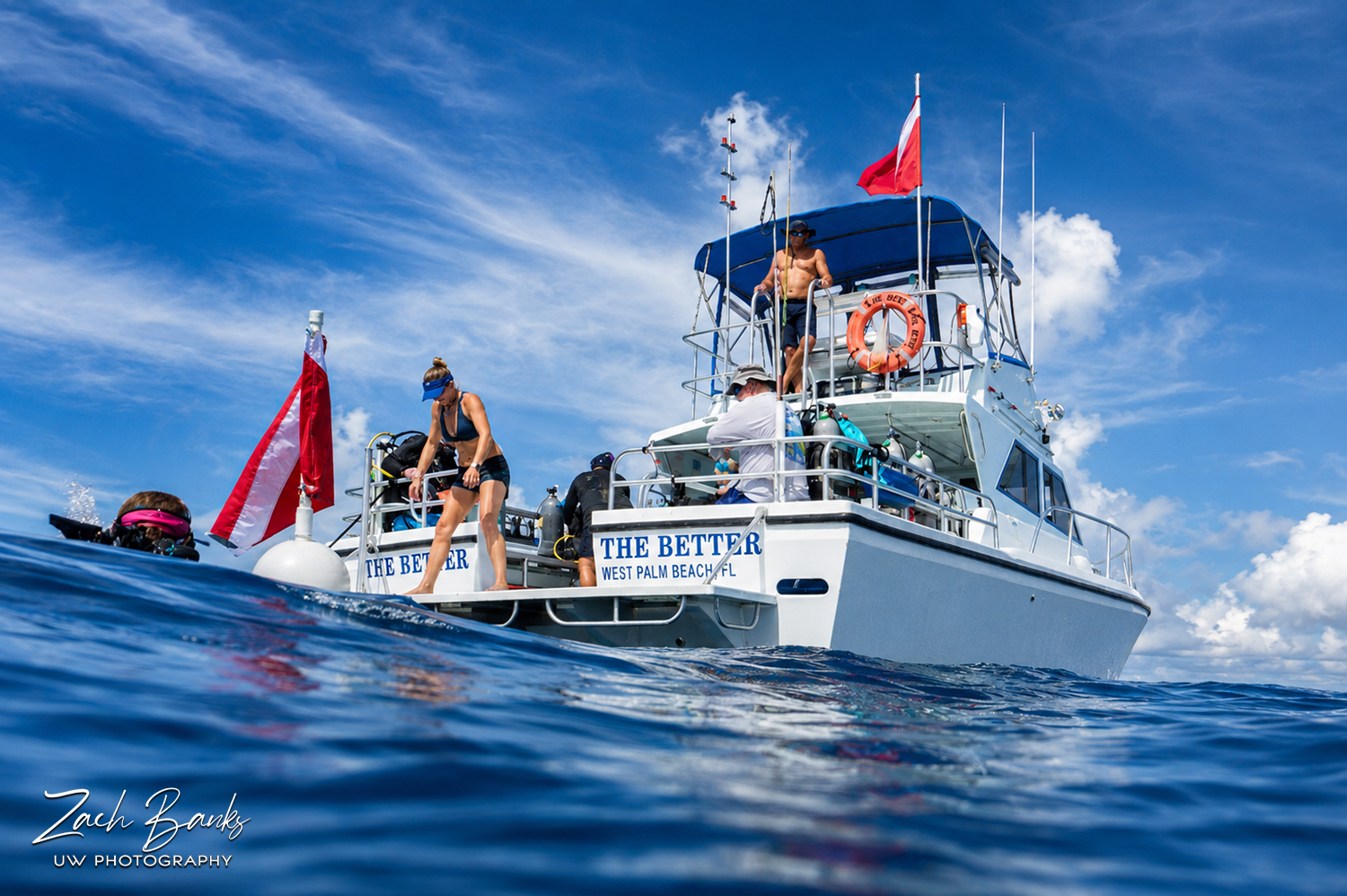
Our Chariot Awaits: Our trusty steed awaits us after an amazing dive with Walkers Dive Charters, following another unforgettable day exploring the reefs and wrecks of West Palm Beach.




 West Palm Beach and the surrounding areas have arguably the best reef diving in the United States. A short drive north to Jupiter or south to Boynton Beach also provides fantastic diving. West Palm has a plethora of quality dive operators in the area. On my latest trip, we used Walkers Dive Charters out of Riviera Beach Marina. Walkers has been in business for over 20 years and offers a top-notch boat and crew. We were fortunate to have flat seas and excellent visibility during our three-day dive trip. Because this trip was at the beginning of July, we were diving right in the middle of sea turtle nesting season. This is an excellent time to get up close and personal with loggerhead, green, and even leatherback turtles. The female turtles spend their nights laying eggs on the beach and their days resting on the reefs. This provides a fantastic opportunity to get extremely close and photograph them.