IJN NAGARA - The Life, Loss and Rediscovery of a Japanese Cruiser
Share This Article
IJN NAGARA
Let ADM Read the Article for You
Text and Photography by Yoshitaka Isaji
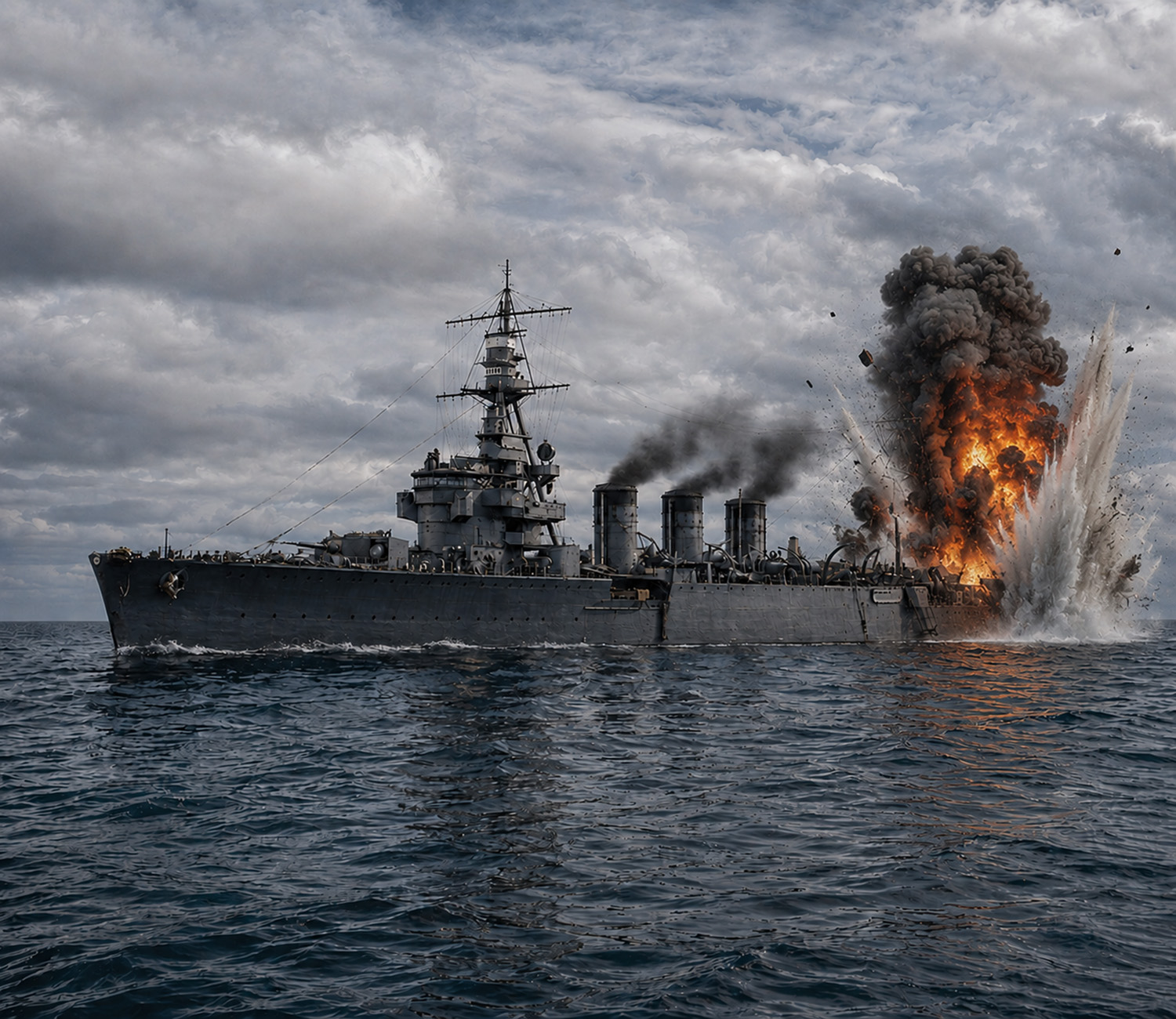
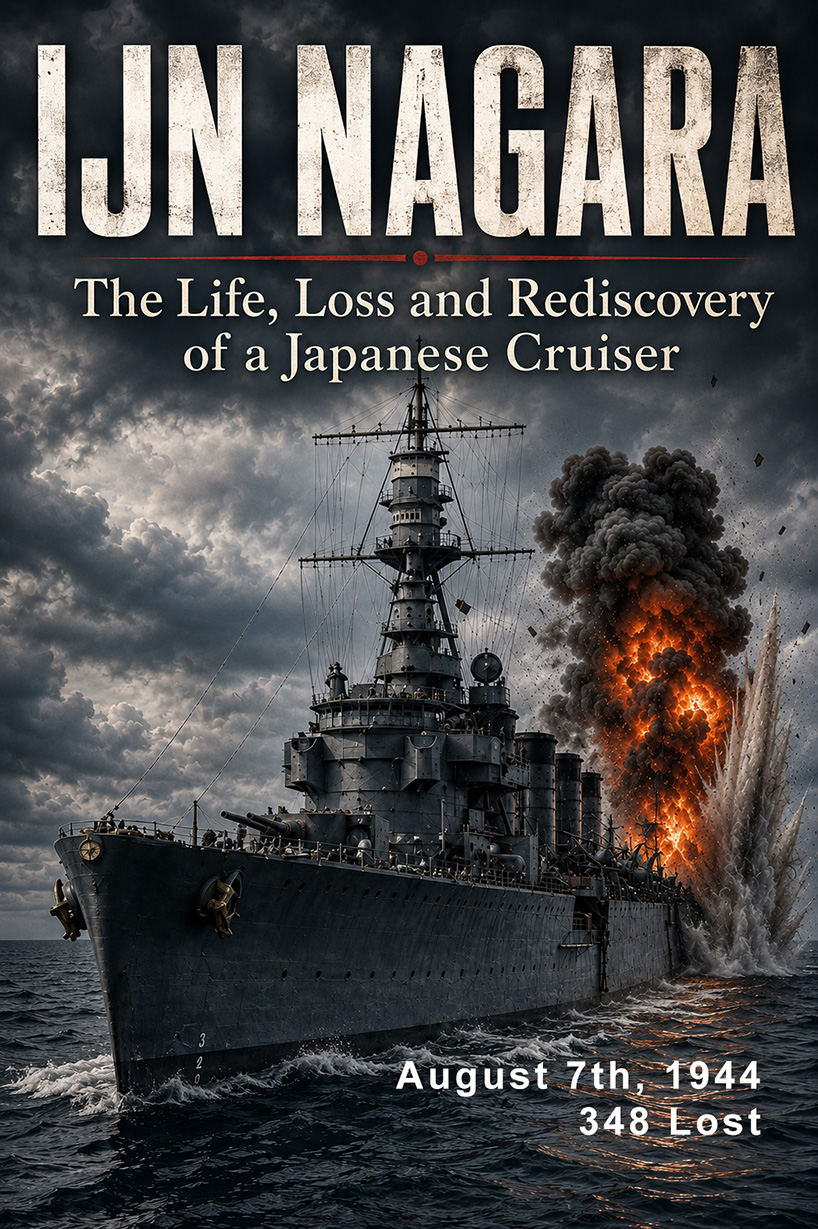
The Imperial Japanese Navy light cruiser Nagara (長良) was lost during World War II off Ushibuka in the Amakusa Islands of Kumamoto Prefecture. Torpedoed by a U.S. submarine, the cruiser sank with devastating loss of life. Of the 583 men aboard, 348 were killed. More than eight decades later, the wreck remains on the seafloor as a powerful reminder of the human cost of war.
Each year on August 7, the anniversary of Nagara’s sinking, a memorial service is held to honor the crew and ensure that the tragedy of war—and the importance of peace—are passed on to future generations. In 2025, an additional offshore memorial service was held on August 9, marking 80 years since the end of the war. It was around this time that the idea of investigating Nagara began to take shape.
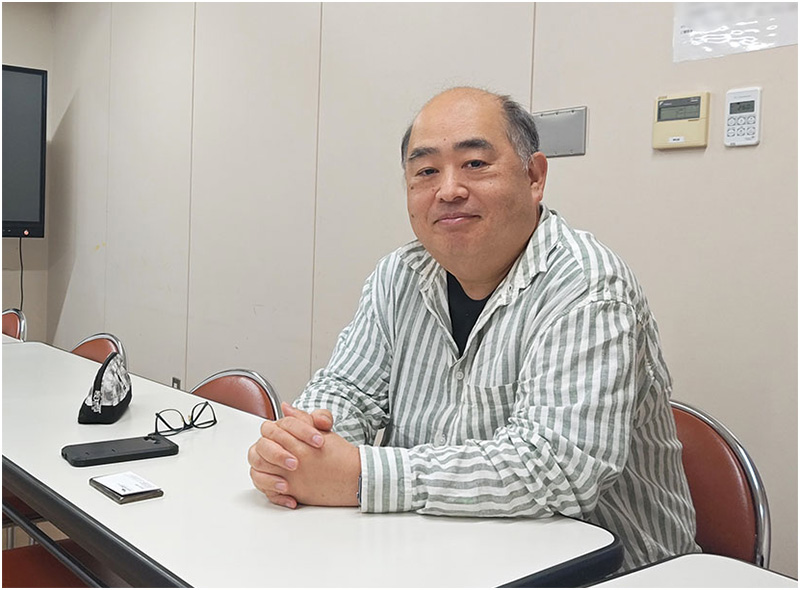
While I was being interviewed during our underwater investigation of the Chousei Coal Mine, journalist Mr. Seiichiro Nishinaka told me that he was a family member of one of the men lost aboard Nagara. That conversation led me to begin researching the ship and the circumstances surrounding her loss.
In the months that followed, I established contact with the Ushibuka Branch of the Amakusa City Social Welfare Council, which organizes the annual memorial service, as well as members of the bereaved families. Through those discussions, plans gradually developed for an underwater investigation of the wreck.
Nagara’s resting place had already been identified, but reaching her would present an entirely different challenge. The wreck lies far beyond conventional recreational diving limits, in a deep-water environment requiring advanced technical diving techniques, specialized equipment, and careful planning.
DIVE Explorers, led by Yoshitaka Isaji, has spent years exploring underwater caves and investigating deep-water environments. For the Nagara project, we would apply that experience to a different objective: documenting the present condition of a historic warship resting deep beneath the waters off Ushibuka. The goal was not simply to reach Nagara, but to record what remained and bring that record back to the people who had preserved her story.
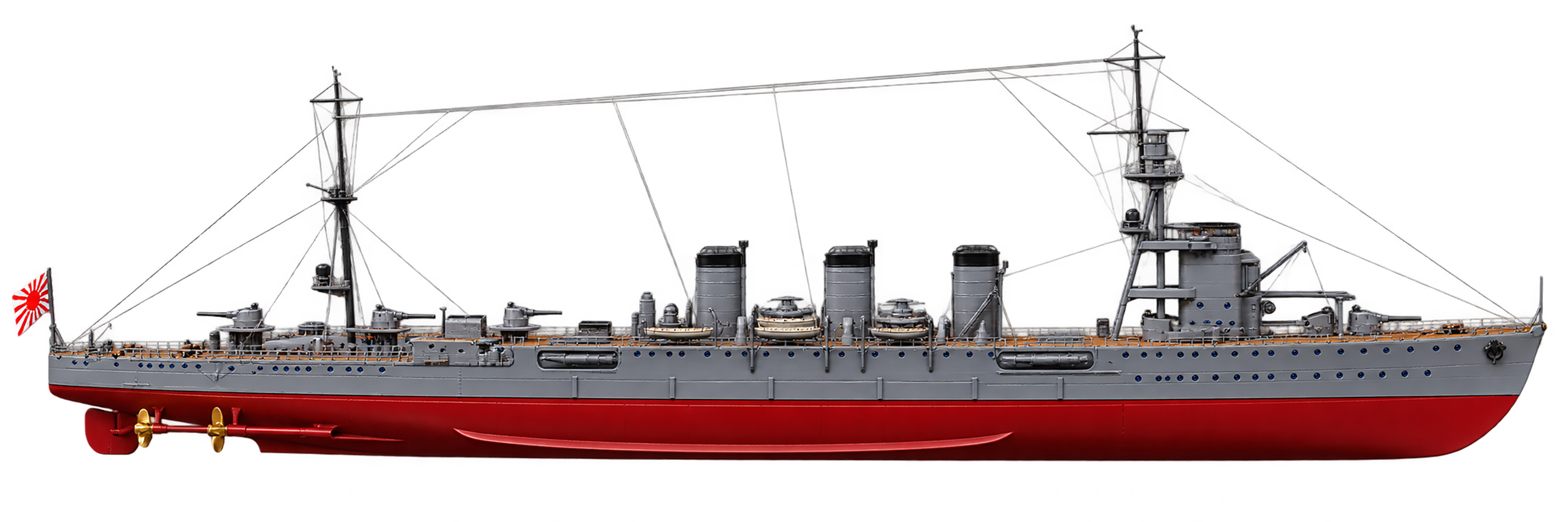
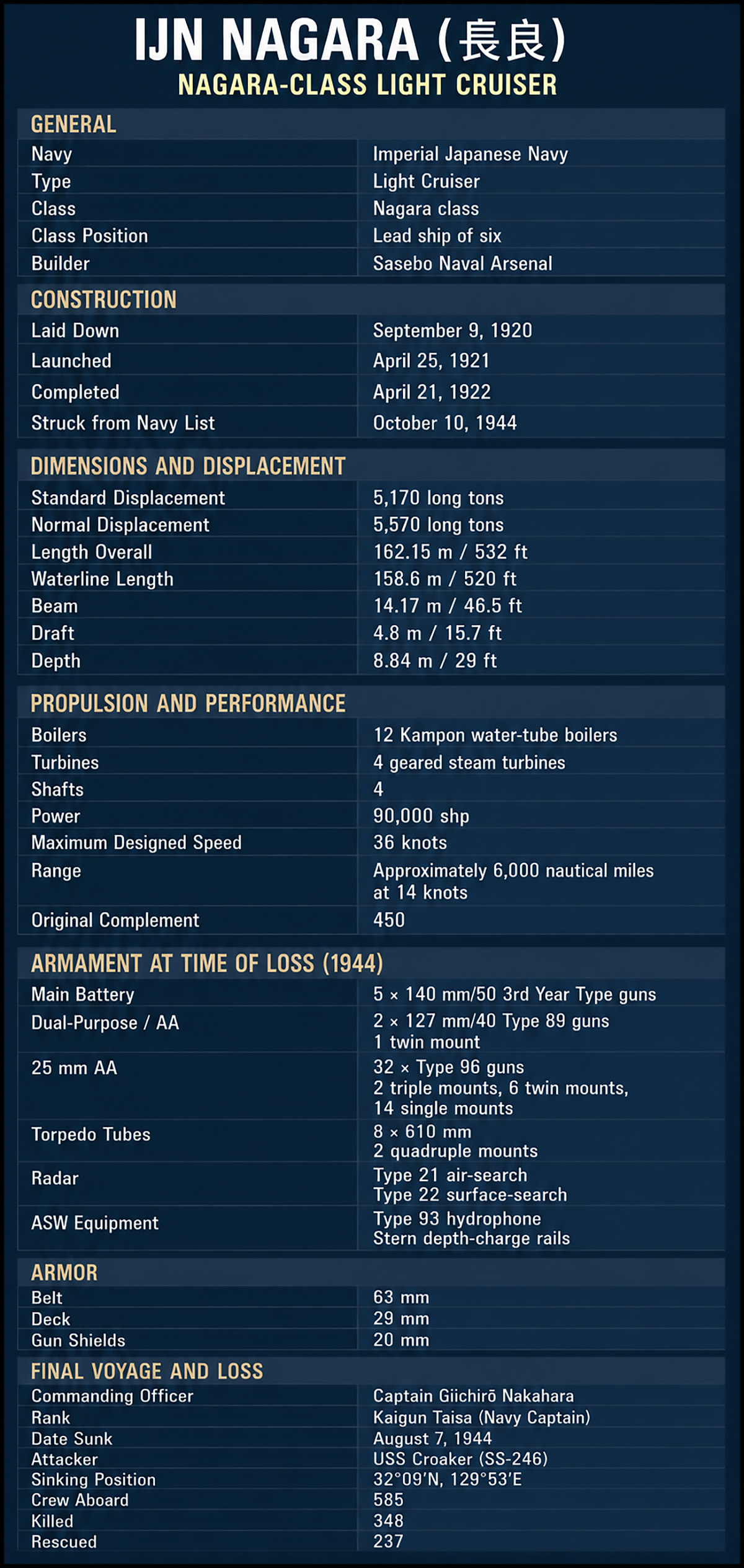
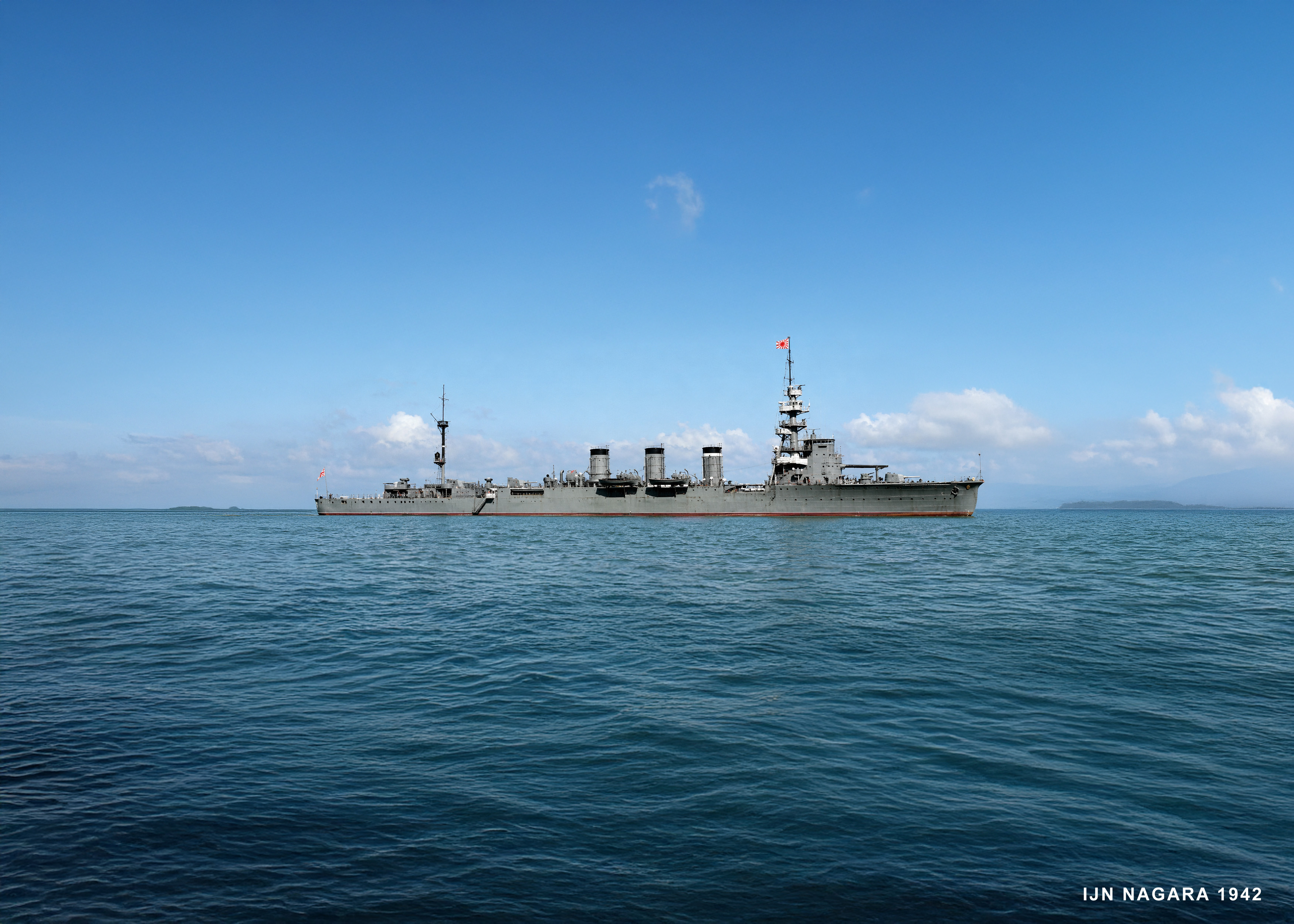
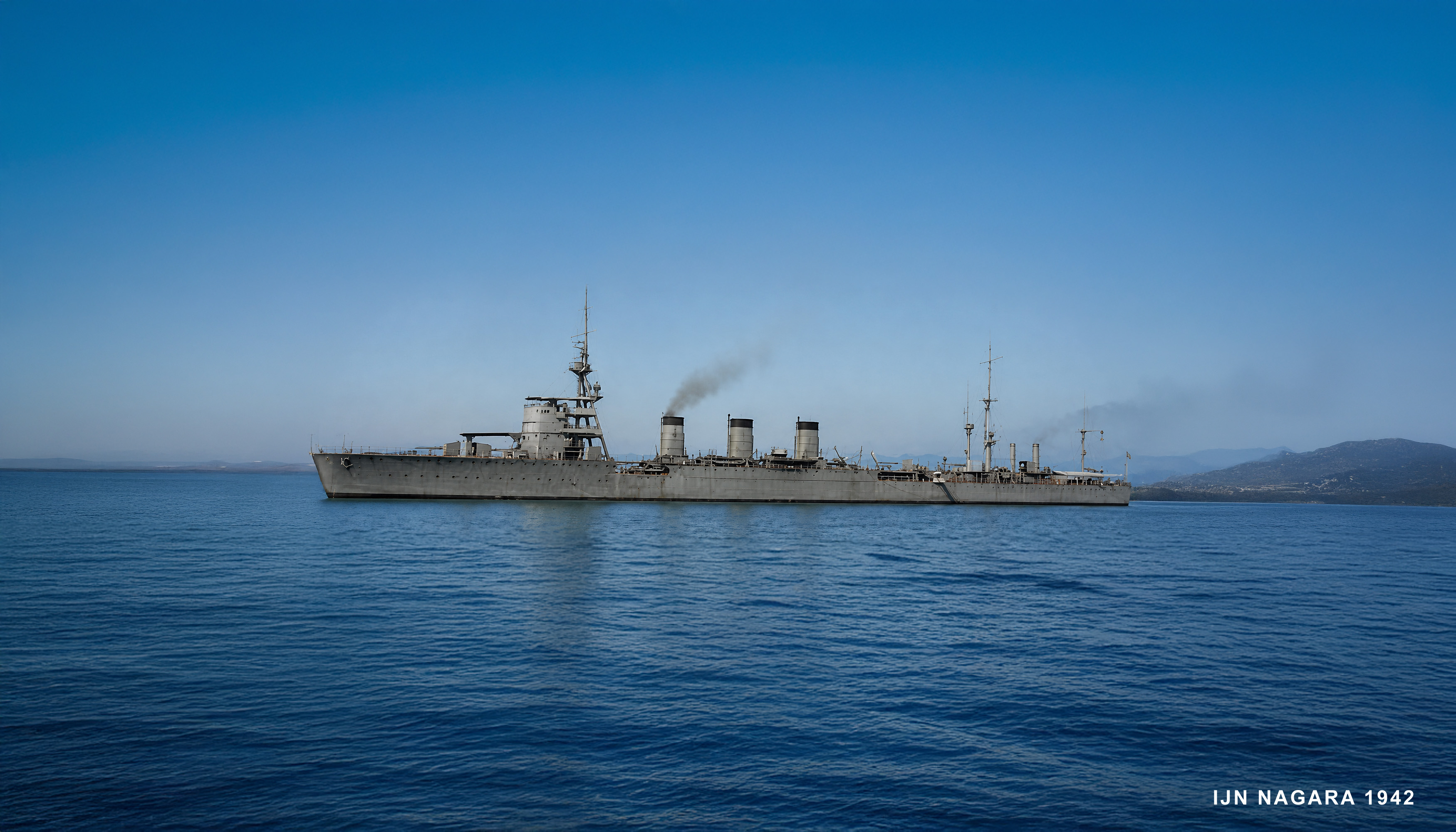
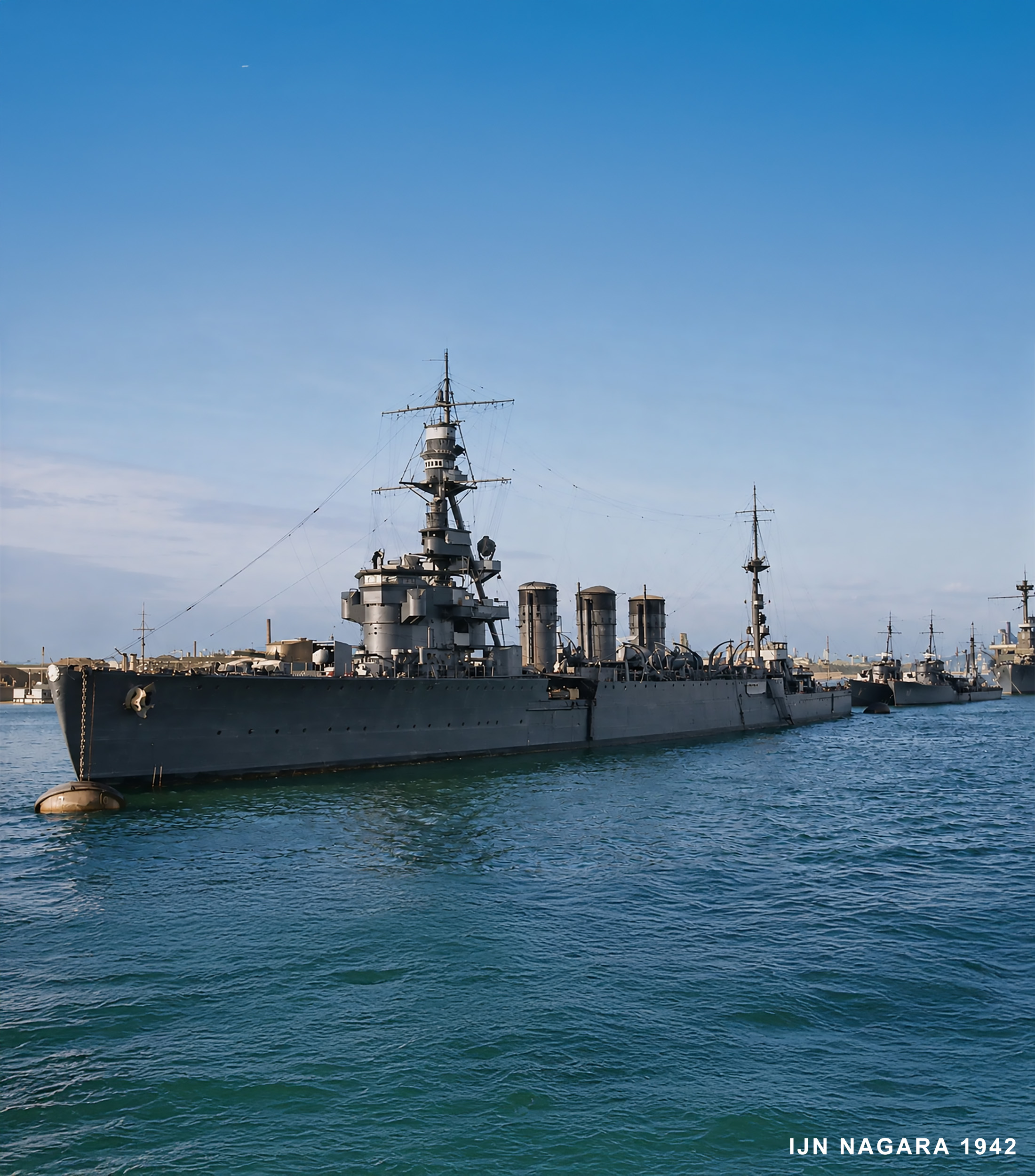
Commissioned in 1922 (Taisho 11), Nagara was the lead ship of the Imperial Japanese Navy’s six-vessel Nagara class of light cruisers. Her sister ships were Isuzu, Natori, Yura, Kinu, and Abukuma. Built during a period of rapid development within the Japanese fleet, these fast light cruisers remained in active service through the Pacific War.
The Nagara class formed the second generation of what became collectively known as Japan’s “5,500-ton light cruisers.” Together with the earlier Kuma class and later Sendai class, they were designed as fast, versatile cruisers capable of operating with destroyer flotillas while performing reconnaissance, escort, transport, and other fleet duties.
At approximately 162 meters (532 feet) long, Nagara was built as a fast cruiser capable of operating closely with destroyer forces. During the Pacific War, she took part in operations across the Japanese-controlled Pacific and served alongside major fleet forces. She was involved in actions around the Philippines and the Dutch East Indies and later operated in the Central and South Pacific.
Nagara also played a role during the Battle of Midway in June 1942 and later fought in the waters around Guadalcanal. During the Naval Battle of Guadalcanal in November 1942, Nagara operated with Japanese destroyers during the night fighting against American forces. By 1944, however, the aging cruiser was increasingly being used for transport and other operations closer to Japan.
Like many Imperial Japanese Navy vessels, Nagara also maintained a spiritual connection with a shrine ashore. Inaba Shrine in Gifu City, Gifu Prefecture, was associated with the cruiser as her shipboard guardian shrine, providing an important religious connection for her officers and crew.
By her final voyage in August 1944, Nagara had served for more than two decades. The ship that now rests beneath the waters off Ushibuka had survived years of war before beginning the voyage that would become her last.
By the summer of 1944, the war in the Pacific was moving steadily closer to the Japanese home islands. In early August, Nagara was operating between Japan and Okinawa. After transporting personnel and cargo south, she arrived at Naha on August 5. She then returned north, reaching Kagoshima before beginning the final leg of her voyage.
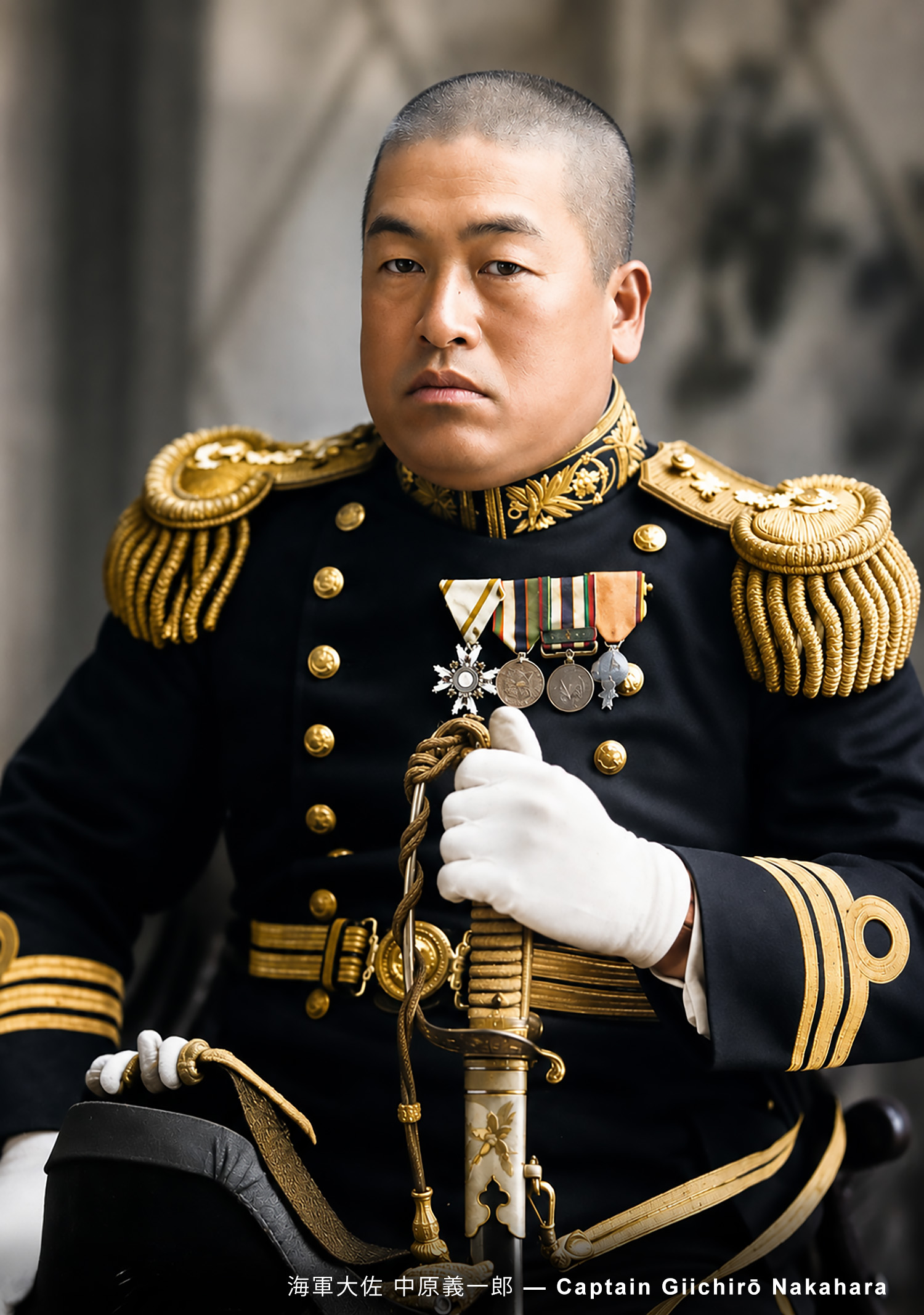
On August 7, 1944, Nagara departed Kagoshima for Sasebo. Her commanding officer was Captain Giichiro Nakahara. The cruiser was accompanied by a submarine chaser, while two aircraft provided aerial cover.
Waiting along her route was the American submarine USS Croaker (SS-246), commanded by Lieutenant Commander John E. Lee. Croaker had been commissioned only months earlier and was on her first war patrol in the East China and Yellow Seas.
Lee maneuvered Croaker into an attack position and allowed the Japanese cruiser to close to approximately 1,300 yards. He then fired a spread of four torpedoes from the submarine’s stern tubes.
At 12:22 p.m., one torpedo struck Nagara aft on the starboard side.
The damage was catastrophic. The cruiser began sinking by the stern, and approximately 18 minutes after the torpedo struck, at about 12:40 p.m., Nagara disappeared beneath the sea off the Amakusa Islands.
Captain Nakahara was among those lost.
Of the 583 officers and crew recorded aboard, 348 were killed. Historical records differ slightly on the number who survived, generally giving a figure of 235 to 237. Many of those who escaped the sinking are said to have been rescued from the sea by fishermen from Ushibuka.
For the survivors, the families of those who did not return, and the people of Ushibuka who became connected with the tragedy, August 7 became a date that would never be forgotten.
During the war, information concerning Nagara’s loss was treated as sensitive military information and was not publicly reported in the way such a disaster would be today. As a result, public remembrance of the ship and her dead remained limited for some time after the war.
One woman, however, refused to allow their memory to disappear.
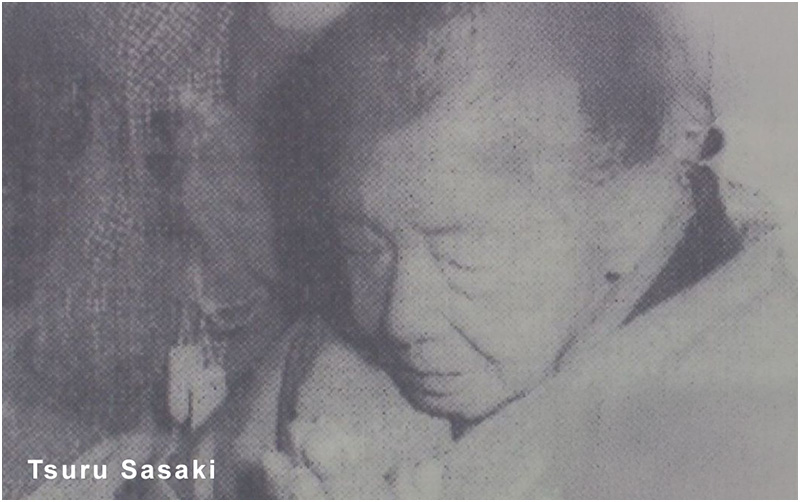
Tsuru Sasaki, born in 1898, devoted herself for many years to remembering the men lost aboard Nagara. Acting largely from personal conviction, she continued memorial activities at a time when the sinking was rarely discussed publicly.
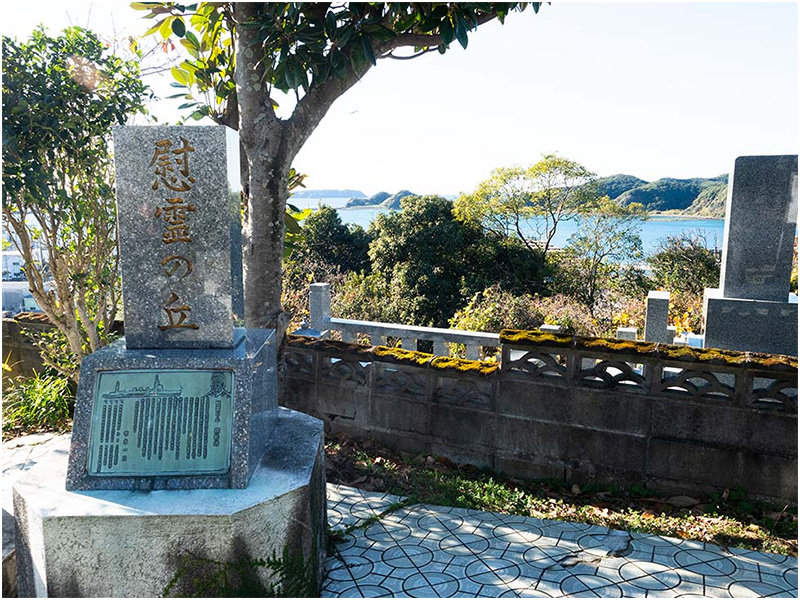
In 1970, Sasaki used her own funds to construct the Nagara Memorial Monument in a veterans’ cemetery on a hill overlooking the waters where the cruiser had been lost. She is said to have climbed to the monument and prayed there every morning, maintaining a personal vigil for the men who remained beneath the sea.
Sasaki continued this work until her death at the age of 88. Responsibility for preserving the memory of Nagara was eventually carried forward by the Ushibuka Branch of the Amakusa City Social Welfare Council. Today, the August 7 memorial brings together bereaved families, local residents, and others committed to remembering those who died.
In 2025, as Japan marked 80 years since the end of World War II, bereaved families and others connected with the memorial boarded the Japan Maritime Self-Defense Force minesweeper Toyoshima for an offshore service near the sinking site. A memorial ceremony followed, attended by approximately 150 people.
More than eight decades after Nagara disappeared beneath the sea, the remembrance begun by Tsuru Sasaki continues—on the hill above Ushibuka and over the deep water where the cruiser and hundreds of her crew remain.
My personal connection with Nagara began through Mr. Seiichiro Nishinaka, the journalist who had come to cover one of our underwater investigations. During our conversation, he told me, “I am a family member of one of the fallen from Nagara.”
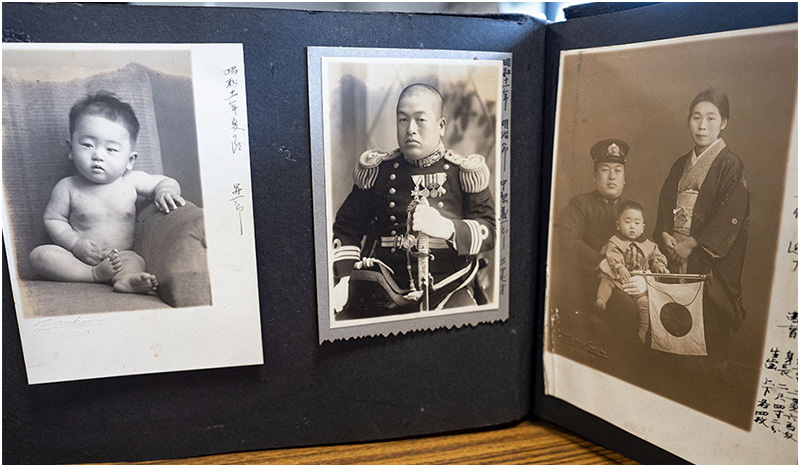
Mr. Nishinaka is the grandson of Captain Giichiro Nakahara, Nagara’s commanding officer at the time of her sinking. Until then, I had known of the ship and the annual memorial service, but little about the people who had continued to preserve her memory.
As I began researching Nagara, conducting interviews, and speaking with those connected to her story, one question became increasingly important: Could our abilities as divers contribute something meaningful? If we could reach Nagara and photograph her as she rests today, we could create a visual record of a place few people would ever see. If personal effects were encountered, they could also be documented in their original surroundings.
A shipwreck is more than steel, machinery, and artifacts on the bottom. Behind it are the people who served aboard, the events that brought it there, and the families and communities affected by its loss. With this in mind, we contacted the Ushibuka Branch of the Amakusa City Social Welfare Council and members of the bereaved families, and arrangements were made for us to visit Ushibuka in December 2025.
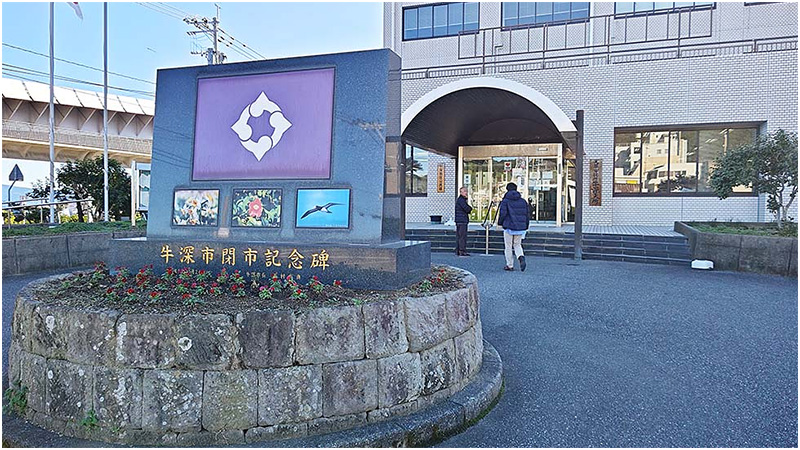
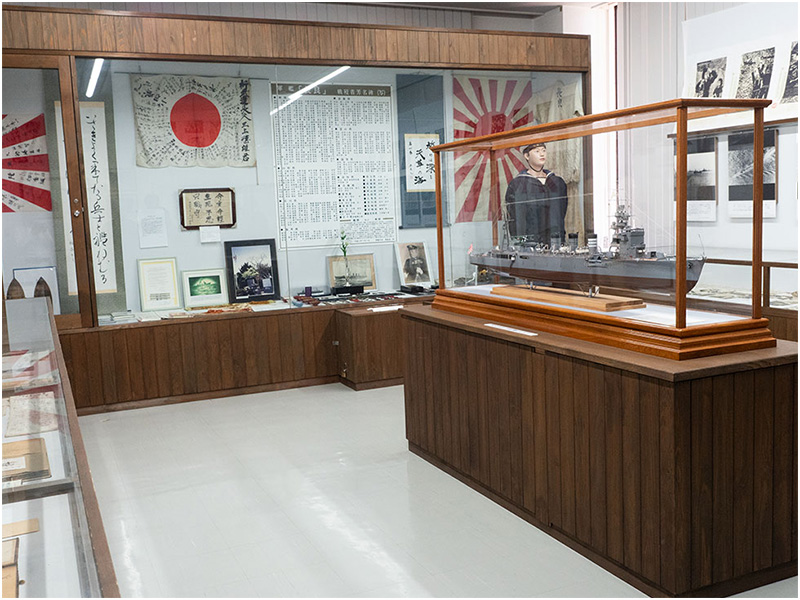
The Social Welfare Council building also houses the Nagara Memorial Museum, where materials relating to the cruiser and her crew have been preserved. We hoped that photographs from the wreck might eventually become part of that historical record. One member of the Social Welfare Council told us that having additional material to pass on to future generations would be something for which they could be grateful, and those words helped define the project.
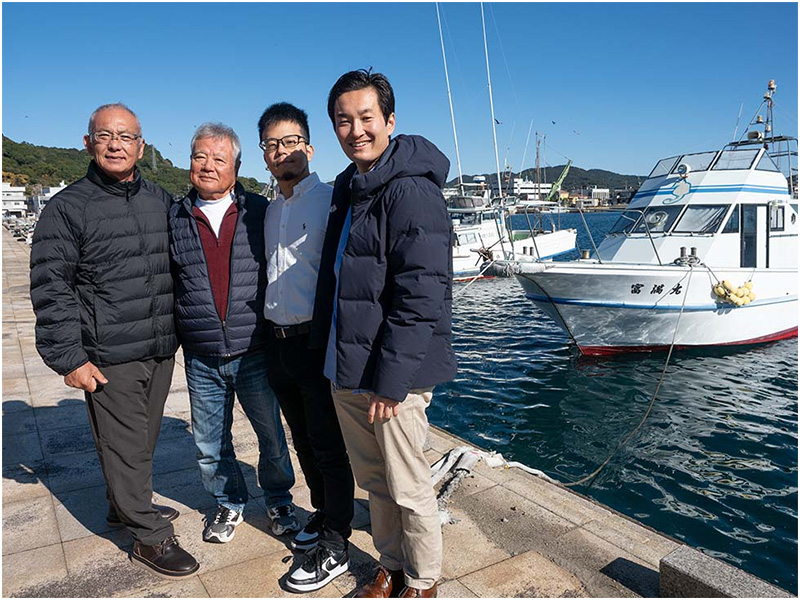
On December 22, 2025, I traveled to Ushibuka with Mr. Nishinaka and visited the Ushibuka Branch of the Amakusa City Social Welfare Council to meet the people who had spent decades preserving the memory of the ship and her crew.
We learned that obtaining photographs of the wreck’s present condition had been a long-held hope. With 2025 marking 80 years since the end of the war, there was renewed importance surrounding the creation of historical records that could be preserved for future generations. Just as important, however, was understanding what the families did not want us to do.
We were told that the bereaved families’ association had previously reached a consensus that human remains should not be recovered. If personal effects were encountered, their preference, at least for the time being, was that we photograph and document them where they rested rather than recover them. These wishes established clear boundaries for our investigation.
Among those we met was Mr. Soichi Fukumoto of the Amakusa City Social Welfare Council. Tsuru Sasaki had personally asked Mr. Fukumoto to continue the memorial work she had devoted so much of her life to maintaining.
During our discussions, Mr. Fukumoto showed us a photograph of an echo-sounder image believed to show Nagara on the seabed. Written on it were the words: “depth: approx. 80 meters.”
That number immediately caught our attention. Eighty meters placed the wreck firmly within advanced technical diving range and provided an important starting point for planning the investigation. For months afterward, almost every part of our technical planning would begin with that number.
The Nagara Memorial Museum contained photographs, documents, and historical records relating to the ship and her crew. A visitor comment book showed that people had traveled from throughout Japan to visit, evidence that decades of work in Ushibuka had carried Nagara’s memory far beyond the community.
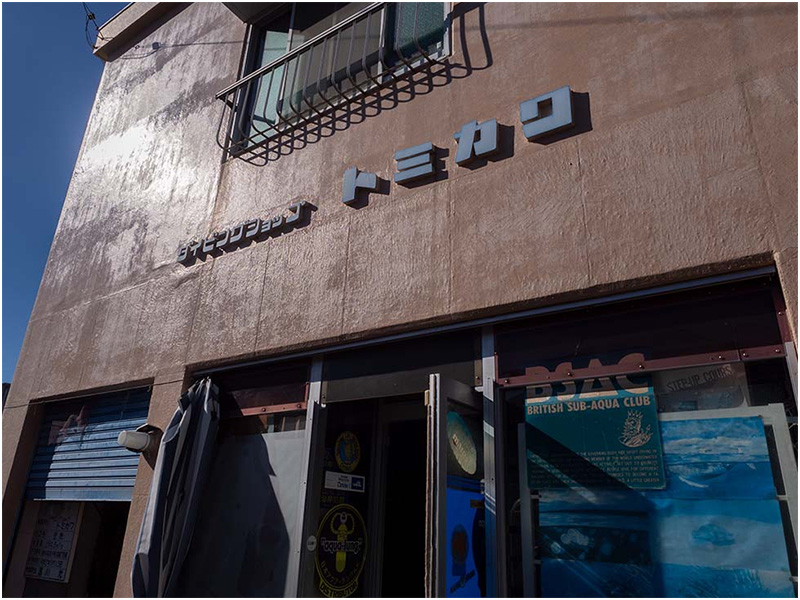
Our next important connection was Diving Shop Tomikawa, a local diving operation that has supported the annual Nagara memorial service for many years.
Mr. Tomikawa operates the shop with his wife and provides boats used to carry bereaved families and others participating in the memorial. When we explained our plans and asked for assistance, they readily agreed.
For a deep technical operation in unfamiliar waters, local knowledge can be as important as the equipment carried by the divers. Their familiarity with the weather, currents, sea conditions, and waters surrounding Nagara would become an important part of the expedition.
Before leaving Ushibuka, we visited the memorial monument built by Tsuru Sasaki at what is now known as the “Hill of Remembrance.” Reaching the monument requires climbing more than 120 steps from the road, and Social Welfare Council staff still make that climb to clean and maintain the site.
From the hill, they pointed toward the sea and explained that Nagara lay below that line of sight. Standing there gave the wreck a physical connection to everything we had been told. Somewhere beyond the hillside, beneath the deep water, was the ship we hoped to reach.
On April 23, 2026, as preparations continued, I traveled to Nara University to meet Mr. Kojiro Nakahara, another grandson of Captain Giichiro Nakahara.
Mr. Nakahara had represented the bereaved families at the 2025 Nagara Offshore Memorial Service and Ceremony. During the ceremony, he expressed gratitude that the people of Ushibuka had continued to honor Nagara and her crew eight decades after the sinking and spoke about carrying that memory forward.
The meeting reminded me again of the responsibility we carried into the investigation. At the time, our information indicated that Nagara rested in the open ocean at approximately 80 meters (262 feet). Reaching and documenting a wreck at that depth would require careful decompression planning, gas management, emergency procedures, underwater photography and video, surface support, and close coordination with the local team.
If we succeeded, the resulting images could become a new part of the ship’s historical record.
By early July, months of research, meetings, and technical planning were converging toward the investigation itself. On July 6, 2026, we held a press conference at Kokorasu, a multipurpose facility in Amakusa City, Kumamoto Prefecture, to formally announce the planned underwater investigation of Nagara. Approximately 30 reporters participated in person and online.
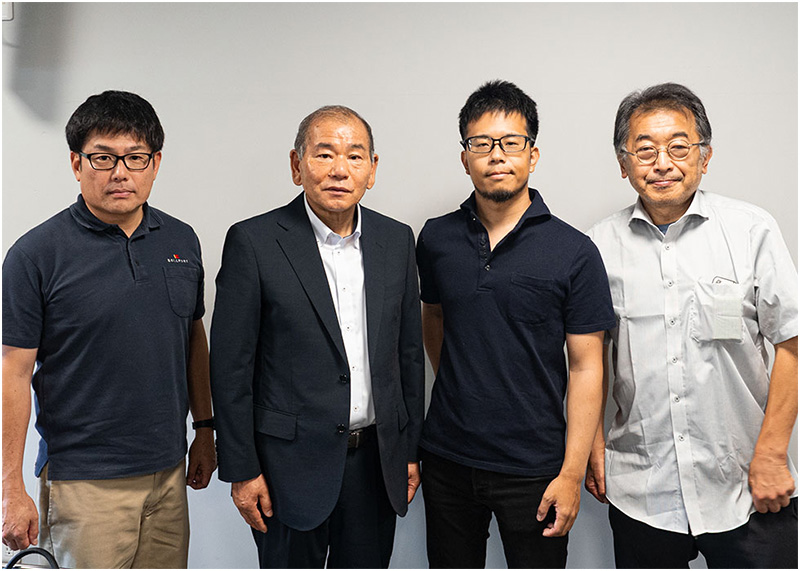
Joining us were several people instrumental in bringing the project together. Mr. Nishinaka represented the family connection to Nagara’s commanding officer and had helped set the investigation in motion. Mr. Soichi Fukumoto, former Managing Director of the Amakusa City Social Welfare Council, brought decades of experience supporting the memorial activities in Ushibuka. Mr. Kazumichi Murai of Bellport Uto, in Uto City, Kumamoto Prefecture, would support the underwater investigation using an ROV, or remotely operated vehicle.
By this stage, the project had grown beyond a small team of technical divers. Bereaved families, members of the local community, the diving and ROV teams, and those who had maintained the memorial had all become part of the effort. Media coverage extended beyond Kumamoto Prefecture, with reports appearing in the Hokuriku region, home to many of Nagara’s crew, and elsewhere in Japan.
The purpose of the investigation was now clear, and the people connected to Nagara knew what we intended to do. What remained was the technical challenge of reaching her.
With the operation approaching, one final stage of preparation remained: reproducing as closely as possible the procedures we expected to use on the actual dive.
On July 14 and 15, 2026, I joined Mr. Hirokazu Mori and Mr. Yosuke Ogiwara at Osezaki in Izu, Shizuoka Prefecture, for two days of simulation training. Osezaki is our home ground. We know the site, the water, and the facilities, allowing us to remove many of the unknowns and concentrate on the procedures we needed to perfect.
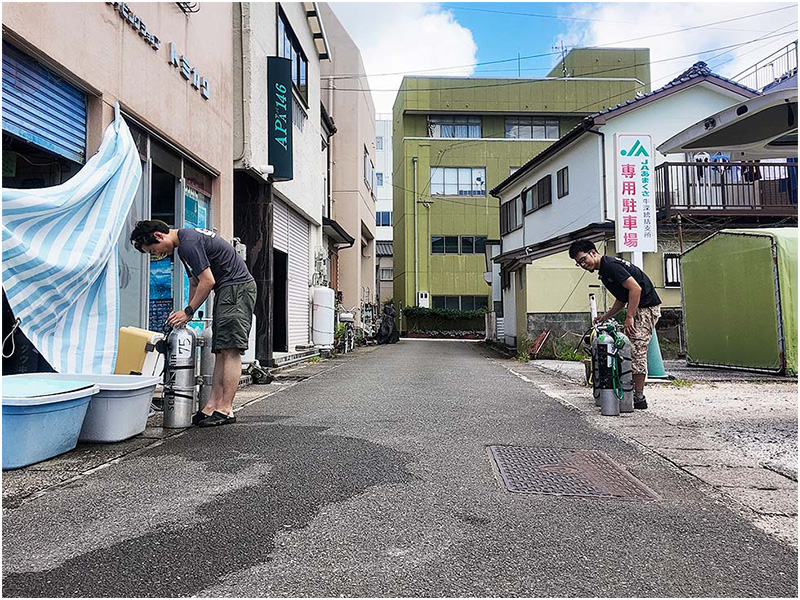
Nearby is a gas-filling facility of which we are members, where we can obtain breathing gases not normally available through recreational diving operations, including trimix and oxygen. Once training was complete, the cylinders, diver propulsion vehicles, and other expedition equipment were loaded into a vehicle. Mr. Mori transported everything from Shizuoka to Kumamoto for the final preparations.
Our objective was to reproduce the complete operational sequence, from entering the water with diver propulsion vehicles to equipment management, filming, decompression, and the final exit.
Gas planning and decompression were only part of the challenge. We also had to determine how to enter the water, stage our equipment, manage the cameras, and get everything back aboard safely. At a remote exploration site, there is no guarantee that the boats or location will already be set up for technical diving, so the team often has to create that system from the beginning.
On July 15, we concentrated on staging equipment on an anchored line and donning it in the water. On paper, the procedure appears simple, but in practice every detail matters: which equipment goes on the line first, where each cylinder and DPV should be positioned, who places it there, the order in which the divers retrieve and attach everything, and how long the process takes.
We also conducted the simulation while carrying our underwater filming systems because photography and video were not secondary objectives; they were the reason we were going underwater. Simply reaching Nagara would not be enough. Every procedure had to work while we were managing cameras and performing the actual documentation.
By the end of the simulation, we had rehearsed the complete operation. The next time we assembled this equipment would be in Kumamoto, and the next descent would be toward Nagara.
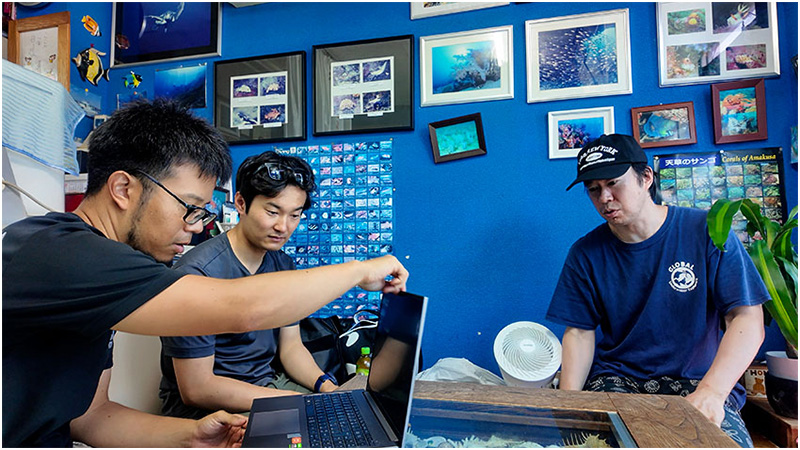
By July 19, every member of the team had arrived in Ushibuka. The next two days were devoted to assembling and checking equipment, reviewing dive profiles, confirming our ERP (Emergency Response Plan), briefing the boat captains and support personnel, and loading the vessels.
We met with Mr. Kazumichi Murai of Bellport Uto, whose team would document the wreck with an ROV, and Captain Koki Matsumoto of the Mikimaru, the vessel from which the ROV team would operate. Our dive team would travel aboard the Diving Shop Tomikawa boat, while our cylinders and equipment would be staged on a line anchored from the Mikimaru. That same line would become our descent and ascent route.
Although our information indicated that Nagara rested at approximately 80 meters (262 feet), we knew better than to build the entire operation around one assumed depth. We therefore prepared two decompression profiles.
The first was based on an average working depth of 80 meters, with either 25 or 30 minutes of bottom time. Because the hull itself has considerable height, this profile allowed for a maximum depth of approximately 90 meters (295 feet). The second assumed an average working depth of 90 meters, with either 20 or 25 minutes of bottom time and a maximum depth approaching 100 meters (328 feet).
We deliberately did not designate either as the primary plan because the actual depth and conditions would determine which one we used. One limit, however, was absolute: if conditions indicated that the average working depth would exceed 100 meters, we would not make the dive.
For the first dive on July 21, Mr. Mori would handle surface and shallow-water support while Mr. Ogiwara and I descended. On the following day, I was scheduled to assume the surface and shallow-water responsibilities. With the equipment prepared and both dive profiles ready, everything we could reasonably plan on land had now been done.
On the morning of July 21, our dive team boarded the Diving Shop Tomikawa boat while the ROV team boarded the Mikimaru. We departed Ushibuka Port and reached the site approximately 45 minutes later.
For an open-ocean location, conditions were remarkably calm, with almost no current and very little swell. Mr. Fukumoto remarked that conditions this favorable were rare—as though we were being welcomed to make the dive.
Then the echo sounder gave us our first surprise. The seabed was approximately 100 meters (328 feet) deep, not the 80 meters we had expected. Twenty meters may not sound like much, but at these depths it changes everything: gas consumption, decompression, working time, and emergency planning.
Fortunately, this was exactly the kind of uncertainty we had prepared for. Our deeper profile had been designed around an average working depth of 90 meters. If the bottom of the hull rested near 100 meters, we expected the upper portions of the wreck to rise toward 90 meters, so there was no need to redesign the dive on the boat. We selected the deeper profile.
Before entering the water, I confirmed two critical points with Mr. Ogiwara. First, we would control the dive around an average working depth of 90 meters. This did not mean that 90 meters was our maximum depth; we could descend deeper while working around the hull, but the overall profile had to remain within our planned gas and decompression limits.
Second, we reviewed what we would do if Nagara was not visible when we reached the bottom. At nearly 100 meters, an anchor dropped beside a wreck at the surface may not land beside it on the bottom. Current can carry the anchor and line sideways during the descent, so we could reach the seabed and find nothing.
If that happened, we would attach a search line to the anchored descent line and search outward from that fixed point. The search would be limited by the bottom time available within our dive plan and the maximum distance of a 60-meter spool. The anchored line would remain our reference point and our route back toward the surface.
We also asked the captain which direction he believed the anchor was most likely to have moved in relation to the wreck, giving us a starting direction for the search. The sea was calm, the equipment was ready, and the deeper profile had been selected. It was time to find out where the anchor had landed.
The Mikimaru began positioning the anchor and descent line. The procedure had to be repeated approximately three times before the anchor was placed in a suitable position.
On an open-ocean technical dive, we try to coordinate the operation with slack water, but that window can quickly disappear if positioning the boat, setting the anchor, staging equipment, and preparing the divers takes too long.
Once the line was secured, we paused before beginning the dive. Together with Mr. Nishinaka, who was aboard the Mikimaru, we offered sake to the sea above the place where Nagara had been lost. It was a quiet acknowledgement of the men below before our descent.
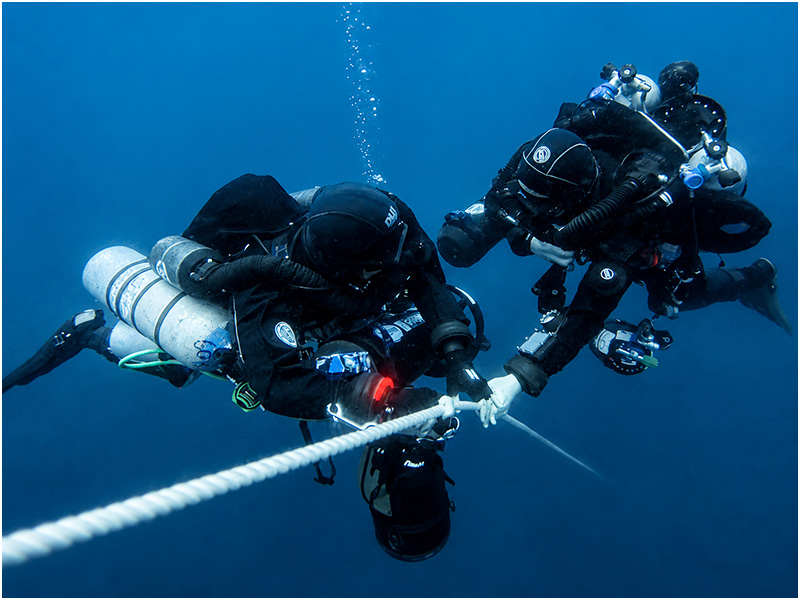
From that point forward, everything followed the procedures rehearsed at Osezaki. Our cylinders and additional equipment were staged at designated positions on the anchored line, allowing us to enter the water carrying only what was necessary for the initial entry.
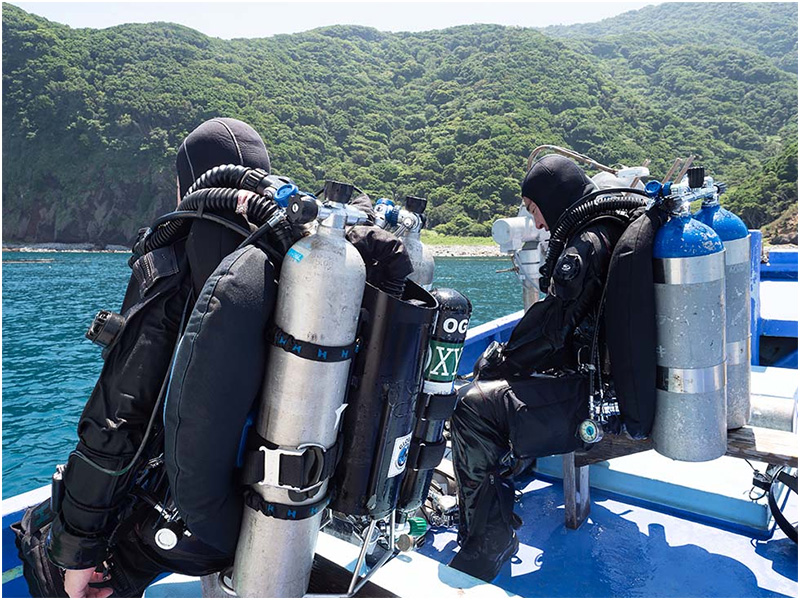
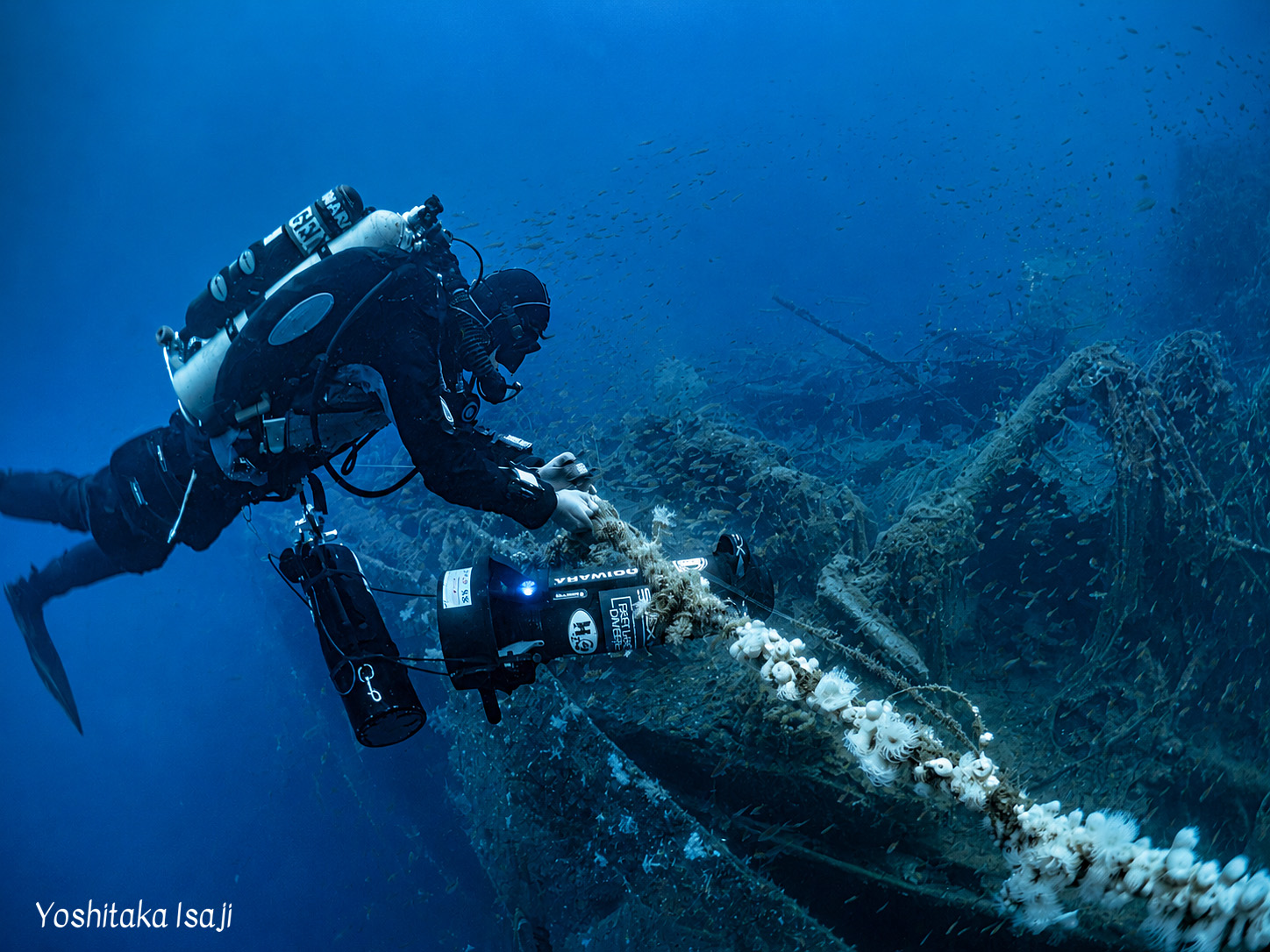
This was especially important for a dive approaching 100 meters. Multiple bailout cylinders, a diver propulsion vehicle, and underwater filming systems create a considerable physical load. Entering from a moving boat wearing everything, then waiting at the surface under that weight, would add unnecessary fatigue before the descent even began.
Instead, we entered with a minimum equipment configuration and donned the remaining equipment from the line. Every step had been rehearsed only days earlier. Mr. Mori remained at the surface and in the shallow-water zone to assist us, and once everything was secured and checked, Mr. Ogiwara and I took our diver propulsion vehicles and began descending.
Shortly after beginning the descent, the action camera mounted to the hot shoe of my primary camera came loose and disappeared into the depths below us. On a dive approaching 100 meters, pursuing dropped equipment is not an option. Leaving the descent line would mean giving up our known position, and with only 20 to 25 minutes of planned bottom time, every minute spent searching for a camera would be taken directly from the time available to locate and document Nagara.
The decision was immediate: leave it and continue. We had begun with three filming systems and still had two, so almost immediately the value of carrying backup equipment had proven itself.
The descent took eight minutes. As we followed the line deeper, the light faded and the surrounding water became progressively darker until we reached the lower end of the line at 97.9 meters (321 feet).
Nagara was not there.
Within the limits of our visibility, there was nothing but open sandy seabed. The possibility we had discussed only minutes earlier had become reality: the anchor had missed the wreck.
Mr. Ogiwara attached a search line to the anchored descent line and began moving in the direction the captain had indicated. Our search was limited by the length of the 60-meter spool and, more importantly, by the bottom time remaining in our decompression profile.
Every minute spent searching was a minute we would lose beside Nagara. Because we had established the limits before entering the water, however, there was no need for discussion or hesitation at depth. We simply followed the plan.
Approximately 13 minutes into the dive, something appeared at the edge of our visibility. Near the surface, visibility had been approximately 15 meters (49 feet), but on the deep seabed we estimated it at only about 7 meters (23 feet).
At first, there was no way to know what the shape ahead represented. As we moved closer, however, the dark outline slowly became recognizable as a large structure rising from the bottom.
It was a ship.
We had found Nagara.
Eighty-two years after the cruiser disappeared from the surface, part of the ship was again visible—this time emerging from the darkness nearly 100 meters beneath us.
Mr. Ogiwara immediately secured the search line to the hull, creating a continuous route from the wreck back to the anchored ascent line. With our return path secured, we could finally begin documenting what we had traveled to Ushibuka to see.
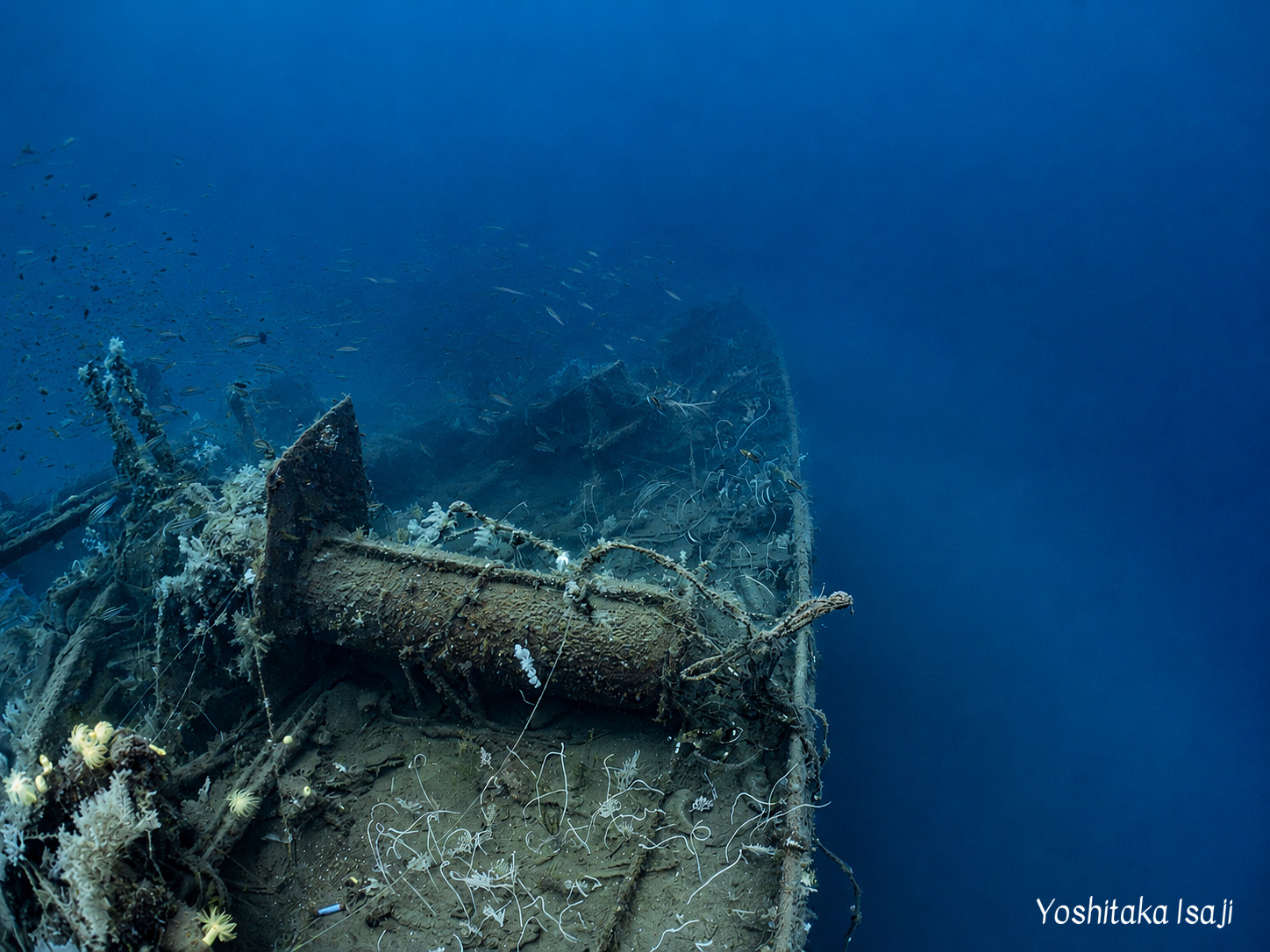
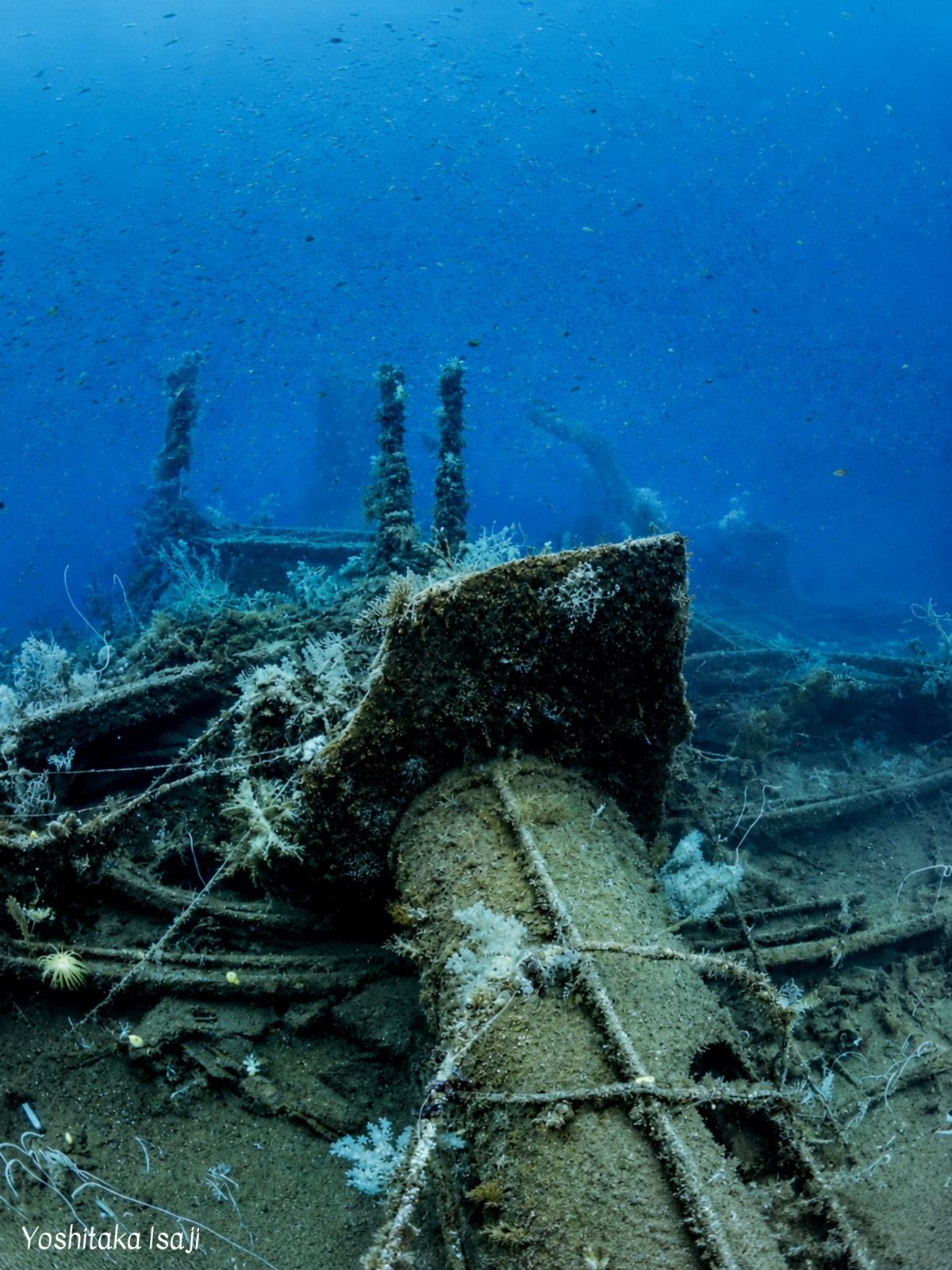
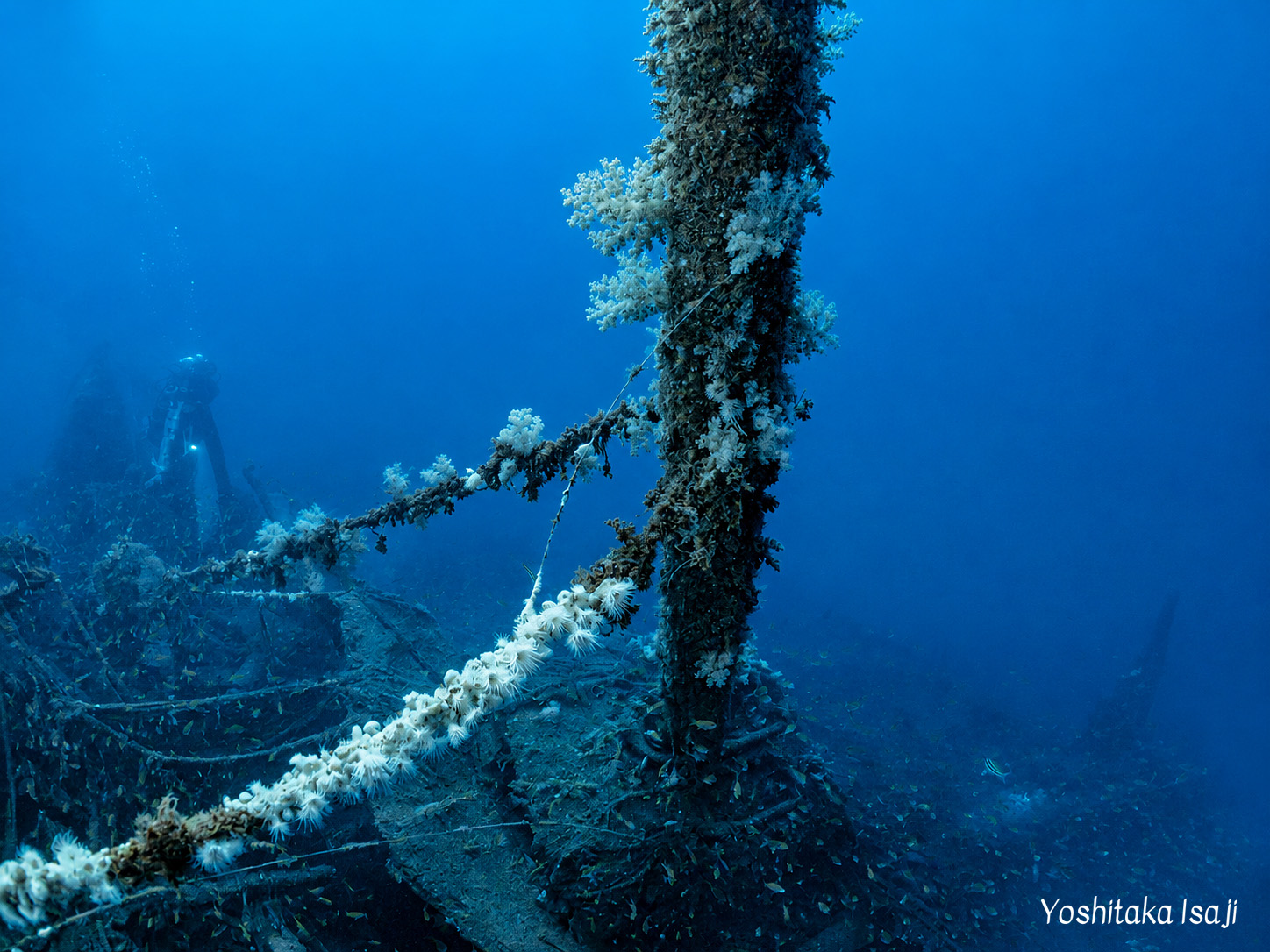
We could not determine the condition of the entire hull during this first dive, but one fact was immediately clear: Nagara was not lying on her side. Within the area visible to us, the cruiser remained upright on the seabed, essentially maintaining the orientation she had held while afloat.
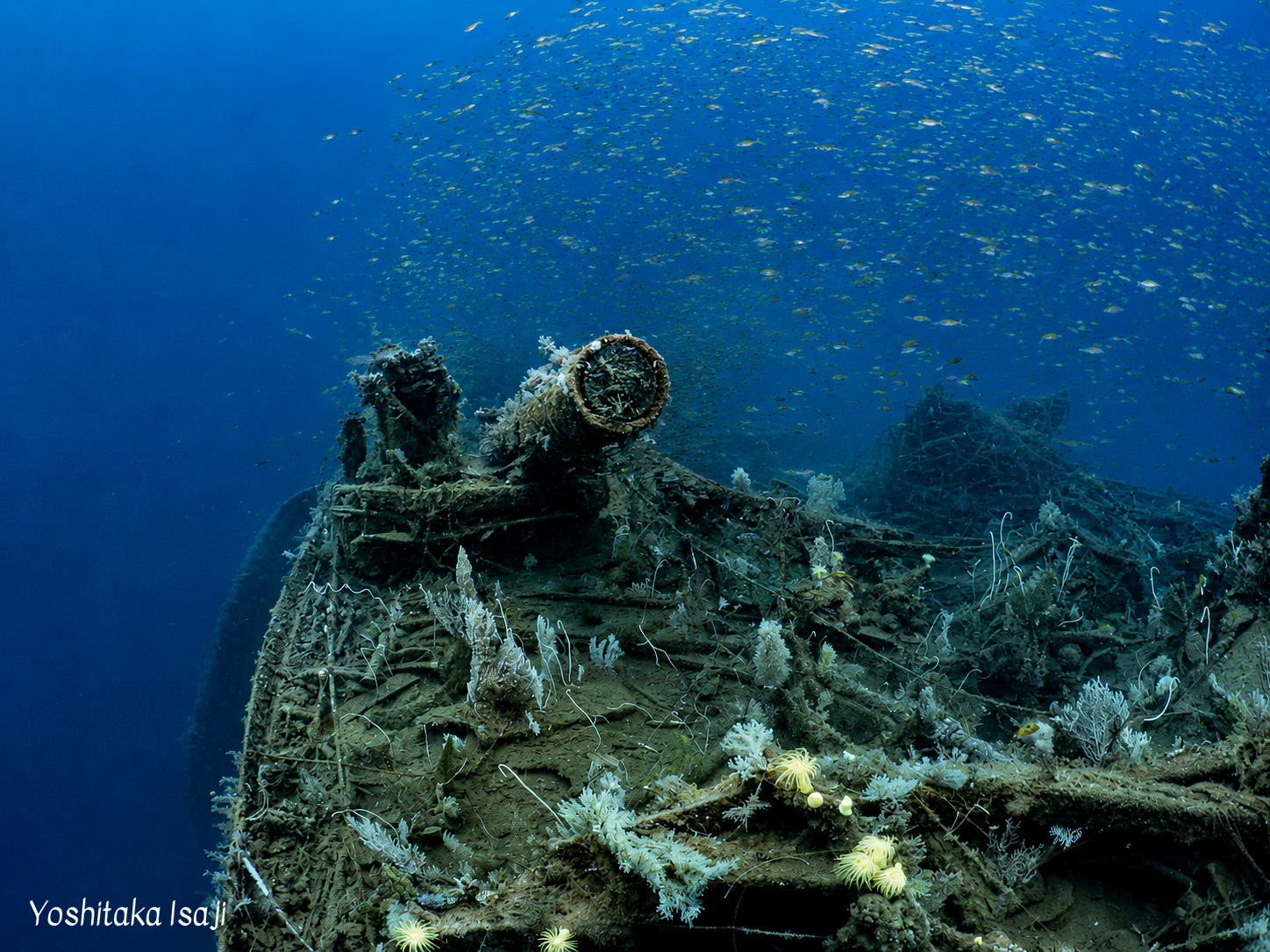
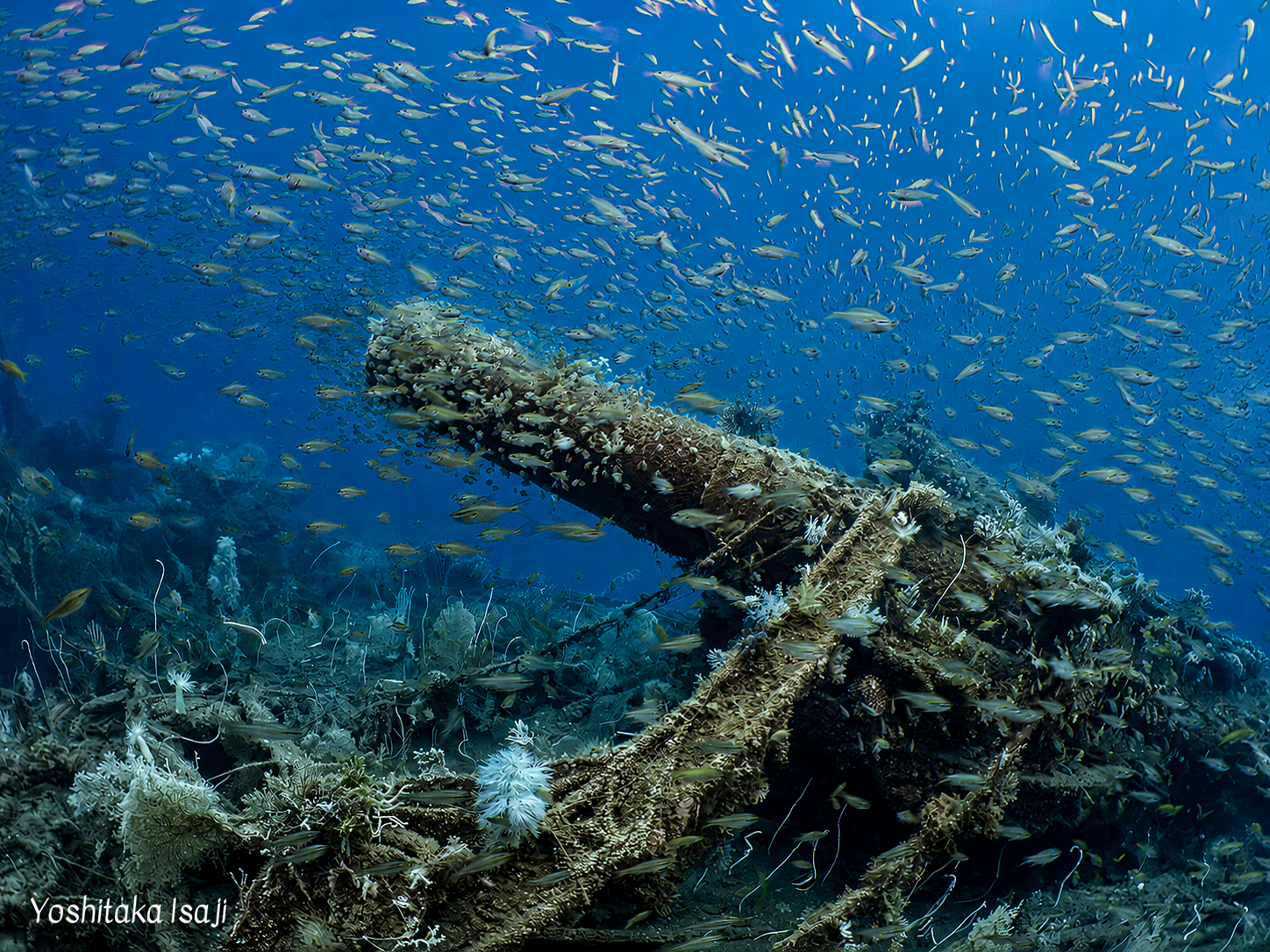
Moving left from where the search line had been secured, we reached what appeared to be the bow. Gun barrels and other structures characteristic of a warship emerged from the darkness as I began working the camera.
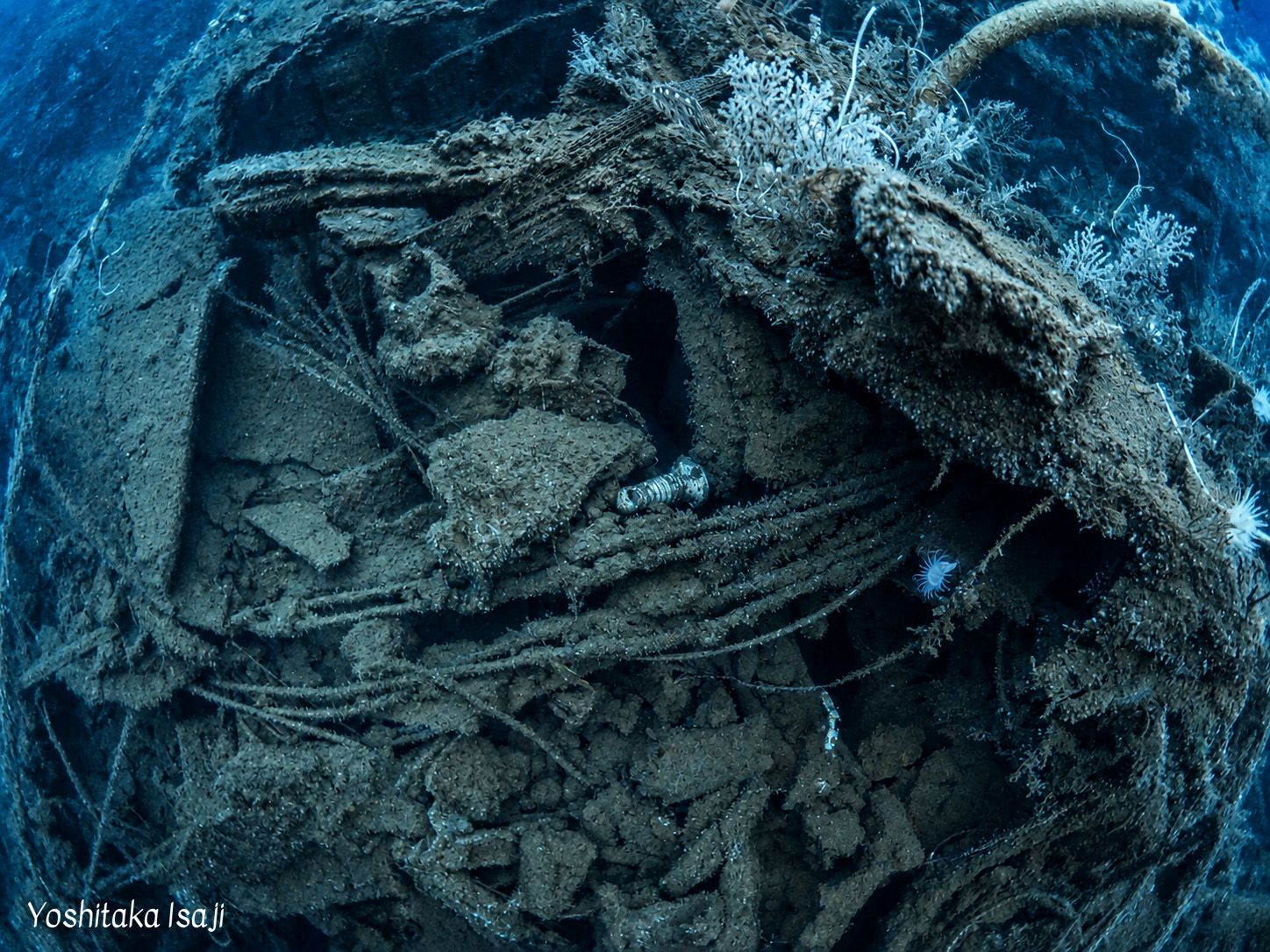
Large amounts of fishing line were tangled across portions of the hull, and fishing nets were present in several areas. At this depth, entanglement is a serious hazard. Becoming trapped could consume the time required to begin the ascent and follow the decompression schedule, so every movement around the wreck had to be deliberate.
After more than eight decades underwater, Nagara had also become an artificial reef. Fish surrounded the hull, and the site—known locally as Gunkan Sone, roughly “Warship Reef”—appears to be used as a fishing ground. It was a striking contrast: this was a place associated with tremendous loss, yet the wreck now provided shelter and habitat for marine life.
During this first exploration, we did not encounter human remains or personal effects.
Nineteen minutes into the dive, we made the decision to leave Nagara and return to the anchored line. Our plan allowed a maximum of 25 minutes before beginning the ascent, but that did not mean we could spend 25 minutes at the wreck. We had found Nagara only after searching away from the anchor, and we still had to travel that same distance back.
If we stayed until the limit and encountered an entanglement, equipment problem, or other delay on the return, we could exceed our planned bottom time. At nearly 100 meters, even a few extra minutes can significantly increase decompression. Nineteen minutes was the point at which we could leave the wreck while still preserving enough time to return and maintain a reasonable safety margin.
We released the search line from the hull and followed it back toward the anchored descent line, reeling it in as we traveled. At 23 minutes into the dive, we reached the main line and began our ascent.
The decompression that followed lasted 139 minutes, with most of that time spent in shallower water. Surface temperature that day was approximately 27–28°C (81–82°F), while the water at depth was approximately 17°C (63°F). The warmer shallow water was favorable during the extended decompression, although the heat during preparation aboard the boat had to be carefully managed before entering the water.
At the shallow decompression stops, Mr. Mori was waiting. We signaled that there had been no problems and handed off cylinders and equipment we no longer required, allowing us to finish the remaining decompression without carrying unnecessary equipment. The ROV accompanied us during part of the decompression before we continued toward the surface.
When we finally climbed aboard the boat, 162 minutes had passed since the beginning of our descent. Of those 162 minutes, approximately 139 minutes had been spent in decompression, while only about six minutes had been spent beside Nagara. Our maximum recorded depth was 97.9 meters (321 feet).
Those numbers describe the reality of deep exploration better than almost anything else. Hours of preparation and decompression can surround only a few minutes in which the actual objective must be accomplished.
Everyone was waiting when we came aboard, and when we reported that we had found Nagara and successfully photographed and filmed the wreck, relief spread across the boat, followed by cheers. We had reached the ship and returned with the photographs we had come to Ushibuka to obtain.
We had originally planned a second dive for July 22 to document a larger portion of the wreck. The first dive, however, had revealed that Nagara was nearly 20 meters deeper than expected. We had reached 97.9 meters and completed 139 minutes of decompression.
After evaluating that exposure, we decided there was no reason to repeat a dive to nearly 100 meters the following day. The second manned dive was canceled, but the investigation could continue using the ROV.
Our six minutes beside Nagara had given us a close view of only a small part of the ship, while the ROV could remain at depth much longer and show us more. Mr. Kazumichi Murai of Bellport Uto and Mr. Yoshiro Ishimatsu of Light Studio therefore continued the investigation using the remotely operated vehicle.
The ROV was deployed twice. During both dives, it recorded areas that appeared to be toward the bow of Nagara. Unlike a diver, the ROV could remain at depth without decompression obligations, allowing it to examine a wider area than we had seen during our short time beside the wreck.
The two methods complemented each other. The manned dive produced detailed photographs and video at close range, while the ROV expanded our view and began revealing how a larger portion of the cruiser rests on the seabed.
By the end of the operation, we had obtained clear photographs of Nagara for the historical record and documented a wider portion of the wreck through the ROV footage. Much remains unknown, however. The condition of Nagara along her full 162-meter length has not been confirmed, and large portions of the wreck remain undocumented. If the families and others involved in preserving her history should wish for further investigation, that may become a task for the future.
Later that same day, we went to the grave of Tsuru Sasaki carrying the photographs taken during our dive. At her grave, we offered those images and burned incense, bringing to the woman who had devoted so much of her life to remembering Nagara the first photographs from our investigation of the ship beneath the sea.
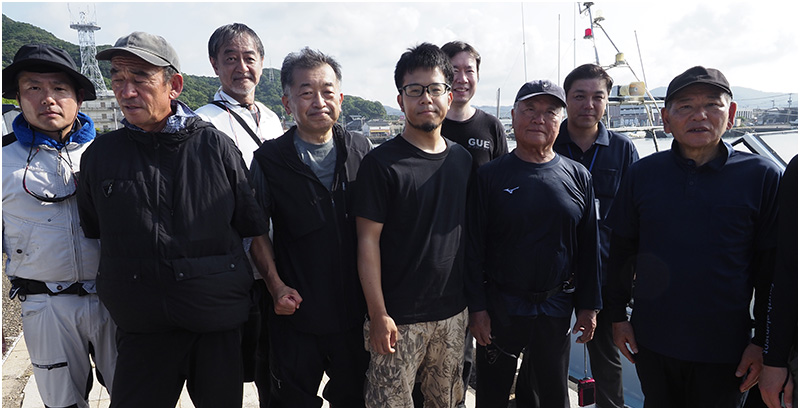
Joining us were Mr. Soichi Fukumoto, whom Ms. Sasaki had personally asked to continue the memorial work; Mr. Yasuharu Wakata, head of the Ushibuka Branch of the Amakusa City Social Welfare Council; Mr. Seiichiro Nishinaka; Mr. Kazumichi Murai of Bellport Uto; Mr. Yoshiro Ishimatsu of Light Studio; and members of the diving team who had participated in the investigation.
After visiting her grave, we returned to the Hill of Remembrance. Standing before the monument, we reported that the underwater investigation had been completed and joined our hands in prayer.
For decades, people had stood on that hill looking toward the sea, remembering a ship they could no longer see. Now we had returned from that deep water with photographs of Nagara as she rests today.
The story had begun there on August 7, 1944, when Nagara disappeared beneath the sea. In 1970, Tsuru Sasaki built the memorial overlooking those waters so the men who died would not be forgotten. On July 21, 2026, we descended into those same waters and photographed the cruiser on the seabed.
We had gone to Nagara to create a record. Bringing that record back to the families and the people who had preserved her memory completed the purpose of our journey.









 Each year on August 7, the anniversary of Nagara’s sinking, a memorial service is held to honor the crew and ensure that the tragedy of war—and the importance of peace—are passed on to future generations. In 2025, an additional offshore memorial service was held on August 9, marking 80 years since the end of the war. It was around this time that the idea of investigating Nagara began to take shape.