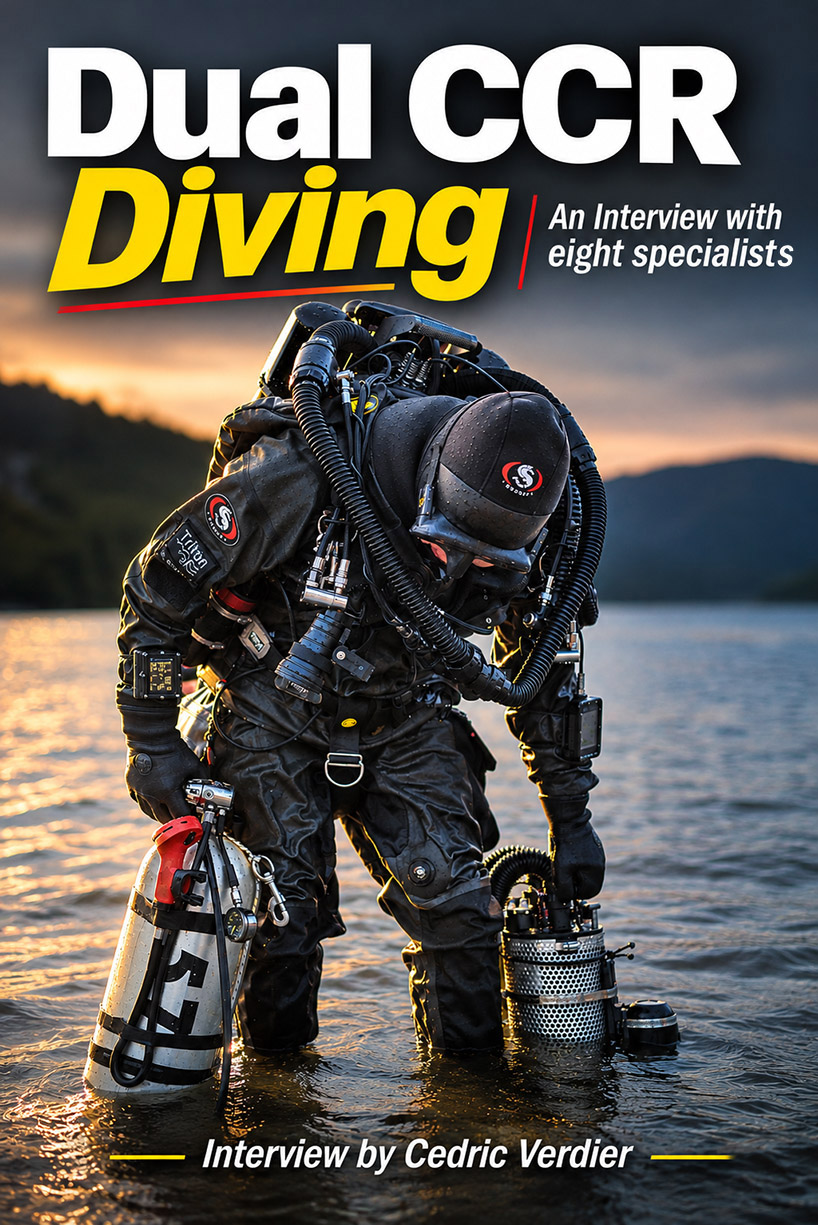
Dual CCR Diving: An Interview with eight specialist
Share This Article
I started being interested in using a second rebreather in 2006, preparing for some pretty deep dives that required a truckload of bailout tanks, something somehow manageable in a cave but not in the ocean.
Fast forward 20 years and many different configurations later, dual-rebreather diving becoming more and more common, I decided to interview eight very experienced divers and instructors who regularly dive a two-rebreather configuration, not for extreme once-in-a-lifetime record but for exploration dives they enjoy doing.
The number of rebreather divers out there has been growing steadily in the last few years. CCRs are safer and training courses have improved a lot. What led you to dive with not one but two rebreathers?
“I looked at the bailout scenarios for the dives I wanted to do — deep and long cave penetration, and deep open-water shipwreck diving — and started seriously considering what realistic open-circuit bailout would actually look like on dives below 100 meters, or three kilometers back into a cave with an average depth of 20 or 30 meters. I realized it's possible, but the trade-off in comfort and complexity — not just equipment complexity in the water, but the complexity of the pre-dive planning — was starting to exceed my risk tolerance. That's when I saw dual rebreathers as the safer, more calculated, more comfortable approach.”
“No matter how skilled you are, there's a logistical limit to how many open-circuit bailout cylinders you can carry. As soon as you want to push your bottom time, you hit limits fast, five, six cylinders or more, and if you push the dive time, depth, or decompression obligation further, managing that many open-circuit stage tanks becomes logistically cumbersome and physically at some point impossible.
At that point, you have to ask yourself what is actually safer and easier to execute underwater: managing and cycling through six or more open-circuit bailout stages across major depth shifts or long penetration distances in caves, or transitioning to a second rebreather setup that provides a fixed PO2 setpoint, warm humid gas, and mostly depth-independent total run time? Going into a dual CCR configuration simply offers a much cleaner, more manageable solution than being paralyzed by open-circuit gas logistics.”
“I consider open-circuit diving to be an extremely dangerous method of diving, especially in caves where there's no way to make an emergency ascent... A deep understanding of all these aspects pushed me to move completely away from Open Circuit.”
“That necessity appeared just because of natural reasons — it's not about making the deepest dive in history. At some point it became absolutely clear that we'd reached the limits of single-rebreather technology, and to continue the exploration we had to create something new. I started diving dual rebreather something like 7 years ago, and at that time there were maybe 10 people in the whole world doing dual-rebreather diving in real exploration conditions.”
“I went from diving single rebreather to dual rebreather, for, in my personal opinion, safety. I believe dual rebreather, done correctly, is not only safe — it's safer, and I think it's something necessary. If I need more than four bailout tanks, I'm going dual CCRs. The reason: with four different gases, having to switch, verify, identify, and change computers, there's always a chance of error... I think the risk of something going wrong with eight stage bottles is a lot higher than having two rebreathers.”
“My configuration became more cumbersome, negatively affecting both trim and, above all, hydrodynamics, which for me is a fundamental aspect of cave progression. At that point, I started looking for a configuration that would be better suited to the type of diving I was beginning to undertake, eventually leading me to choose dual CCRs. For me, using two rebreathers was simply the natural evolution of the way I dive.”
There are many different possible configurations: back-mounted, sidemount, chest-mounted. What dual-CCR configuration did you start with, and what do you dive now, and why?
“In 2018, I started diving on a Liberty dual sidemount rebreather configuration. I've modified the standard unit quite a bit and I’m very satisfied with my configuration. I use small 3-liter carbon fiber cylinders as additional diluent for each rebreather, as well as the gases I carry on my back in small 3-liter steel cylinders with a pressure of 300 bar.”
“I started rebreather diving in general, probably like all CCR divers at that time, with a backmount configuration. But very quickly, within just one year, I switched to a sidemount machine — one of the first SF2 converted from a backmount configuration. I dived with this sidemount SF2 for about a year and a half. When I decided it was time for a second machine, I added a second SF2 before I started using two S7 CCRs that make things easier.”
“I'm currently diving the Revo, there are features on the Revo I really like... I personally dive a back-mounted Revo with a side-mounted T-Reb. I like the side-mounted T-Reb because it's essentially like an 80-cubic-foot bailout tank.”
“My dual rebreather configuration initially was a Revo on my back and a DiveRite Optima CM on my chest... My Revo was my primary, and the Choptima was my bailout. That was my first configuration, and I dove it to about 120 meters several times.”
“Right now, I have two different dual rebreather configurations. One is my configuration down to about 140 meters, and another that I dive from 140 to 210 meters... right now I dive Mike Young's new system, called the Stingray — that's my bailout rebreather, on my back. Then I dive a chest-mounted primary rebreather, the Halcyon Symbios CCR. When I want to go deeper than 140 meters, I switch to a GBM Scubatron CCR on my chest.”
“I looked around and saw some guys using a KISS Sidekick, so I bought one, and it's still my bailout machine today for real, serious dives. I also use a Poseidon and an Armorfish. The Armorfish is an mCCR — very slick and small on the back."
There are different ways to dive with two rebreathers, and there doesn’t seem to be any kind of consensus. Do you run one primary unit and one bailout, or do you switch back and forth between the two, like a sidemount diver would do with their two cylinders?
“With two Liberty sidemount CCRs, I use one purely as bailout and one purely as primary. At the end of the dive, since the bailout rebreather's scrubber is unused, I cycle it into the primary rebreather and put a completely fresh scrubber into the bailout unit. I choose not to swap back and forth during the dive, so the bailout rebreather is always ready to go, always brand new.”
“Different strategies are valid depending on what shall be accomplished. If maximizing dive time safely with the total kit in dual CCRs, I switch rebreathers in timed intervals. This always leaves enough scrubber time to make it out of the dive with one unit failing, no matter which unit fails”
“I always work with only one rebreather, as my primary, and rely solely on it to complete the planned mission. Furthermore, in the event of an emergency, such as the primary rebreather flooded, I try to use it until the last moment... I absolutely believe that, whenever possible, a backup rebreather should be preserved until the last possible moment, without exposing ourselves to risk, since being left with only one device is a significant risk.”
“Constantly switching between the main rebreather and the backup will result in water entering the loop, significantly reducing the scrubber's lifespan.”
“My personal preference is to count both machines as primary machines — for me they're absolutely the same. I have the same gas, the same settings, almost the same for various reasons... I have two absolutely identical, independent machines, and I collect data from both onto my independent computer. If necessary, I use bailout rebreathers, which can be parked somewhere in the cave — those extra units are the true bailout rebreathers for me.”
“On most dives I stay on one primary unit the whole time and keep the secondary actively monitored, switching onto it periodically, circulating gas, and running checks at different points.”
“The way I dive dual rebreather, I have a primary and a bailout. I manage the PO2 of my bailout identical to my primary, off-loop. Do I switch onto it during the dive? Yes — say I'm diving to 150 meters, I'll switch onto my bailout around 60 meters just to confirm the volume and everything is good, then get back on the primary... After that, I won't switch back and forth throughout the rest of the dive.”
“I only switch to check that everything is working fine. I have my main rebreather and my bailout rebreather — the bailout has a small oxygen tank, so it's really just for bailout.”
“On the way up, at the decompression stop, I like to switch onto the bailout rebreather, adjust the setpoint, and get it ready in case I need to bail onto it.”
“In my configuration, I consider the left Liberty sidemount CCR to be my primary CCR, while the right one is my emergency unit, which I keep ready for immediate use and constantly monitor. I normally begin the dive breathing from the left CCR, and every 10 minutes I switch to the right CCR for approximately 1 minute, just to verify that both units are functioning correctly.”
Diving a dual CCR configuration is clearly not for everyone. Does it mean you dive solo or do you have dive buddies using dual CCRs, or a different setup?
“My deeper dives are in a team environment, but most of my dives are done solo. We went to Aranzano three or four months ago, and I'd say about 75% of the divers were on dual rebreathers. Of course they are not as cool as me with my dual-sidemount configuration!”
“I almost always dive solo, going far and long distances alone.”
“My former buddy dived with a backmount plus bailout CCR setup, and I dived with two sidemount machines with him. Nowadays, in my team, I'm the only dual-CCR diver — I have several single-machine users, and quite a lot of open-circuit divers as well, for surface support and underwater support.”
“All the divers we dive with in the Cobra team, are using some kind of dual rebreather configuration.”
“It's a big problem to find people who want to invest the time to improve their level of diving. I have very few people I can choose to dive with, because I think it's not very easy to choose a buddy.”
I understand why you dive with two rebreathers but what in your opinion are the limitations of a dual CCR configuration?
“You now have two rebreathers instead of one, so maintenance, care, oxygen sensors, everything doubles. Dual CCR diving involves high task loading, especially when operating in cold water overhead environments or caves. When you combine backmount and sidemount CCRs with DPVs and open-circuit bailout, you become physically cumbersome, making it the wrong configuration for negotiating tiny restrictions or tight cave passages.”
“First of all, it's price. Second is the age of divers. Generally, when people buy a machine, it's an expensive toy, so you need money, and you need time to dive. Dual rebreather diving is even more technically complicated. I think it really comes down to those three reasons — money, time, and complexity.”
“A lot of people would argue open circuit is much more robust against failure — imagine, for whatever reason, you open the mouthpiece on one of your units and it floods; that redundancy is just gone.”
“Now rebreathers are built very well, electronics are very reliable, galvanic sensors work well, sorb is commercial and tested, tanks and valves are tested — what fails is the diver. We fail. That's the number one failure point on a dual rebreather system — the diver — and that's where training comes in.”
“The second thing that really needs attention is your dual rebreather configuration — you need to find a system and a pairing that works for you, not what works for your friend or your buddy, or what everyone online insists is the right way.”
“Two CCRs give you more opportunities, let you go safer, longer, deeper. The limitation is the projects. We don't have enough projects.”
“I believe the greatest limitation of a dual CCR configuration is precisely the difficulty of maintaining open-circuit redundancy alongside it. When you already have two CCRs mounted on either side of your body, adding open-circuit bailout cylinders laterally becomes quite complex - especially in a cave - can severely restrict freedom of movement and the ability to pass through restrictions.”
I see more and more divers trying different dual CCR configurations mostly in caves, but also in the ocean. This trend really started just a few years ago. How do you see the future of dual-CCR diving?
“I don't think it'll ever become mainstream, since it's a big financial and time investment to get to this point. But it's becoming more and more accepted as a methodology for these kinds of dives, especially once you look at deep cave explorations to 220, 230, 240 meters — open circuit isn't even in the conversation at that point.”
“I think the future looks good, especially seeing what Divesoft is doing, giving their sidemount units a mode that makes them ready to act as a bailout rebreather. I'd hope Shearwater follows soon, since they own most of the rebreather electronics market.”
“We're living now in the era of dual-CCR, but it's still not a mass product... I believe that within a couple of years we'll have a truly mass dual-CCR activity, just because of education and price.”
“Part of me thinks that because there's an open technology frontier, people will naturally want to go there — everyone wants to do everything. But I'm not sure that holds, because rebreathers are always going to be expensive, and the advantages of a second rebreather are mostly interesting in exploration scenarios... I guess it'll always remain something of a niche market.”
“I think dual CCR is what's happening in the future. Back in the early 2000s, only what I'd call the deep dive pioneers were doing dual-CCRs; nobody else was. Now there's a lot of people doing it... Courses are being developed, and manufacturers are making computer changes to better support dual-CCRs.”
“Will it become more common in the field — yes, for sure, because people are drawn to the image of it... From a real-need perspective, I'm still the guy who says: if you can do it simply with open-circuit bailout, use open-circuit bailout.”
“What would help across the board is better education. People are going much deeper and longer on rebreathers without really having the skill to bail out.”
“I believe the future should focus on systems that are increasingly reliable, intuitive, and capable of providing the diver with the right information at the right time, without taking the responsibility for the decision away from them. The best technology is not the technology that thinks for the diver, but the technology that enables the diver to think better.”
If dual-CCR configurations are becoming more popular, what advice would you give someone considering adding a second rebreather?
“Master the unit you're using now — that's the biggest piece of advice. Understand how it works, be able to operate it blind... What's benefited me most has been mentorship and finding a community of people who dive this way, because being able to talk with people about why you do something a certain way has been the single biggest benefit.”
“There needs to be firm experience with open circuit first, then firm experience with a single rebreather, and only as a third step, dual or even multiple CCRs. There should be proper time given to every step, and proper experience gained, because even with dual or multiple-CCR rebreathers, open circuit is still our foundation.”
“If you're doing exploration dives or very deep dives, yes, you should have a second rebreather available. But you need proficiency with both systems individually before combining them into one system, and that takes a lot of time in the water and a lot of surface maintenance work. In my opinion it's only worth it if you're doing dives that actually require it. Be honest with yourself about whether this is genuinely the kind of diving you want to do."
“You need to be 100% confident in single CCR diving first. Don't rush into dual CCR just because someone else is doing it, or because you want to do more. Take your time — technical diving at the depths where you'd need dual-CCRs is already dangerous. Adding another system adds a massive amount of additional risk.”
“My advice is simple: do not rush. First ask yourself whether dual-CCRs is really necessary for what you want to do — and if you decide to take this path, be prepared to dedicate time, training, and humility to it. Because in the end, it's not the secondary rebreather that makes you a better diver, but the dedication, experience, and journey you undertake to learn how to understand and use it correctly.”
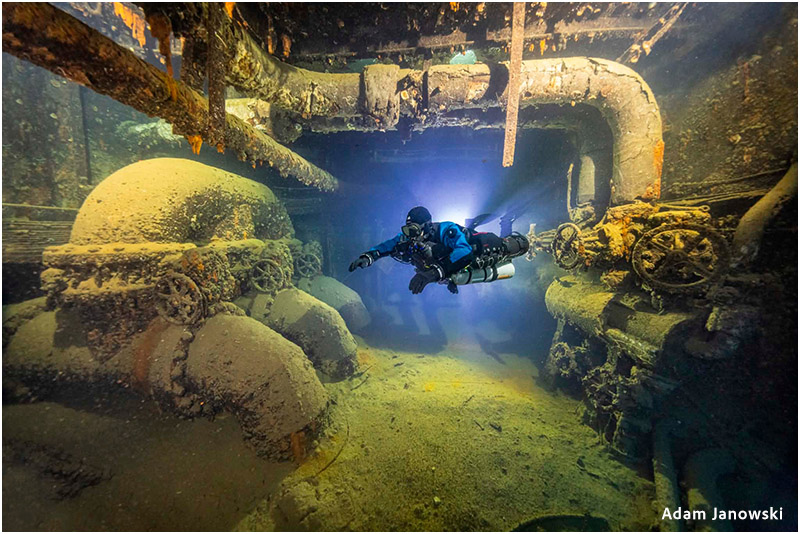
Adam Janowski, 30, is originally from Northern Kentucky and now lives in Slovakia. He's been diving for 15 years, seriously for the last four and a half, moving from cave and sidemount training into dual sidemount rebreathers. He is an active member of the Liberty Divers Club, but his main focus is on long cave penetrations and deep wreck dives.
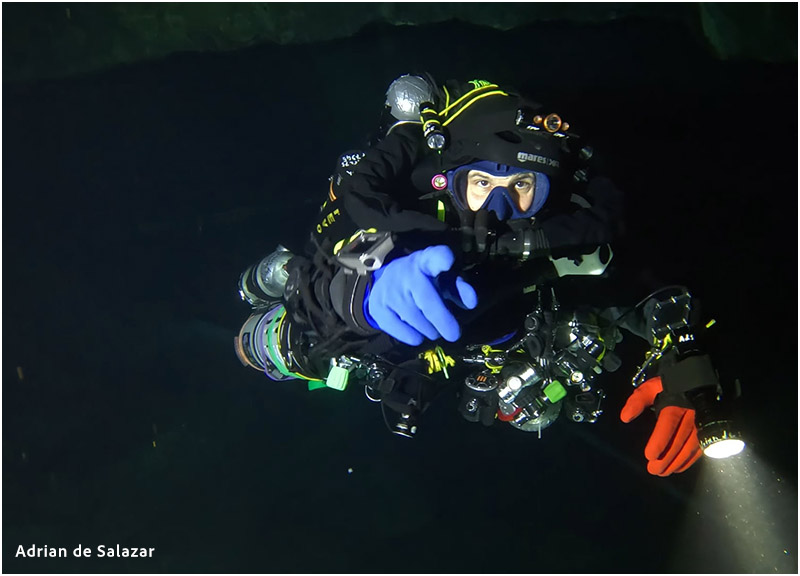
Adrian de Salazar is half Peruvian, half German, raised in Germany, where he works in strategic procurement in healthcare. He started diving in 2015 and rebreathers in 2021, settling on a back-mounted Revo paired with a sidemount T-Reb. A member of COBRA Divers alongside Daniel Lee, he co-authored their dual CCR handbook and is known for his active Instagram and YouTube presence.
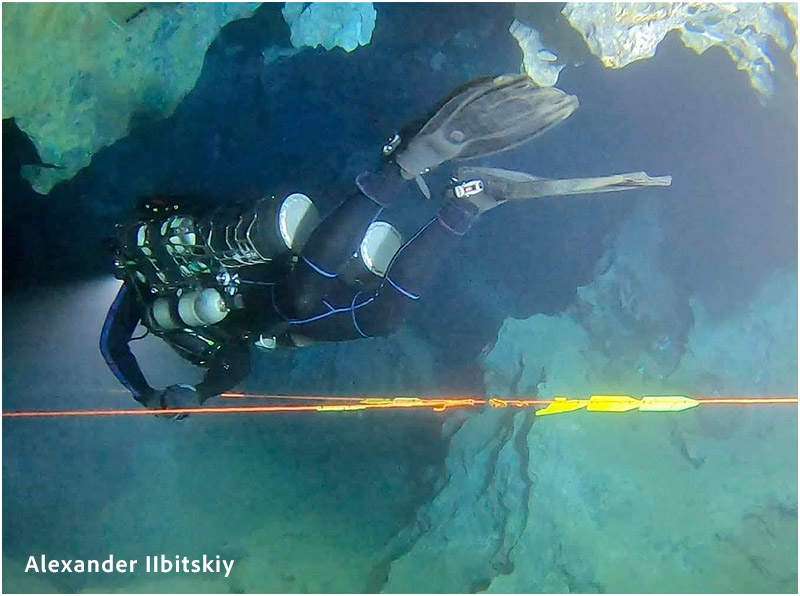
Alexander Ilbitskiy, 55, was born in Zhytomyr, Ukraine, and works in commercial transport. Diving since 2001, he moved into cave exploration after relocating to Spain in 2015, where he now dives Cueva del Moraig, a 20+ km cave system. He has used double sidemount rebreathers since 2018, typically diving solo on long 4-6 hour dives.
Anton Zuchkov is a Ukrainian-by-origin cave explorer based in Portugal, leading exploration with his team, SAGA. He's also a technology entrepreneur who co-founded SmartDive company, the manufacturer of the S7 CCR, a compact sidemount rebreather, and is one of Europe's first certified dual-rebreather instructors. He shares his exploration work on his YouTube channel, Cave Diving Portugal.
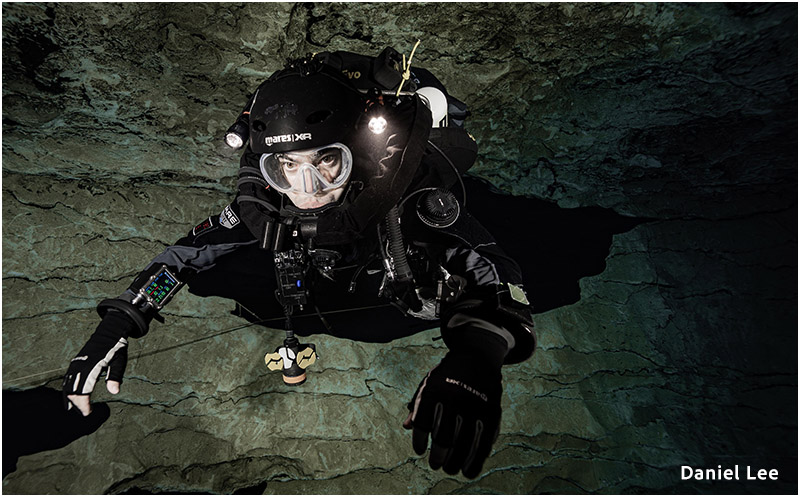
Daniel Lee co-founded COBRA Divers (Cave Operations Bailout Rebreather Association), a Germany-based team known for rigorous, risk-analysis-driven dual CCR procedures. A serial entrepreneur now working in the space industry, he dives a back-mounted Revo with a side-mounted T-Reb on cave and mine-mapping projects.
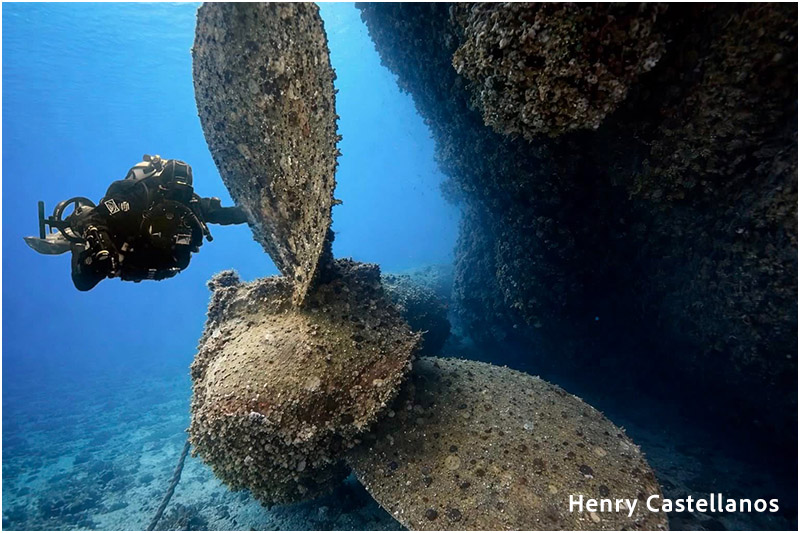
Henry Castellanos, known online as "Señor Scuba," lives in Fort Lauderdale, Florida, and makes CCR technical diving videos focused on WWII wrecks. He's also a commercial airline captain and Boeing test pilot. Qualified on about ten rebreather models, he has pushed dual-CCRs to depths of 210 meters and teaches technical diving.
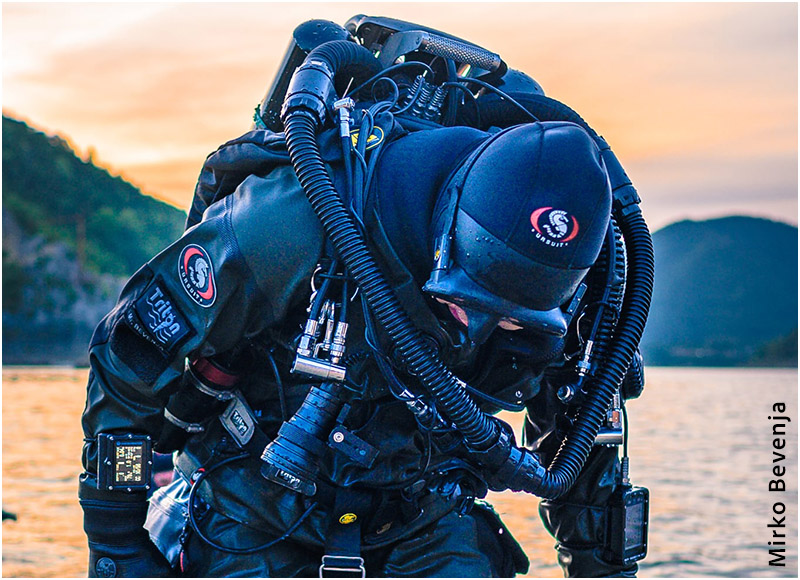
Mirko Bevenja is a technical diving instructor trainer based in Belgrade, Serbia. His diving career began spearfishing in Montenegro and progressed through Adriatic wreck diving and early rebreathers before he moved into mCCRs, including a self-built design called the Armorfish. He now dives Poseidon, Armorfish and KISS Sidekick rebreathers on deep wreck and cave projects.
Valentino Cambareri, from Turin, Italy, works as an electronic technician in the automotive industry and collaborates with dive shop Tech Evolution in Brescia. Since starting in 2018, he's logged over 500 technical open-circuit dives and 1,000+ hours on rebreathers, including about 400 in dual-CCRs. He dives a dual sidemount rebreather setup in deep caves and wrecks.
Cedric "Vic" Verdier, originally from France, has been a Trimix, rebreather, and cave diving instructor trainer for several decaders. His interest in rebreathers and technical diving led him to push the limits of deep and cave exploration. He was the first to dive the wreck of the battleship HIJMS Yamashiro at -196m/645ft in the Philippines, and has explored numerous other deep wrecks worldwide, including the submarine Protée and the s/s Natal in France, and the HMS Manchester in Tunisia, as well as several sub-200m/650ft cave systems across Southeast Asia.