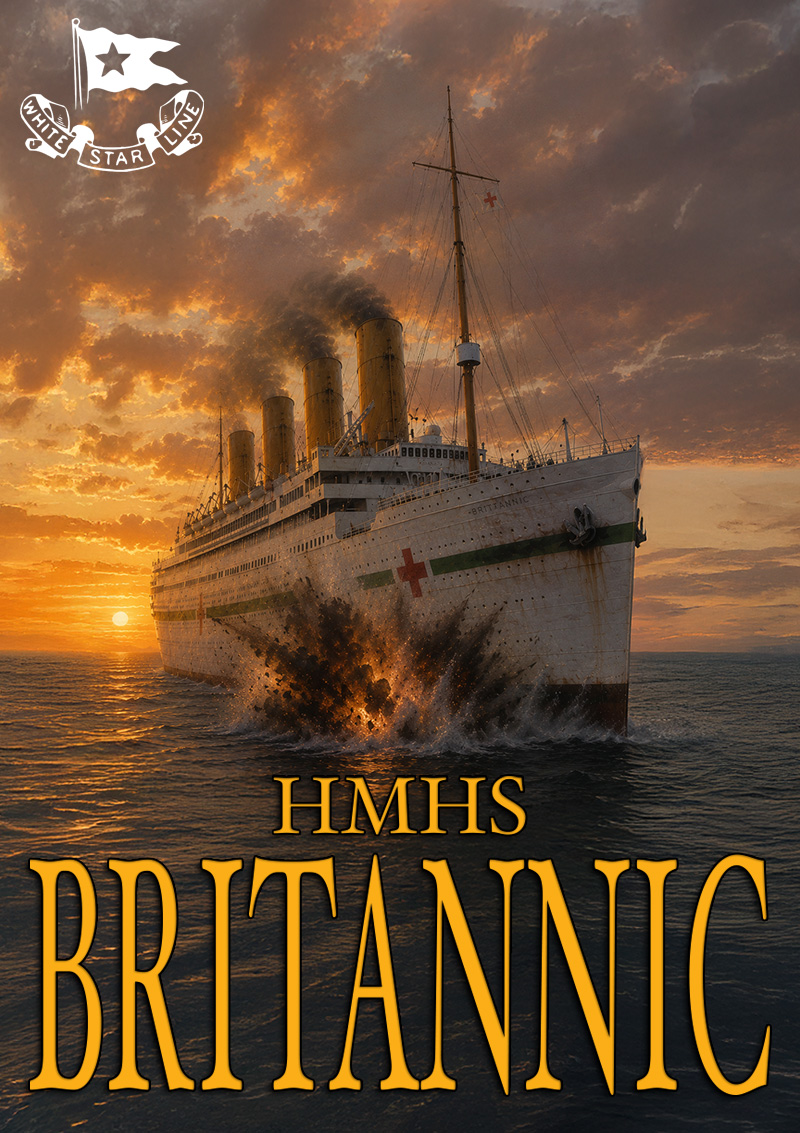
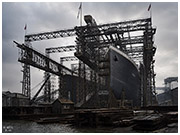
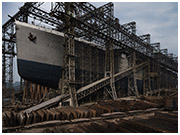
HMHS BRITANNIC - TITANIC'S SISTER SHIP


Diving HMHS Britannic: Precision, Depth, and the Reality of CCR Exploration

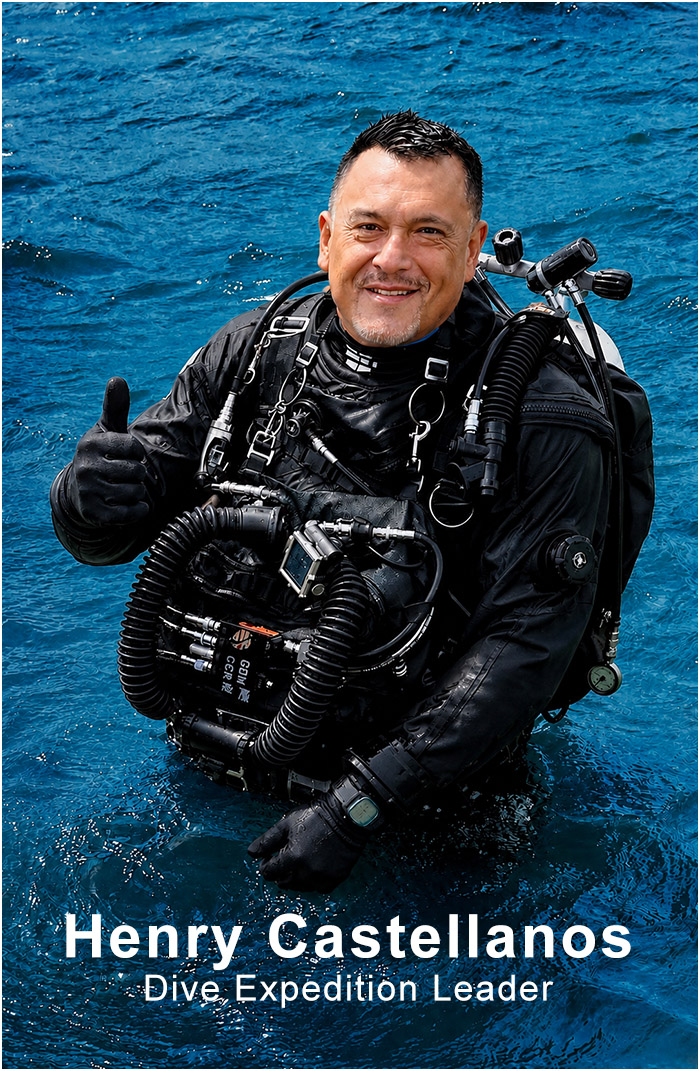
By Henry Castellanos - Dive Expedition Leader


Diving HMHS Britannic: Precision, Depth, and the Reality of CCR Exploration

There are wrecks, and then there is HMHS Britannic.

Resting on her side in the Kea Channel at approximately 120 meters (400 feet), Britannic represents one of the most demanding and rewarding objectives in technical diving. As the largest of the Olympic-class liners and sister ship to Titanic, she combines immense scale, historical significance, and operational complexity in a way few wrecks in the world can match.

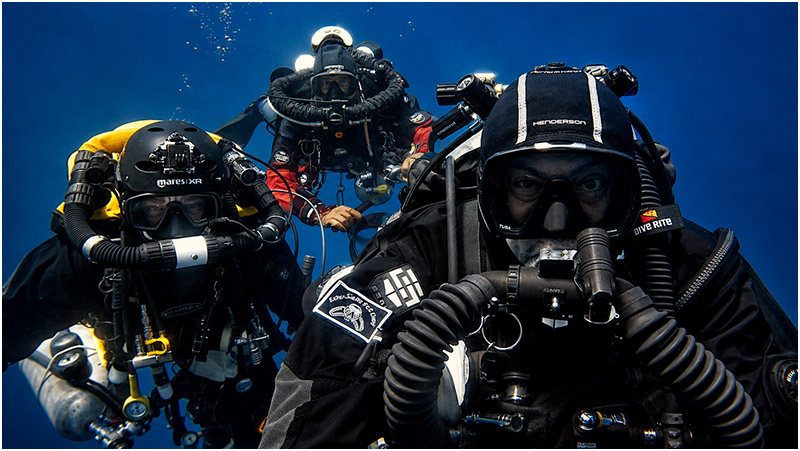
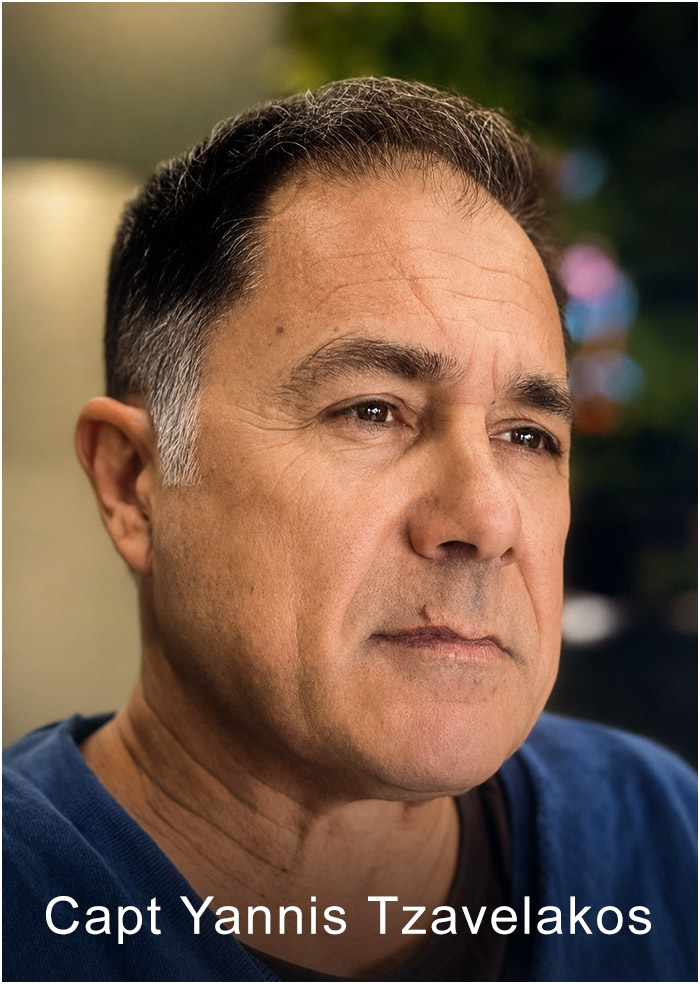
From May 13 through May 24, a closed-circuit rebreather expedition was conducted to explore Britannic and several additional historic wrecks in Greece. The expedition was led by Henry Castellanos, widely known through his professional platform Señor Scuba, and was carried out under the operation of Kea Divers, led by owner Yannis Tzavelakos.

The expedition team was composed of highly experienced technical divers, each contributing a specialized skill set essential for dives of this magnitude.


As expedition leader, Henry Castellanos was responsible for the overall planning, coordination, and execution of the dives. Through his Señor Scuba platform, Castellanos has established a reputation within the technical diving community for documenting deep wreck and cave expeditions with a focus on realism, discipline, and system-level understanding of closed-circuit rebreather diving.

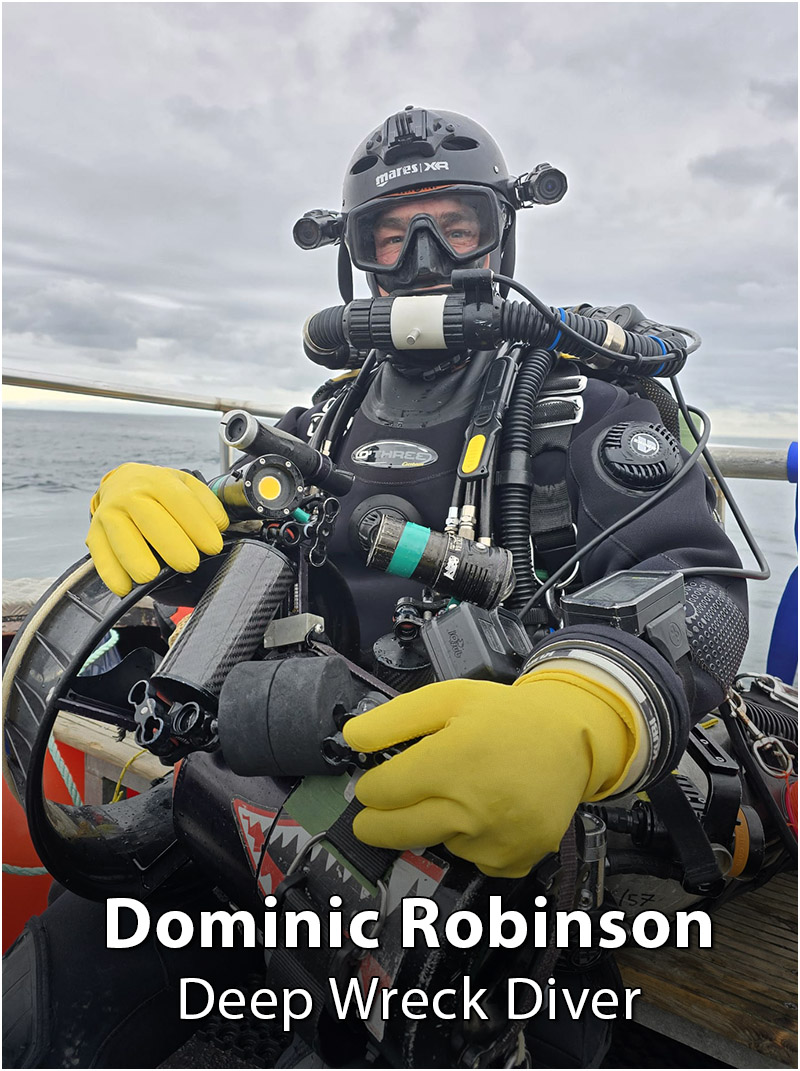
Joining the expedition was Dominic Robinson, recognized through his Deep Wreck Diver platform. Robinson’s work centers on disciplined wreck exploration and detailed documentation of historic dive sites. His methodical approach to navigation and dive execution contributed significantly to the team’s efficiency and precision throughout the expedition.

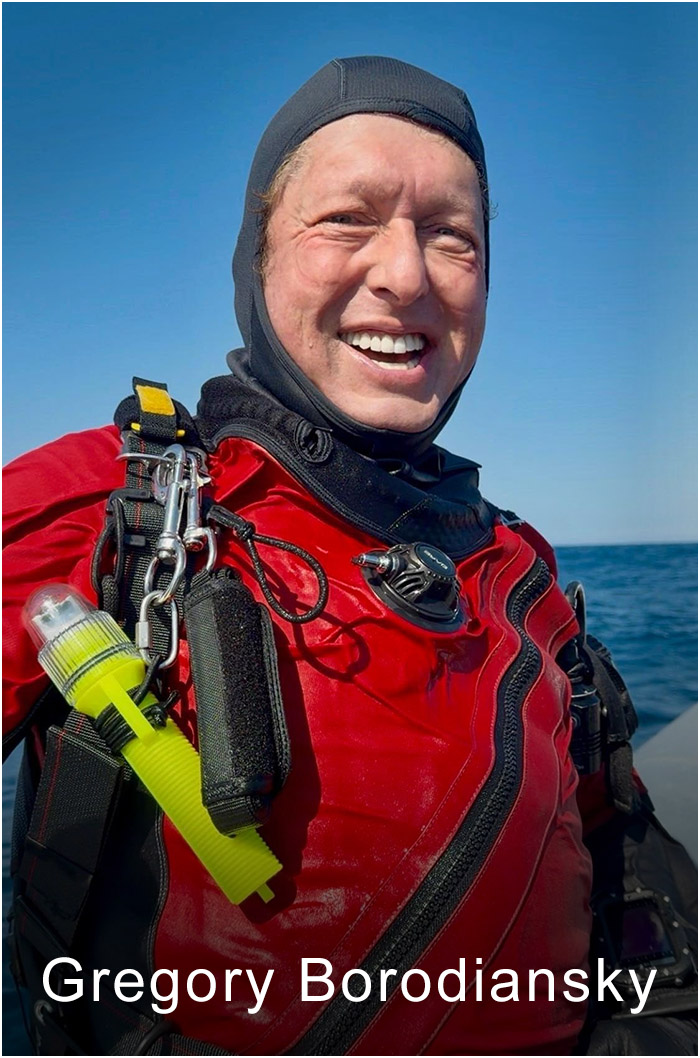
Gregory Borodiansky brought a unique and highly valuable dimension to the team, not only as an experienced closed-circuit rebreather diver but also as the developer and manufacturer of the GBM closed-circuit rebreather system.


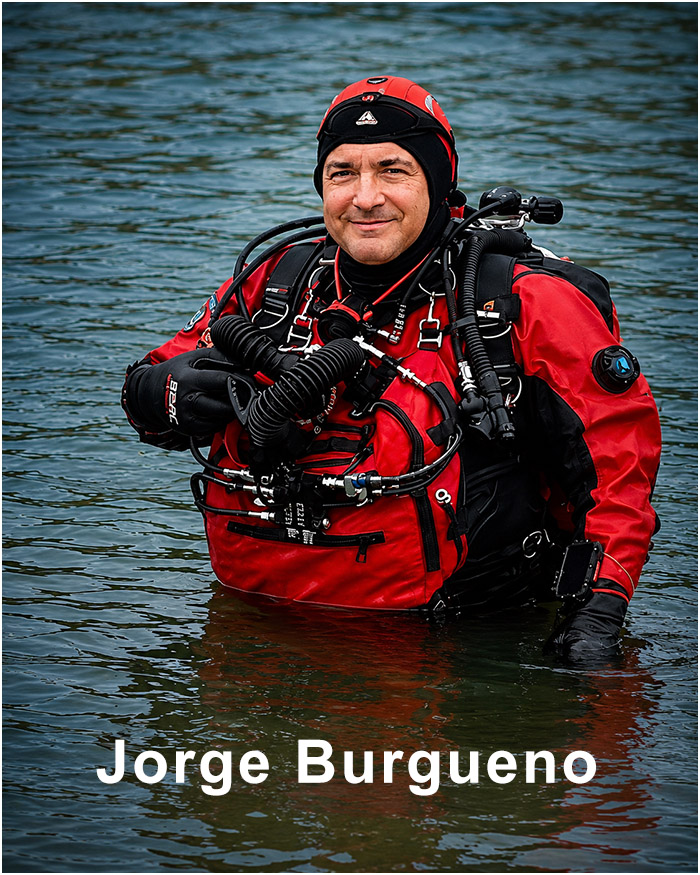
The expedition was further supported by Dr. Jorge Burgueño, who served as the dedicated medical support diver.

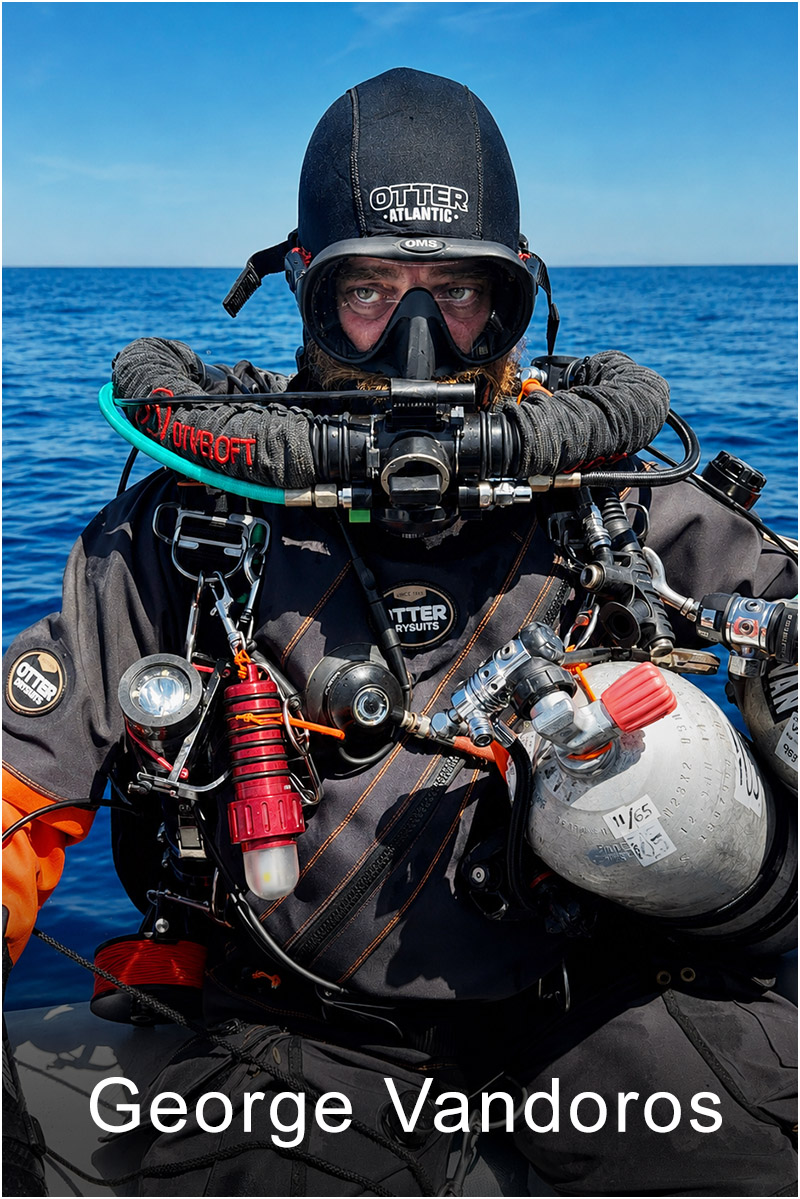
Guiding the team underwater was George Vandoros, serving as technical dive guide.

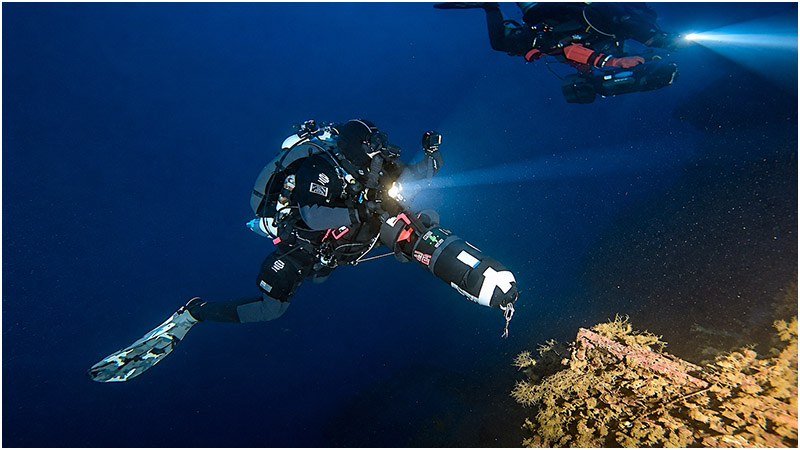
The expedition utilized multiple advanced closed-circuit rebreather systems, including the GBM CCR, AP Inspiration CCR, and Liberty CCR, all of which performed reliably throughout the expedition.

Over the course of the expedition, the team completed three dives on HMHS Britannic, two dives on the SS Burdigala, and one dive on the Patris wreck, accumulating more than sixteen hours of total dive time.

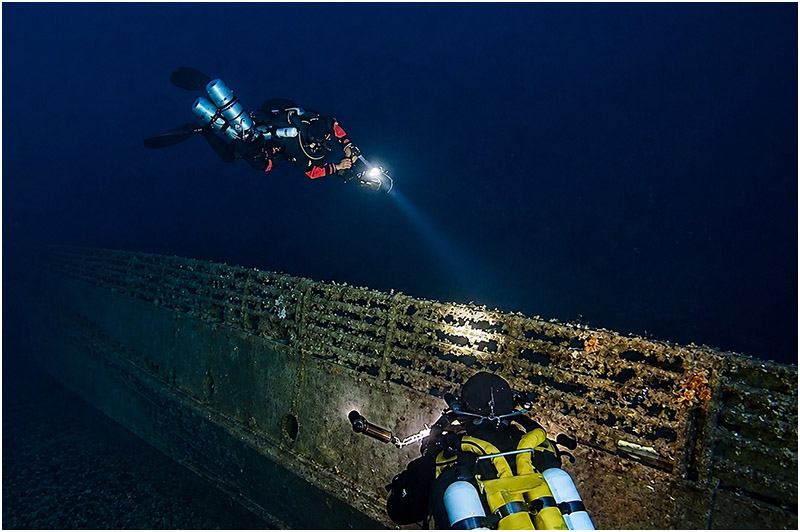
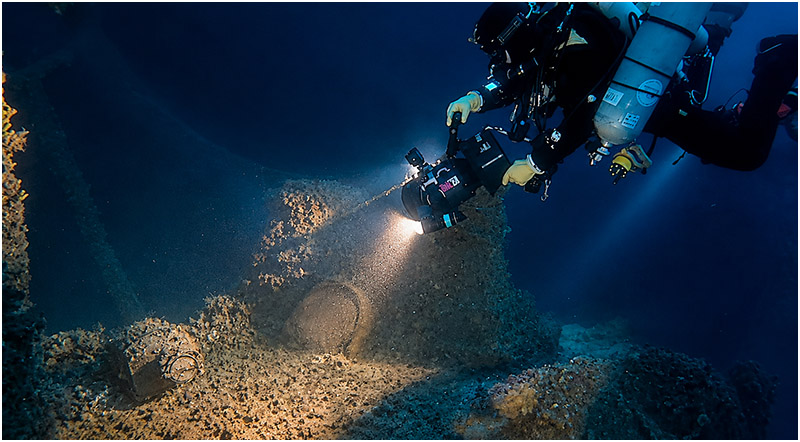
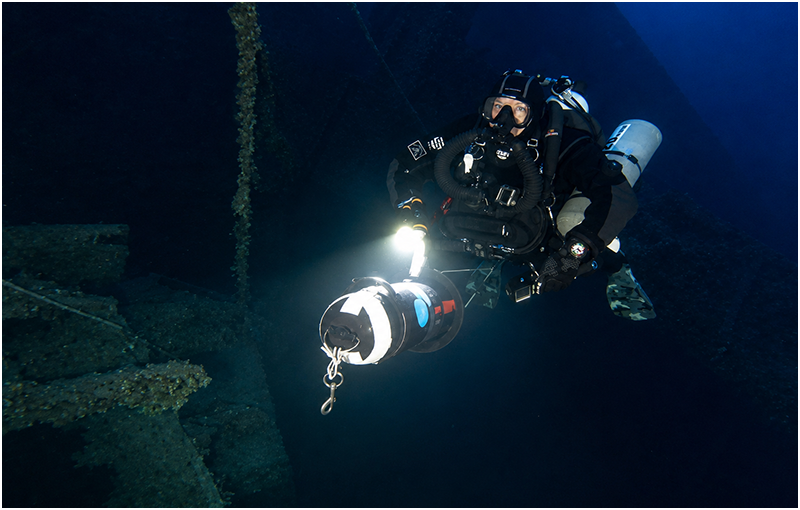
The Britannic dives were carefully structured to allow for systematic exploration of the wreck, including the stern, bow, bridge, and a full promenade deck traverse of approximately 1,600 feet.

The success of the expedition was the result of meticulous planning and disciplined execution. No equipment failures or diver-related issues were encountered.

Kea Divers demonstrated exceptional professionalism throughout the expedition, including conducting regular emergency drills to ensure readiness at all times.


Expeditions of this nature highlight the intersection of history, technology, and human performance at the highest level. HMHS Britannic demands respect, preparation, and precision.

For those capable of meeting those demands, it offers an experience that remains unmatched in the world of technical diving.

Expedition Inquiries

For divers interested in conducting a technical expedition to HMHS Britannic or other wrecks in Greece, Kea Divers offers a highly professional and well-prepared operational platform. Inquiries can be directed to owner Yannis Tzavelakos at +30 697 343 0860 or via email at info@keadivers.com.


Video of the HMHS Brittanic by Senor Scuba.


Video of the RMHS Britannic by Deep Wreck Diver
Contact Deep Wreck Diver


Britannic: The Last Voyage of the White Star Giant

Text and Illustrations by Curt Bowen


There are ships that vanish into history, and there are ships that refuse to disappear.

HMHS Britannic belongs to the latter.

Even now, more than a century after she slipped beneath the waters of the Aegean Sea, the great White Star liner continues to haunt the imagination with a strange and powerful grip. Perhaps it is because she was the younger sister of Titanic. Perhaps it is because she was considered the safest ship of her age and yet still met disaster. Or perhaps it is because Britannic vanished not in the black fury of the North Atlantic, but beneath the warm blue skies of the Mediterranean on a calm and beautiful morning while the world was at war.

And still, lingering beneath the story like a shadow beneath deep water, remains the question no one aboard could answer with certainty.

What exactly destroyed Britannic that morning?

Was it a mine laid silently by a German submarine days before? Or did a torpedo strike the hospital ship directly beneath the surface of the sea?

The debate has endured for generations.

But on the morning of November 21, 1916, the men and women aboard Britannic had little time to concern themselves with theories. They were occupied instead with survival.

The dawn had risen quietly over the Kea Channel.

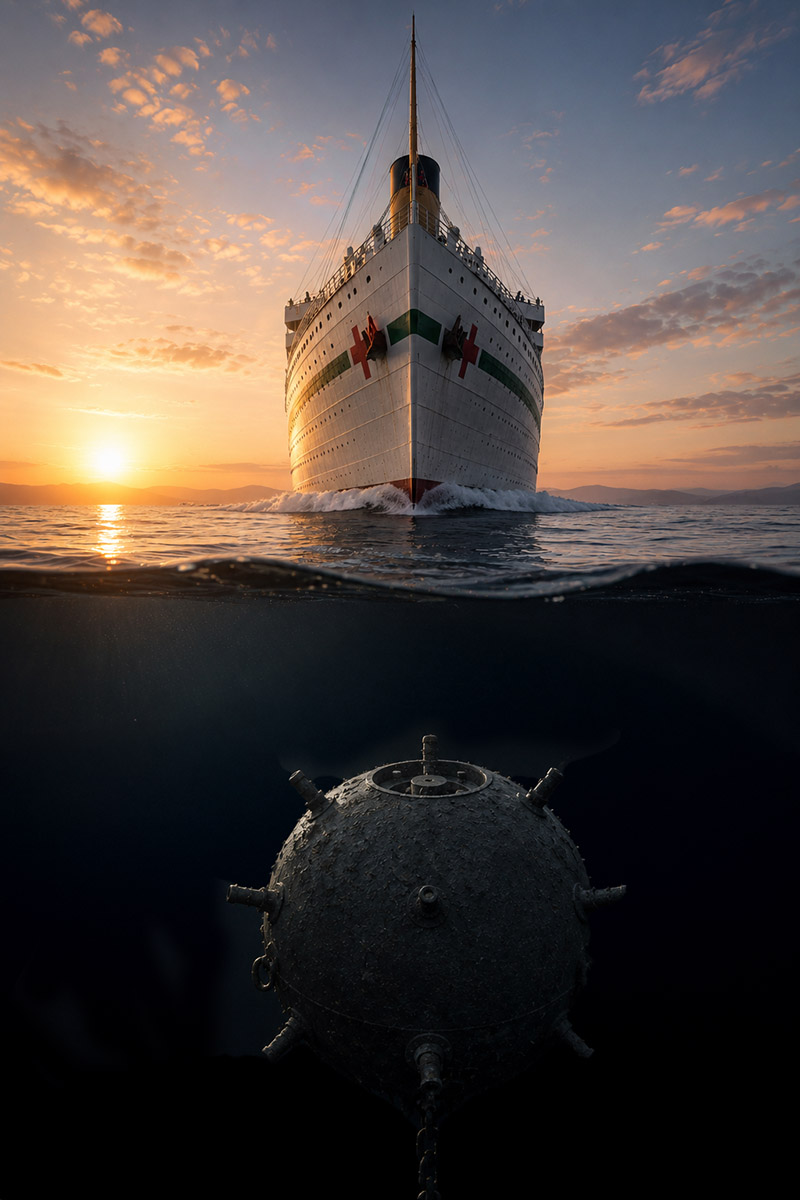
To the east, the Greek islands stood in dark silhouette beneath a pale red sky as sunlight spread slowly across the Aegean. The sea carried only a gentle swell, the sort that barely disturbed a ship of Britannic’s enormous size. She moved through the water with the effortless authority of a floating city, her great white hull gleaming beneath the morning light. Broad green hospital stripes ran the length of her sides, interrupted by giant red crosses that identified her protected status under international law.

Smoke drifted lazily from her four funnels. Deep below the waterline, the engines turned with steady mechanical confidence.

There was little sense of danger aboard the ship.


Nurses crossed polished corridors preparing breakfast for wounded soldiers expected later in the voyage. Crewmen washed decks damp with sea spray. Officers on the bridge watched the calm horizon unfold ahead of them beneath the warming Mediterranean sun.

Britannic was not merely another ship. She was the largest vessel afloat in the world.

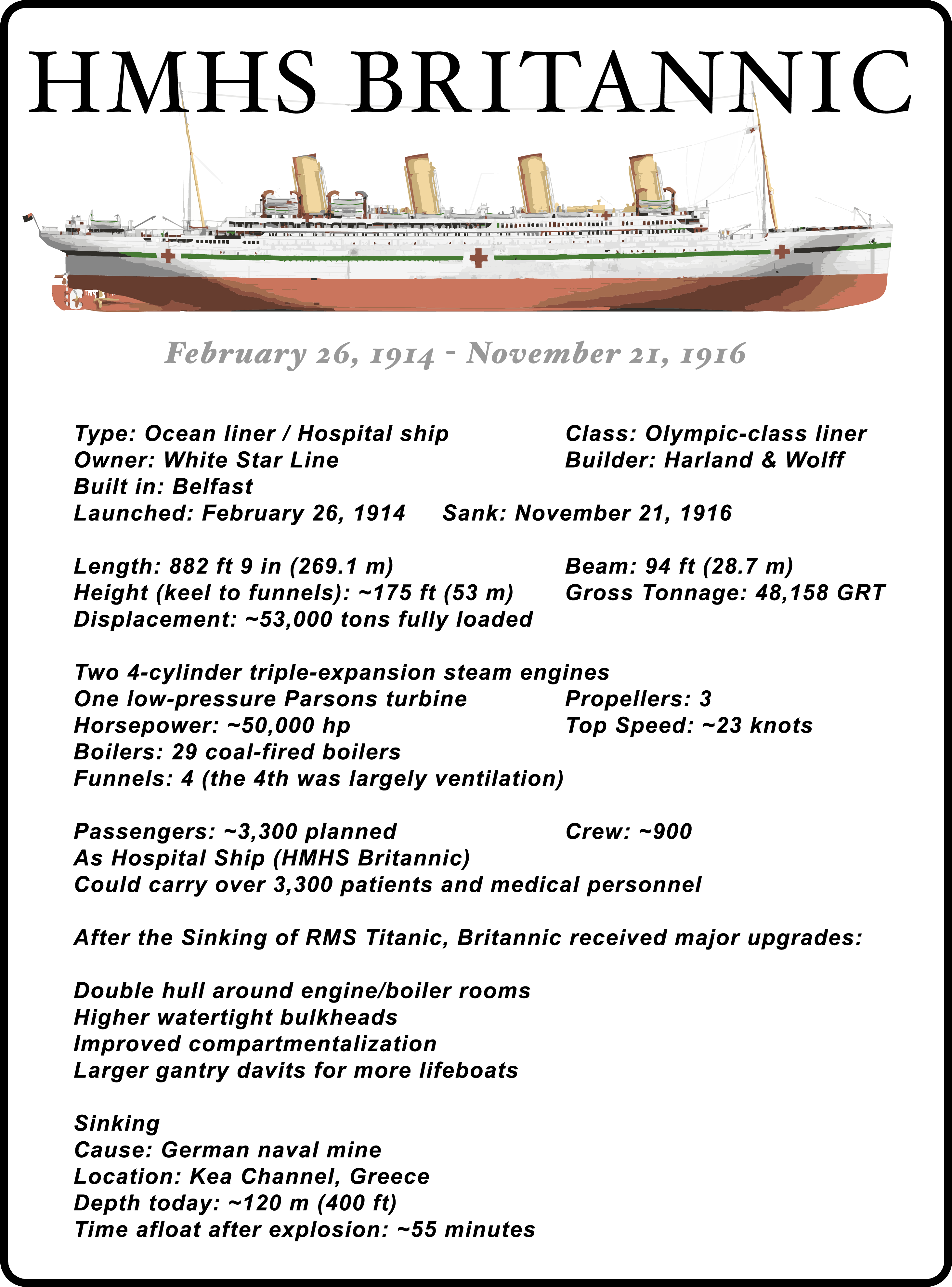
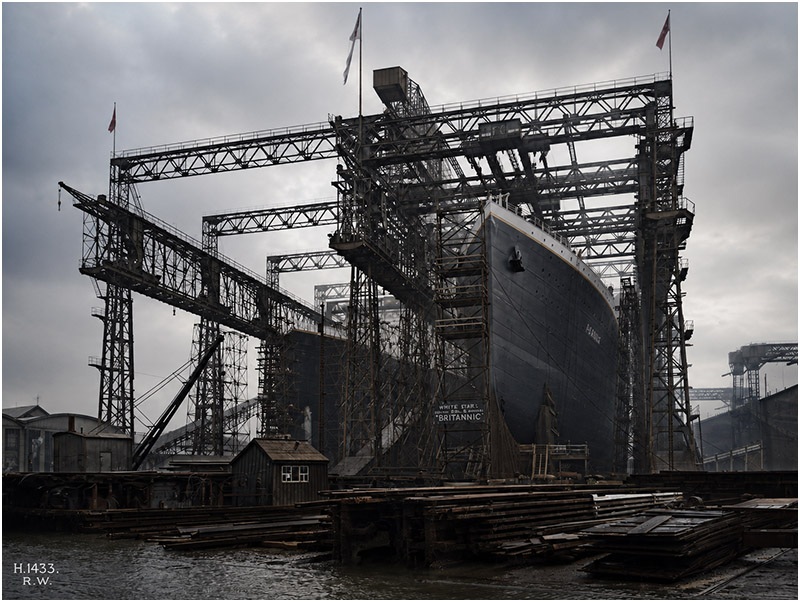
Built by Harland & Wolff in Belfast for the White Star Line, Britannic represented the final evolution of the Olympic-class liners. Her sisters, Olympic and Titanic, had already become legends. Titanic, of course, had become something darker than legend after her catastrophic loss in April 1912.

That disaster shaped Britannic before she was ever completed.

Her designers strengthened her hull. Watertight bulkheads were extended higher through the ship. A double hull surrounded her boiler and engine rooms. Massive gantry davits capable of launching lifeboats from either side were installed across her decks. White Star Line intended Britannic to erase the memory of Titanic’s fatal weaknesses.

She was supposed to be unsinkable in every practical sense.

But war has a way of mocking human certainty.

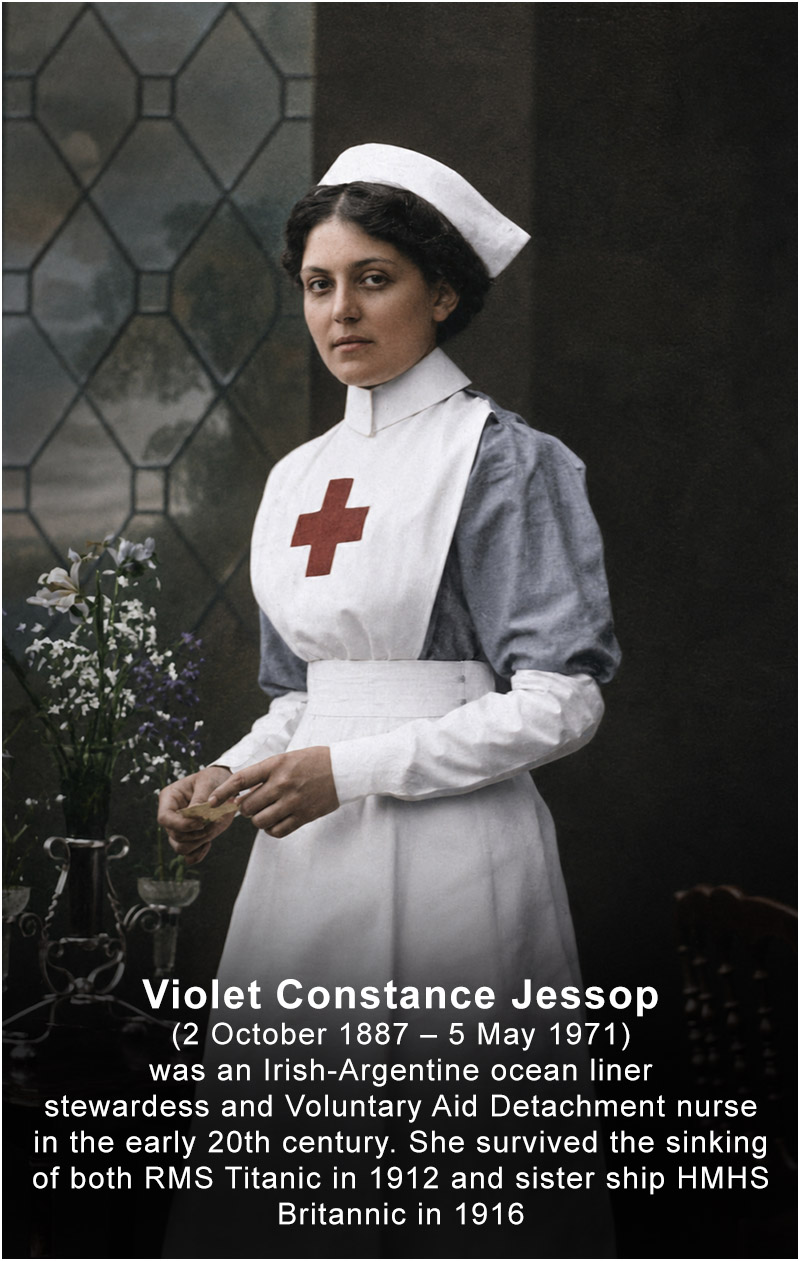
When World War I consumed Europe, Britannic was requisitioned before she could ever carry paying passengers. Her elegant interiors were transformed into hospital wards, operating theaters, and recovery rooms. Luxury gave way to utility. Yet despite the conversion, the ship retained her immense beauty.

At 882 feet in length and more than 48,000 tons, Britannic possessed the proportions of a steel cathedral. Even painted white as a hospital ship, she carried the unmistakable grandeur of the White Star Line.

And on that November morning, she appeared invincible.

At approximately 8:12 a.m., the illusion shattered.

The explosion came low on the starboard side near the forward boiler rooms.


Survivors would later describe it as a deep, violent concussion that rolled through the hull like thunder trapped inside steel. The deck trembled beneath their feet. Bulkheads groaned. Steam burst screaming from ruptured pipes. Crockery crashed across dining rooms while men below deck were thrown violently against machinery and ladders.

Then came the sound no sailor ever forgets — the roar of seawater entering a wounded ship.

Within seconds, the forward compartments began flooding.

But confusion followed immediately behind the explosion.

Some aboard believed Britannic had struck a mine. German submarine U-73 was known to have laid mines in the Kea Channel only days earlier. Yet others insisted the blast felt too violent, too concentrated. Rumors spread quickly through the chaos that a torpedo had struck the ship beneath the surface.

No periscope had been seen. No submarine was spotted. No German commander formally claimed a torpedo attack.

And yet the uncertainty endured.

Even now, resting on the seabed more than 400 feet below the surface, Britannic guards her secret well.

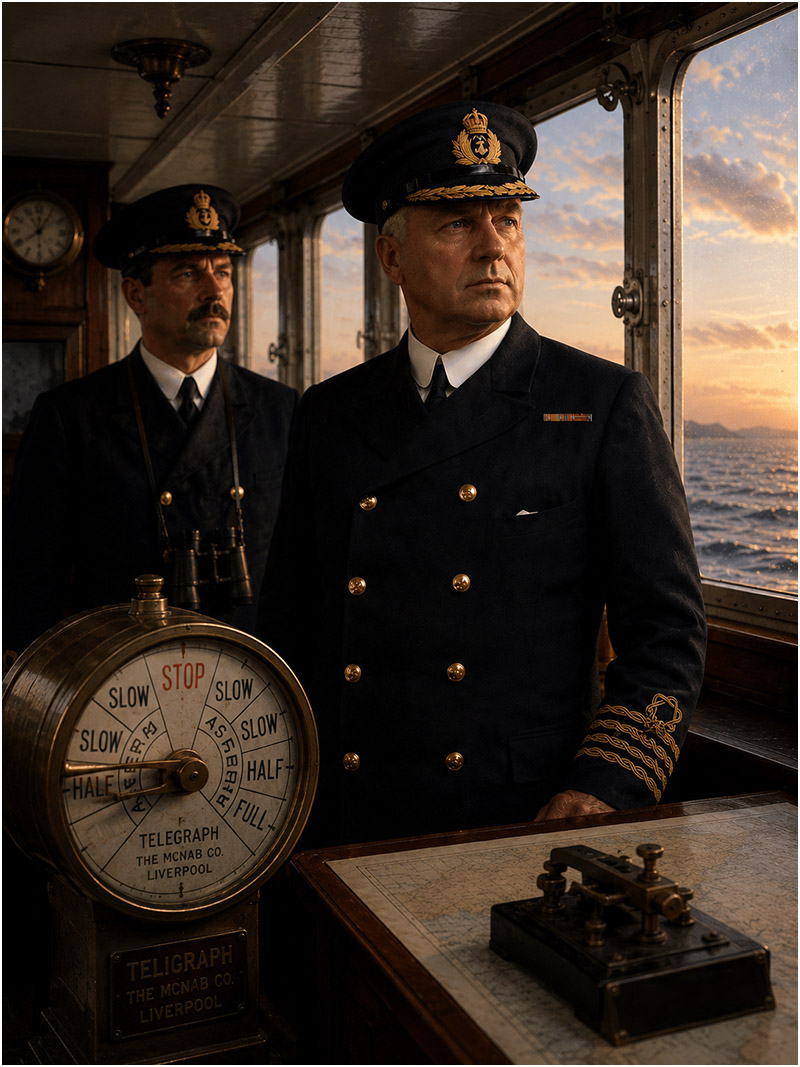
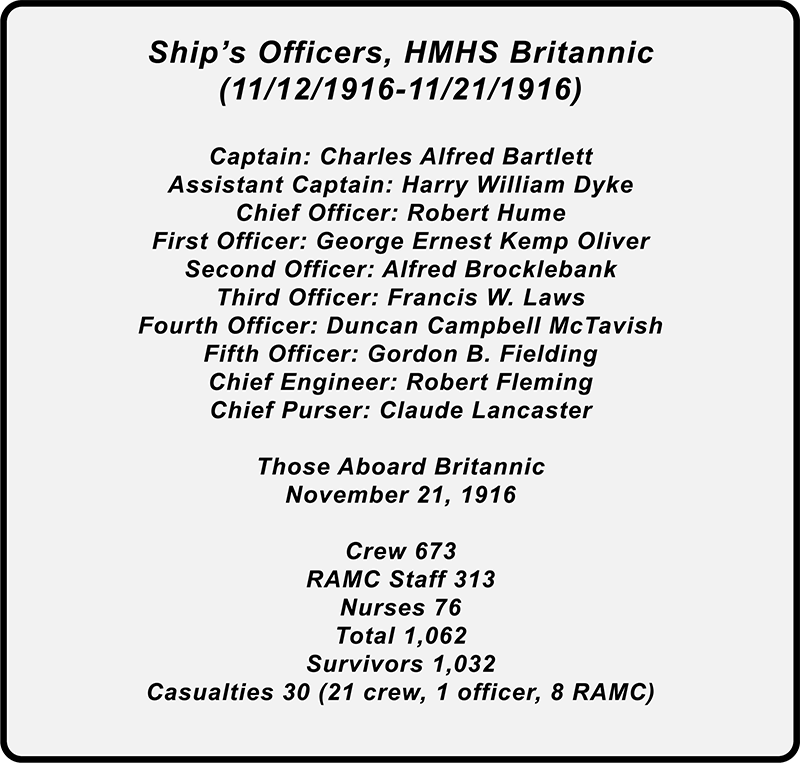
Captain Charles Bartlett reacted instantly.

Unlike Titanic, Britannic did not suffer from confusion or hesitation in the opening moments. Her crew was disciplined, her officers experienced, and her emergency systems functioned rapidly. Watertight doors slammed shut throughout the vessel as engineers rushed to assess the damage.

At first, there was reason for hope.


Britannic had been specifically designed to survive catastrophic flooding. The ship remained stable in the early minutes after the explosion, and Bartlett believed he might still save her by running her aground on the nearby island of Kea.

It was a desperate but logical decision.

The engines continued driving the giant liner forward while crew members prepared lifeboats along the slanting decks. But beneath the surface, unseen forces had already doomed the ship.

Because the weather was warm that morning, many portholes along the lower decks had been opened to ventilate the hospital wards. As Britannic developed an increasing list to starboard, seawater reached those open portholes and began pouring into the ship beyond the protection of the watertight compartments.

The flooding spread relentlessly aft.

Compartment after compartment vanished beneath the sea.

The list grew steeper.

Furniture slid across decks. Dishes shattered. Nurses struggled to move through corridors that tilted more sharply by the minute. The beautiful order of the ship began slowly transforming into mechanical chaos.

Then came the fatal mistake.

Fearing the ship would sink before evacuation could be completed, several crewmen launched lifeboats without orders while Britannic’s propellers were still turning beneath the stern.

The sea immediately pulled the boats backward.

Witnesses watched helplessly as two lifeboats drifted directly into the giant bronze propellers. The spinning blades shattered the wooden craft instantly, killing many aboard in scenes of terrible violence.

It was the darkest moment of the disaster.

And still Britannic fought to remain afloat.

For nearly fifty-five minutes, the great White Star liner resisted the sea.

Unlike Titanic, there was no freezing darkness, no towering icebergs, no endless Atlantic night. Britannic died beneath sunlight and blue sky, surrounded by islands and calm water so deceptively peaceful that the scene seemed almost unreal against the violence unfolding aboard the ship.

At approximately 9:07 a.m., the end came swiftly.

The bow slipped beneath the surface first. Seawater surged across the forward decks as the stern lifted slowly into the air, exposing the immense propellers one final time above the sea. Then the ship rolled heavily onto her starboard side and disappeared beneath the waters of the Kea Channel.

The largest ship lost during the First World War was gone.

Remarkably, more than one thousand people survived.

Only thirty lives were lost — a tragedy made smaller by calm weather, daylight conditions, nearby rescue vessels, and lessons learned after Titanic. Yet Britannic’s sinking carried a cruel irony impossible to ignore.

The very ship designed to correct Titanic’s flaws had still succumbed to the sea.

Today, Britannic rests on her starboard side at a depth of roughly 120 meters in the clear blue waters of the Aegean. Unlike Titanic, whose shattered remains lie scattered across the North Atlantic abyss, Britannic remains hauntingly intact.

And perhaps that is why her story endures so powerfully.

Not because she was Titanic’s sister.

Not because she was the largest ship of her age.

But because Britannic represents something deeper — humanity’s eternal belief that engineering can conquer nature, and the sea’s timeless reminder that it cannot.

Somewhere in the silent waters off Kea, beneath layers of steel and coral and darkness, the truth of what struck Britannic still rests hidden.

 
ˆ
 
BRITANNIC CAPTAIN, CREW and STATS
 
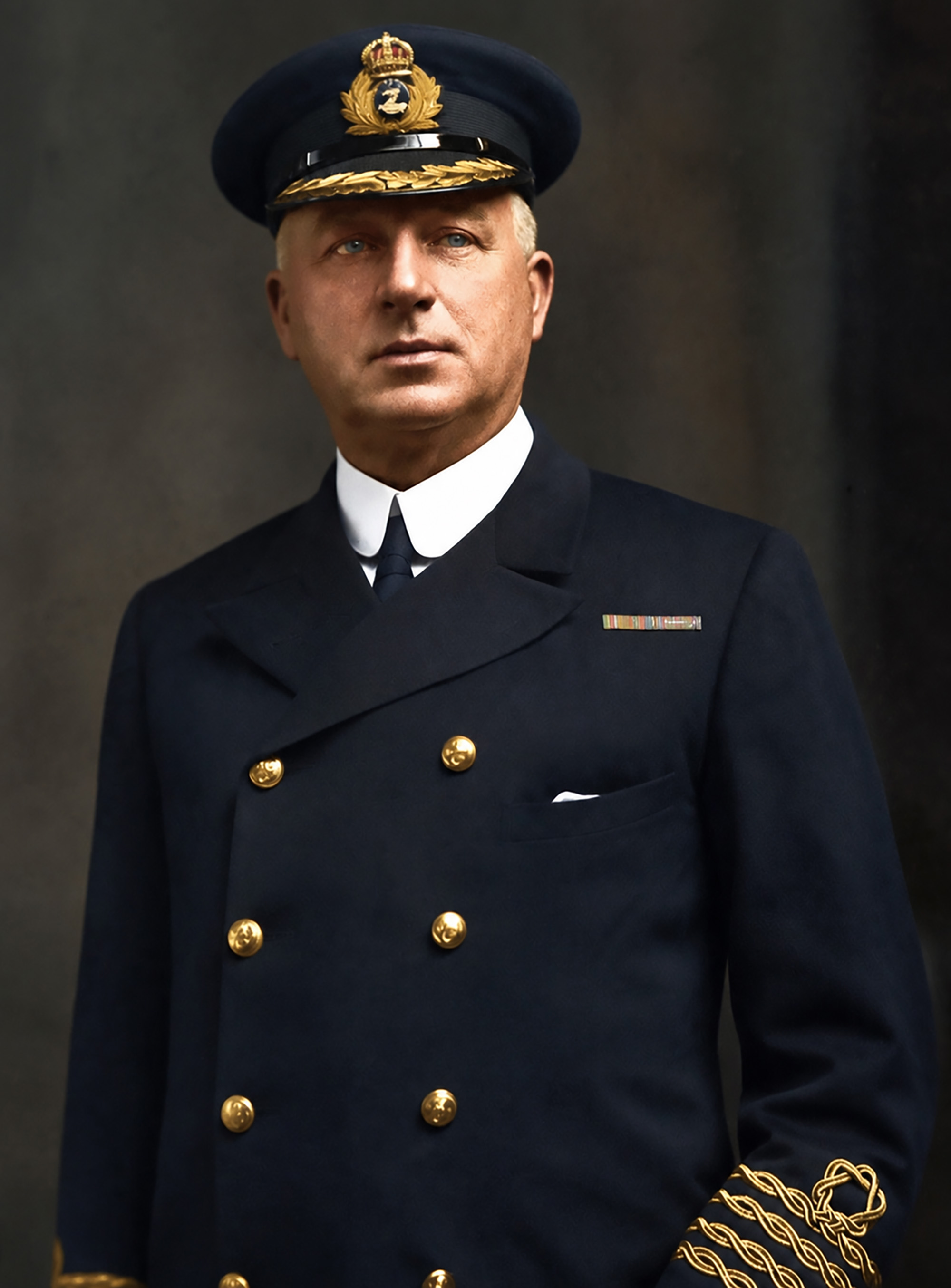
Captain Charles Alfred Bartlett (1868–1945) was the veteran White Star Line master who commanded HMHS Britannic during her final voyage in World War I. Known for his calm leadership and decisive action, Bartlett attempted to beach the stricken hospital ship after it struck a German mine in the Aegean Sea on November 21, 1916. His efforts helped save more than 1,000 lives, preventing an even greater maritime disaster.


Britannic Archive Images

(click image to open)


BRITANNIC 2025 DIVE TEAM


All Materials © Curt Bowen 2024