One of the greatest rewards of my photography has been contributing articles to scuba magazines and dive websites, where I've been able to combine storytelling with imagery. I enjoy creating features that blend compelling photographs with engaging text, giving readers a genuine sense of a destination—hopefully inspiring them to think, "I'd love to experience that for myself."
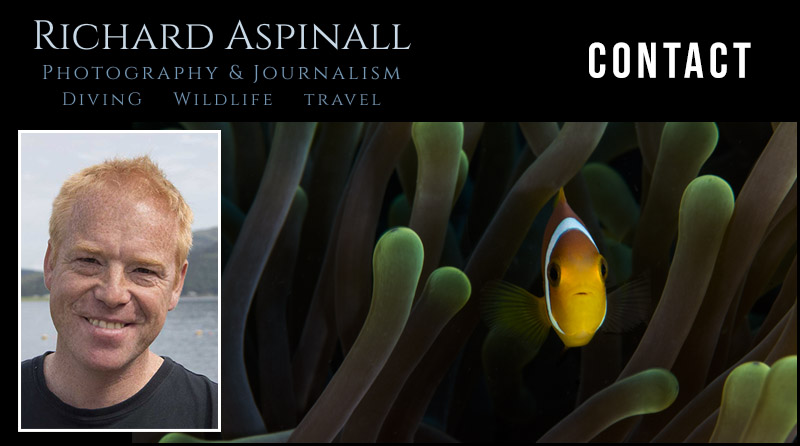
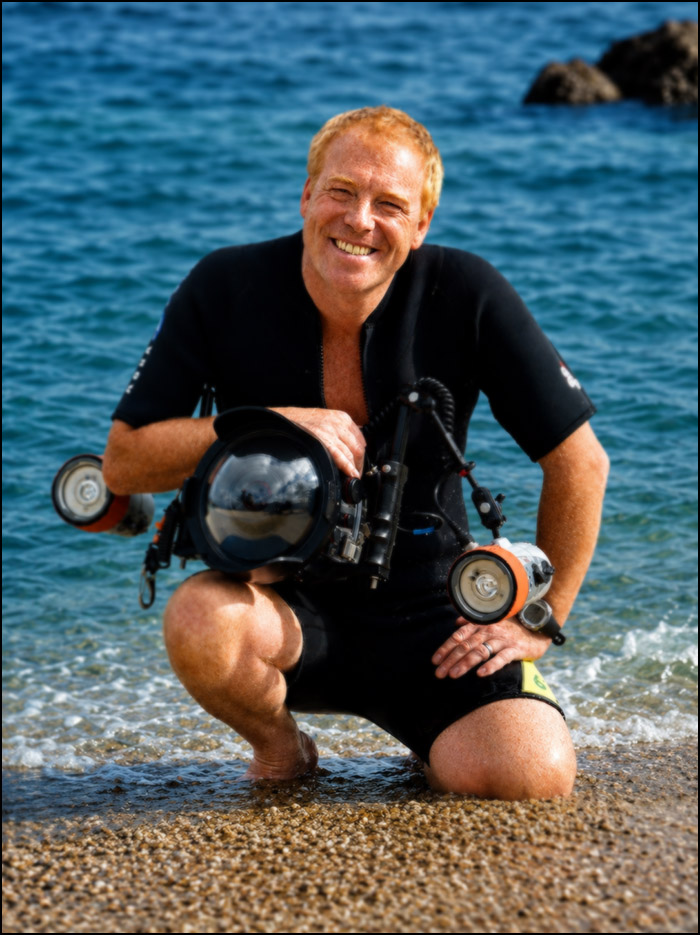
My fascination with the underwater world began during family holidays along England's northeast coast in the 1970s. Hours spent exploring rocky tide pools in search of starfish, crabs, and small fish sparked a lifelong curiosity about marine life. The remarkable diversity and intricate beauty of these coastal ecosystems ultimately led me to study conservation biology at university.
After graduating, I spent several years working in land management, caring for parks and nature reserves. While the job was rooted in conservation, it often involved managing people as much as wildlife. Later, I took the leap into freelance journalism, writing for national newspapers, regional publications, and magazines. It was a rewarding career creatively, though not always financially.
Over time I began securing assignments for dive magazines, and for the past decade that work has allowed me to travel extensively in pursuit of underwater stories. I've never become wealthy doing it—far from it—but the opportunity to explore the world's oceans, meet remarkable people, and document extraordinary places has been reward enough.
Today I live in a quiet, rural corner of southern Scotland, where I continue to plan four or five diving expeditions each year. My next adventure will take me to the legendary reefs of Raja Ampat, a destination I've long dreamed of photographing.
The Red Sea remains the region I've explored most extensively. For European divers, it offers an unmatched combination of accessibility, spectacular shipwrecks, and vibrant coral reefs that still retain areas of remarkable pristine beauty. Choosing a favorite dive site is difficult, but if pressed, Richelieu Rock in Thailand's Andaman Sea would top my list. As for my favorite overall diving destination, nothing has yet surpassed the unforgettable experience of Cocos Island, Costa Rica.
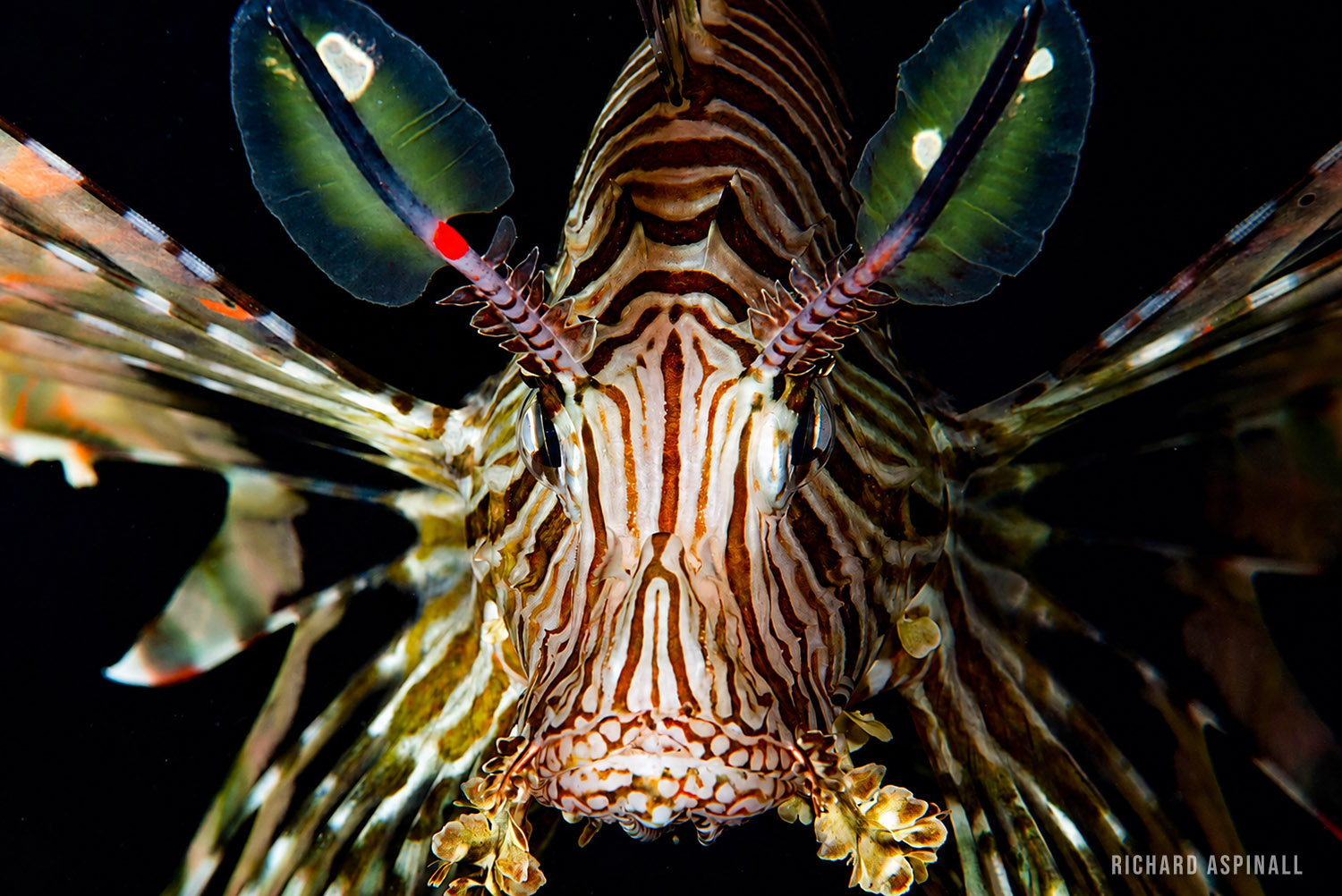
A brilliantly colored Common Lionfish (Pterois miles) hovers effortlessly above the reef in the Red Sea, Egypt. Armed with venomous spines and striking zebra-like bands, this iconic predator patiently stalks small fish and crustaceans among the coral formations. Native to the Red Sea and western Indian Ocean, the lionfish is one of the region's most recognizable—and photogenic—reef inhabitants.
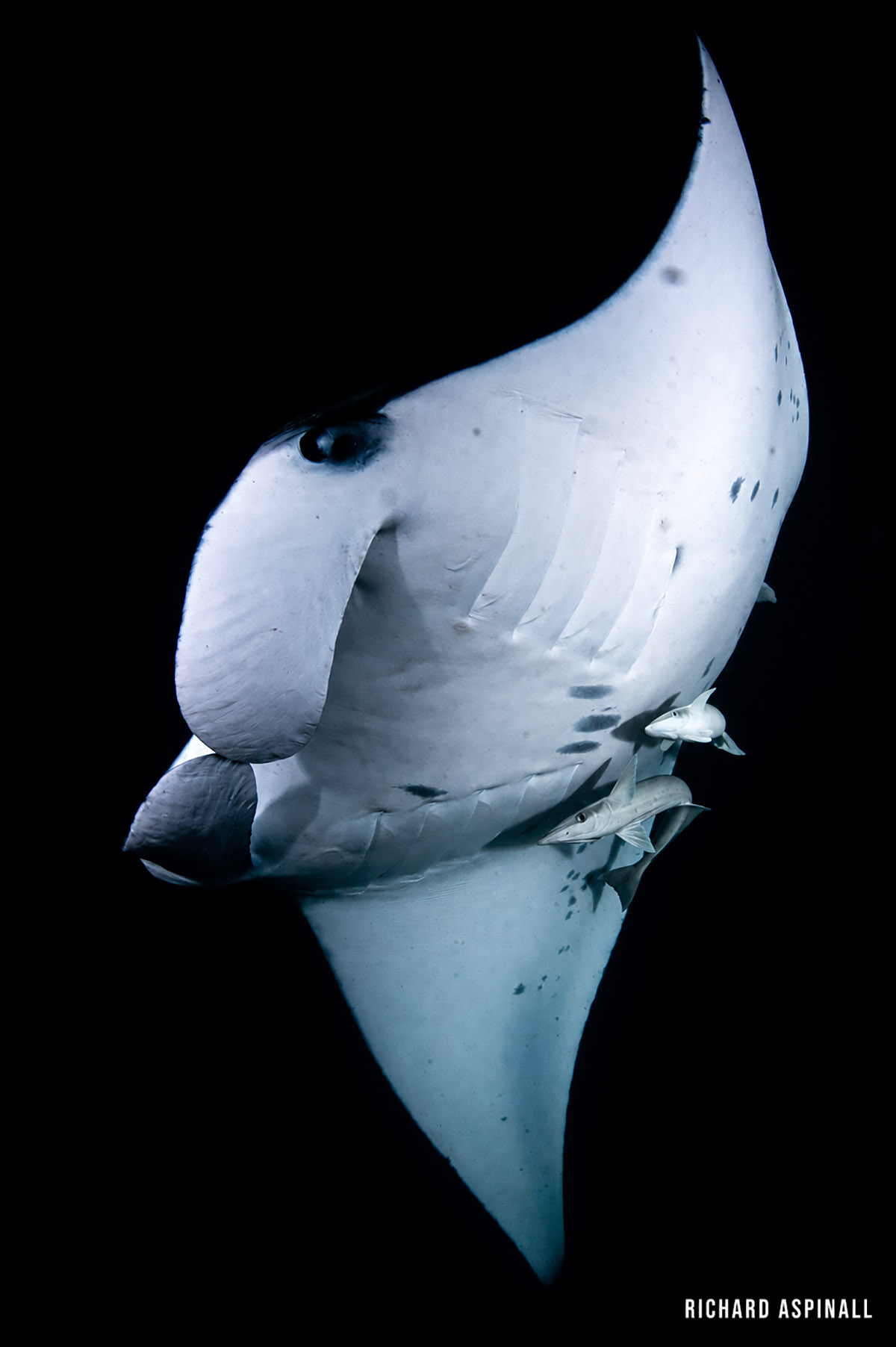
A graceful Reef Manta Ray (Mobula alfredi) glides effortlessly through the crystal-clear waters of the Maldives. With a wingspan reaching more than 5.5 meters (18 feet), these gentle giants frequent the Maldives' cleaning stations and plankton-rich channels, where divers can witness one of the ocean's most spectacular underwater encounters.
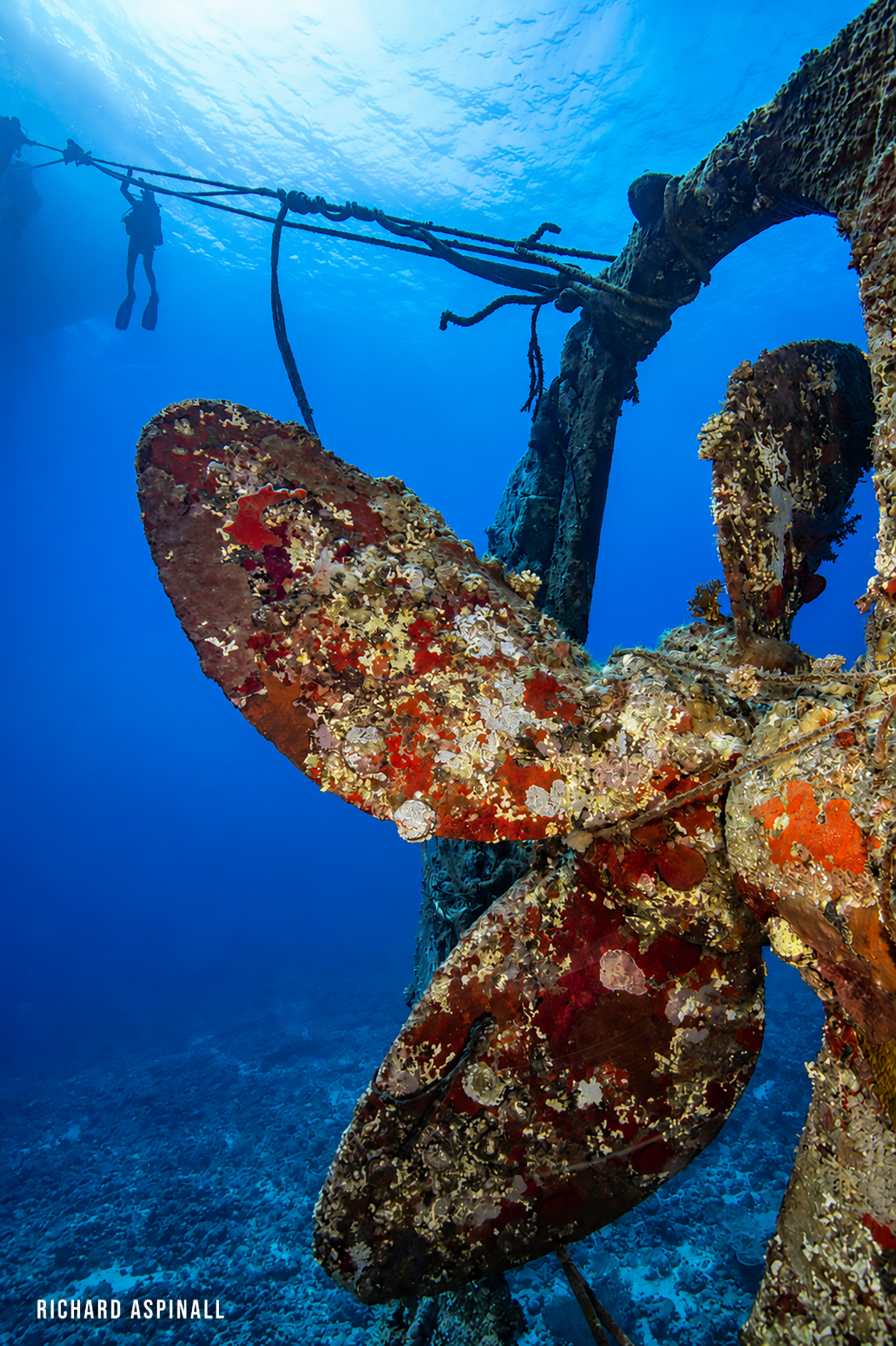
A diver explores the haunting remains of the SS Isola di Levanzo in the Red Sea, Sudan. Resting beneath the clear waters of the southern Red Sea, the Italian cargo steamer has become an artificial reef, its steel structure now encrusted with vibrant corals and surrounded by schools of reef fish, offering technical divers a captivating blend of maritime history and marine life.
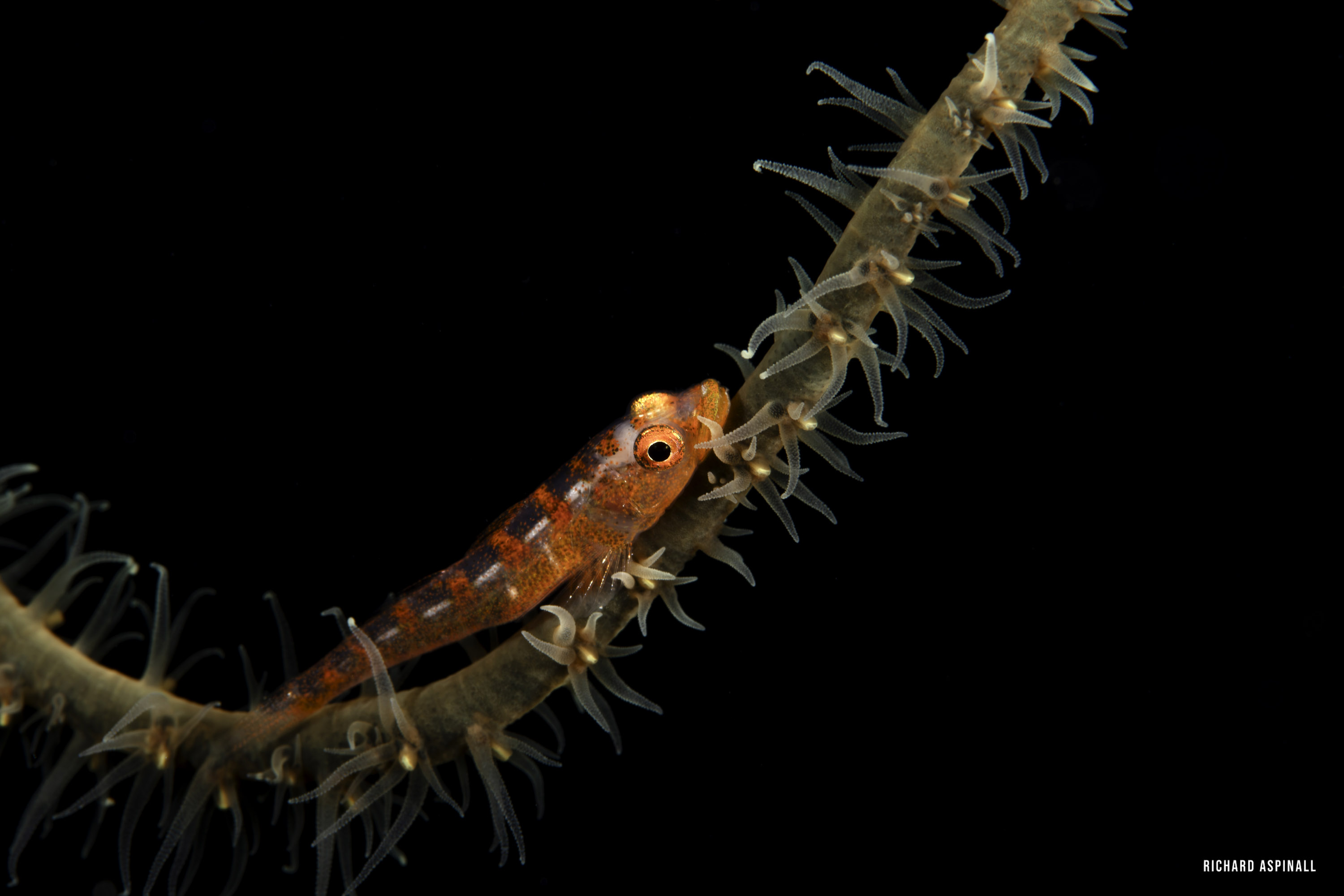
A tiny Whip Coral Goby (Bryaninops spp.) perches delicately along the branches of a whip coral in the Red Sea, Egypt. Perfectly adapted to its host, this diminutive reef fish uses its slender body and cryptic coloration to blend seamlessly into the coral, where it finds both protection from predators and an ideal vantage point to capture passing plankton.
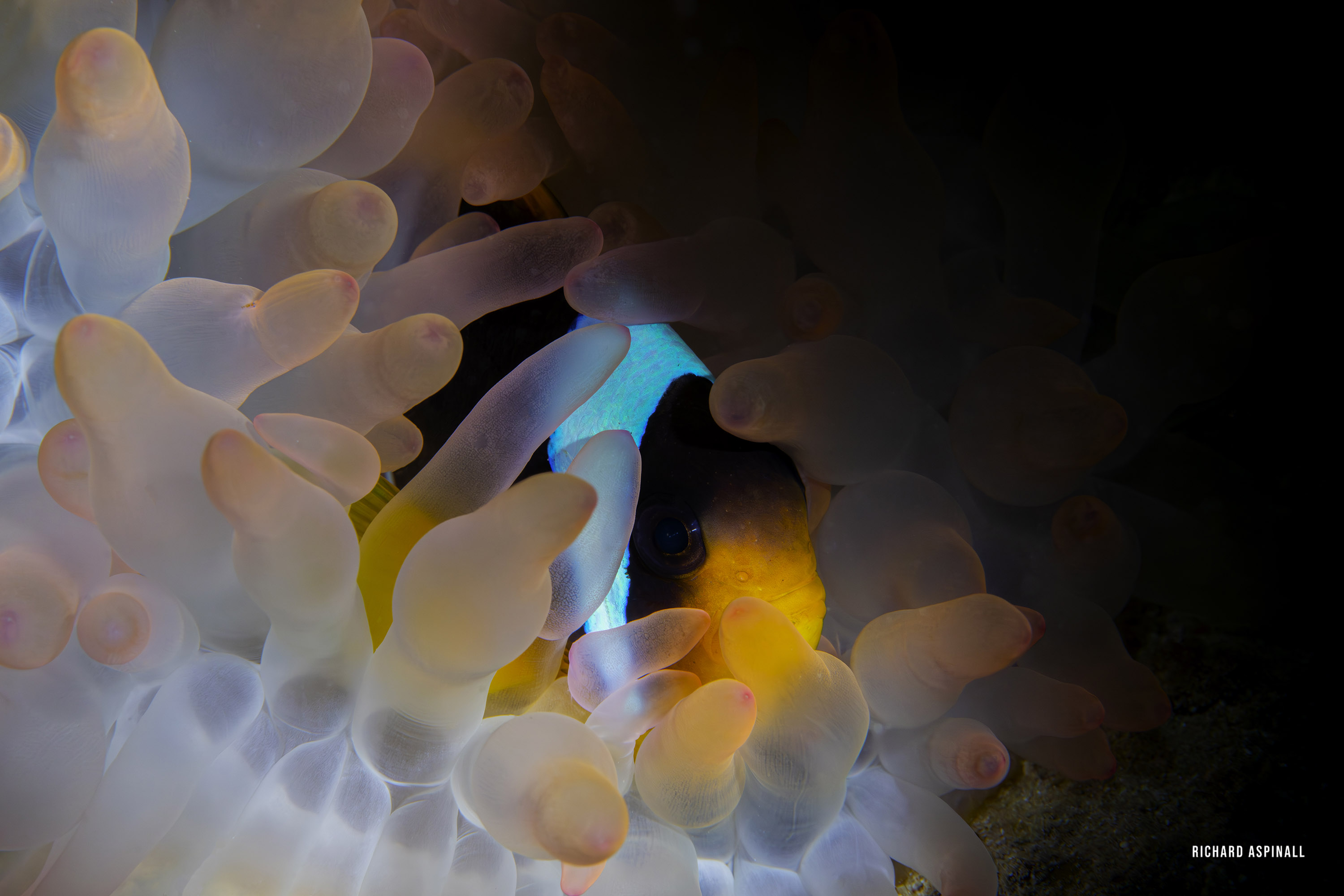
A vibrant Red Sea Anemonefish (Amphiprion bicinctus) peeks from the protective tentacles of its host sea anemone in the Red Sea, Egypt. Endemic to the Red Sea and Gulf of Aden, this iconic clownfish lives in a remarkable symbiotic relationship with the anemone, gaining shelter from predators while helping defend its host and keep it free of debris.
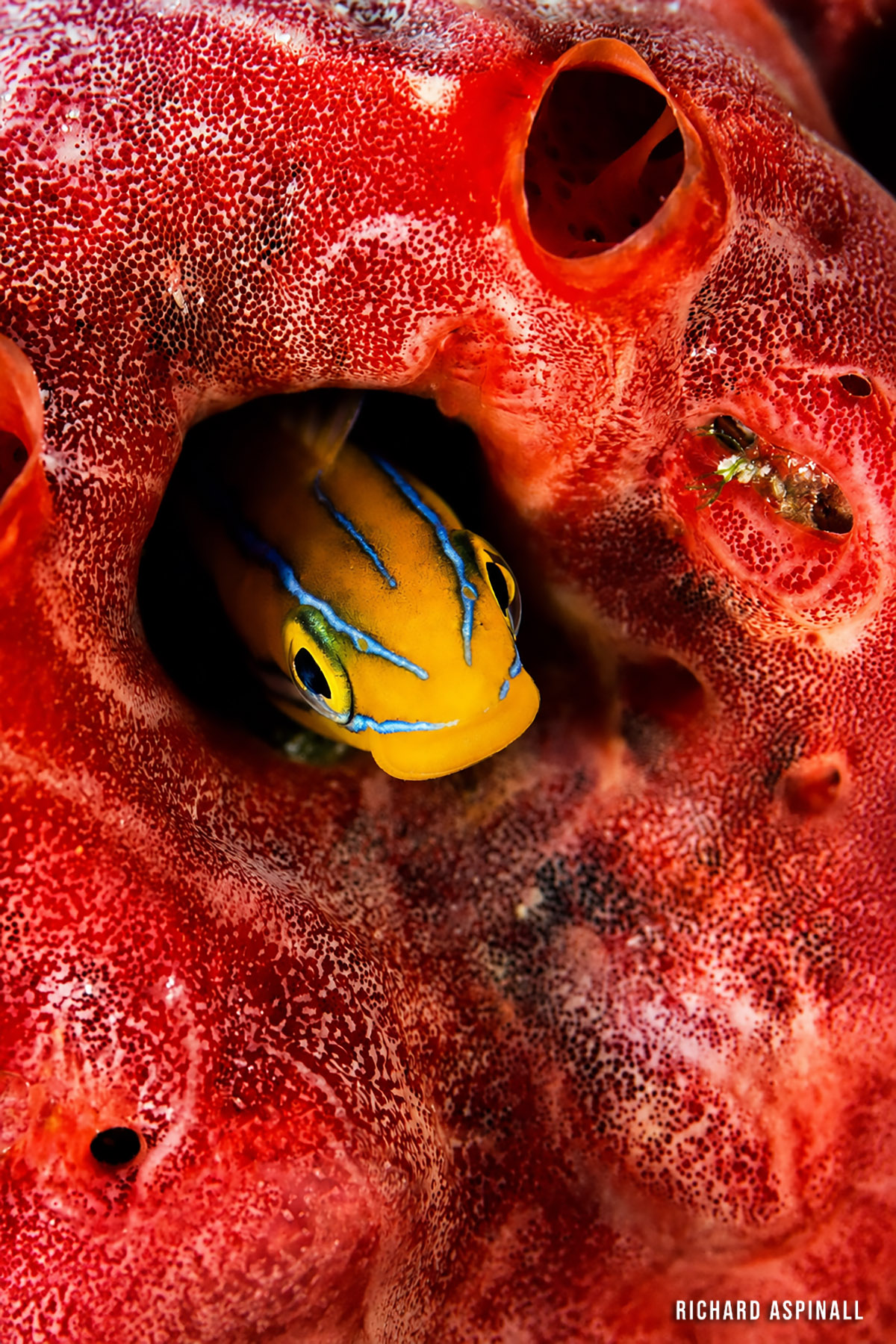
A Blue-striped Fang Blenny (Plagiotremus rhinorhynchos) patrols the reef in the Maldives, displaying the brilliant electric-blue stripes that give the species its name. Despite its small size, this remarkable fish is a master of deception, often mimicking cleaner wrasses to approach unsuspecting reef fish before darting in to nip a mouthful of scales or mucus with its enlarged canine teeth.
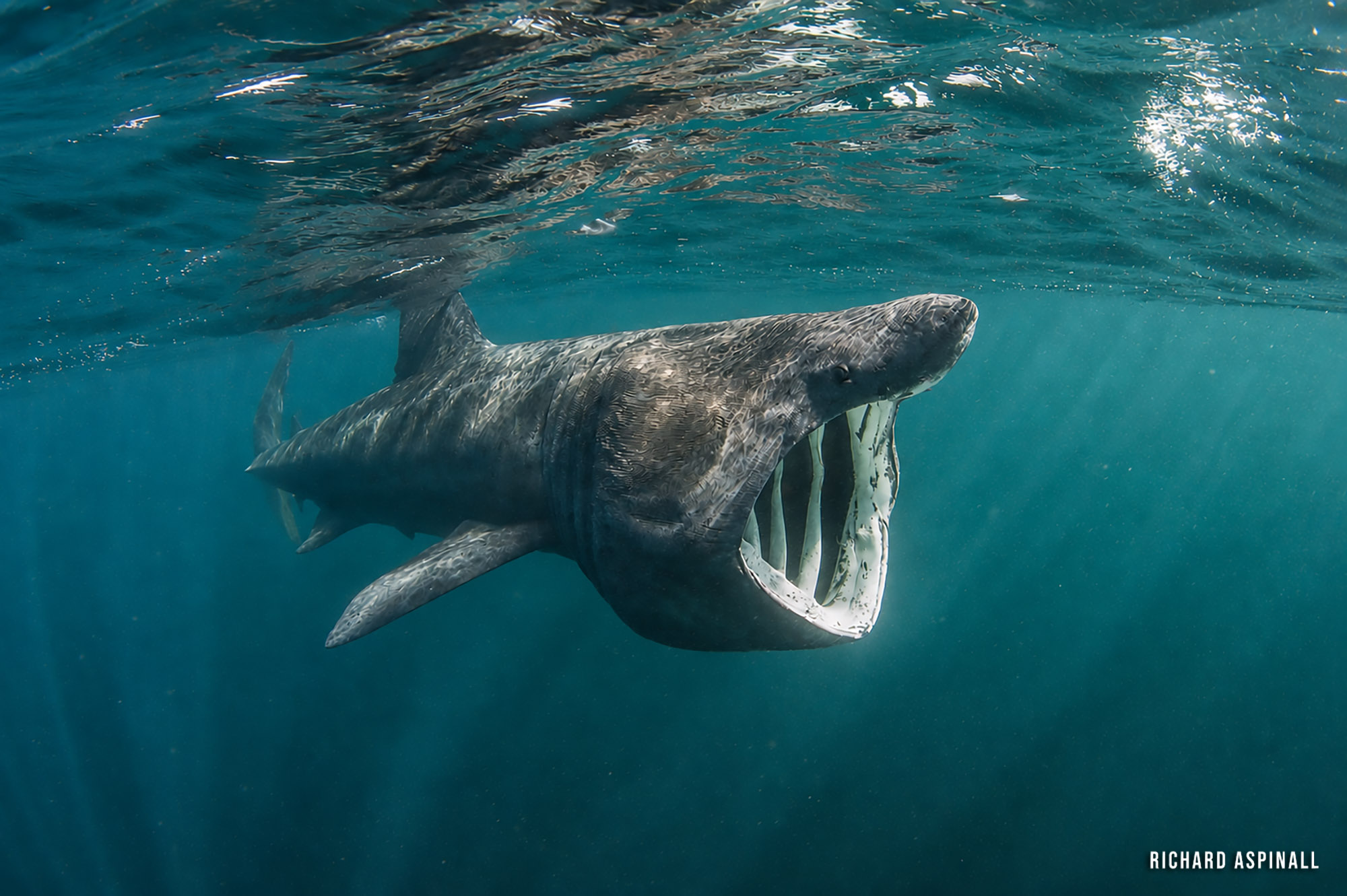
A majestic Basking Shark (Cetorhinus maximus) cruises through the nutrient-rich waters of the Sound of Mull, Scotland. The world's second-largest fish, reaching lengths of up to 12 meters (40 feet), this gentle giant feeds exclusively on plankton, swimming slowly with its enormous mouth agape as it filters thousands of liters of seawater each hour. Despite its immense size, the basking shark is completely harmless to divers.
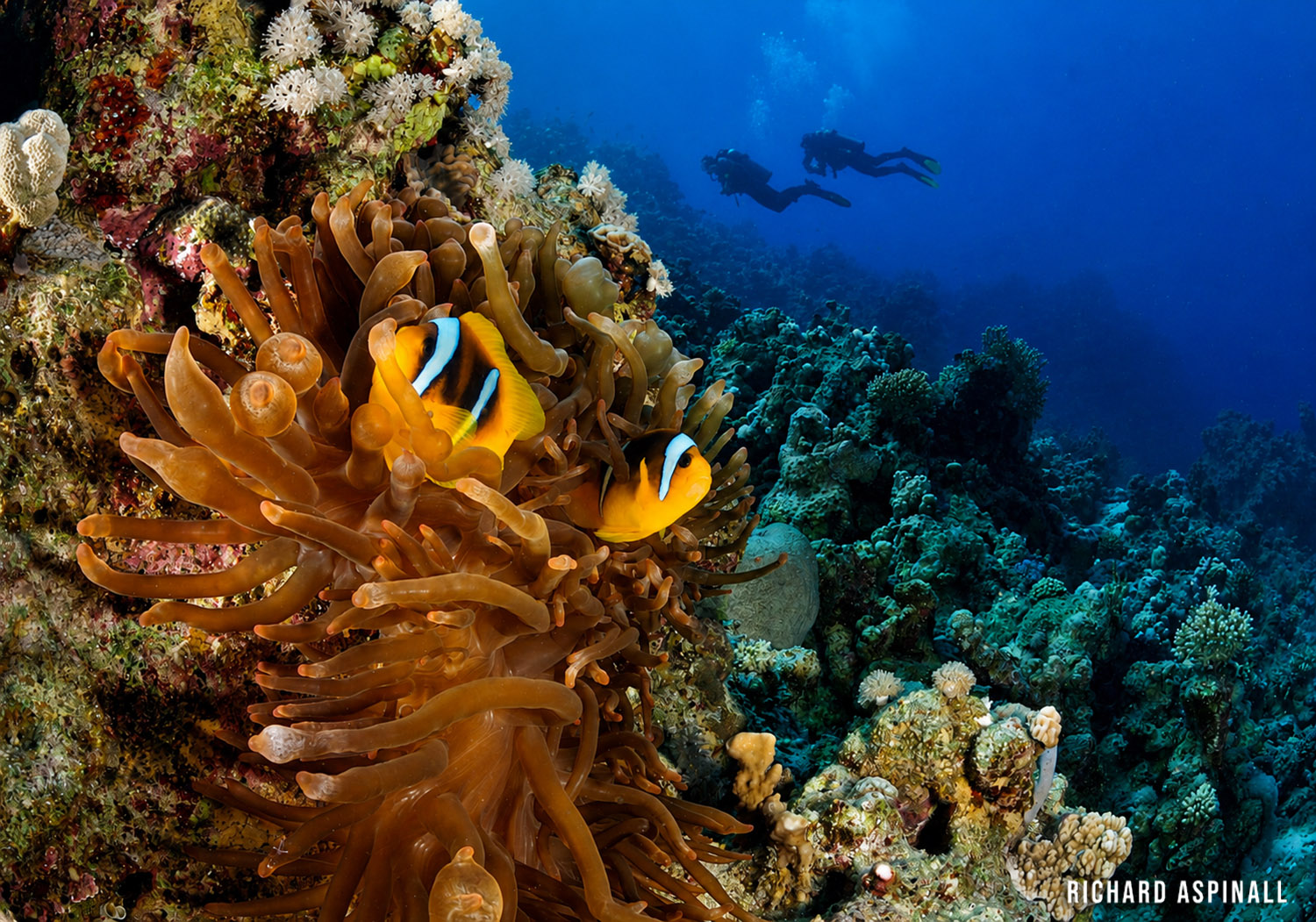
A vibrant Red Sea Anemone sways gently in the clear waters of the Red Sea, Egypt, its colorful tentacles providing both shelter and protection for a diverse community of reef life. These stinging marine invertebrates form remarkable symbiotic relationships with clownfish, shrimps, and other small creatures, making them one of the most fascinating and photogenic subjects on the reef.
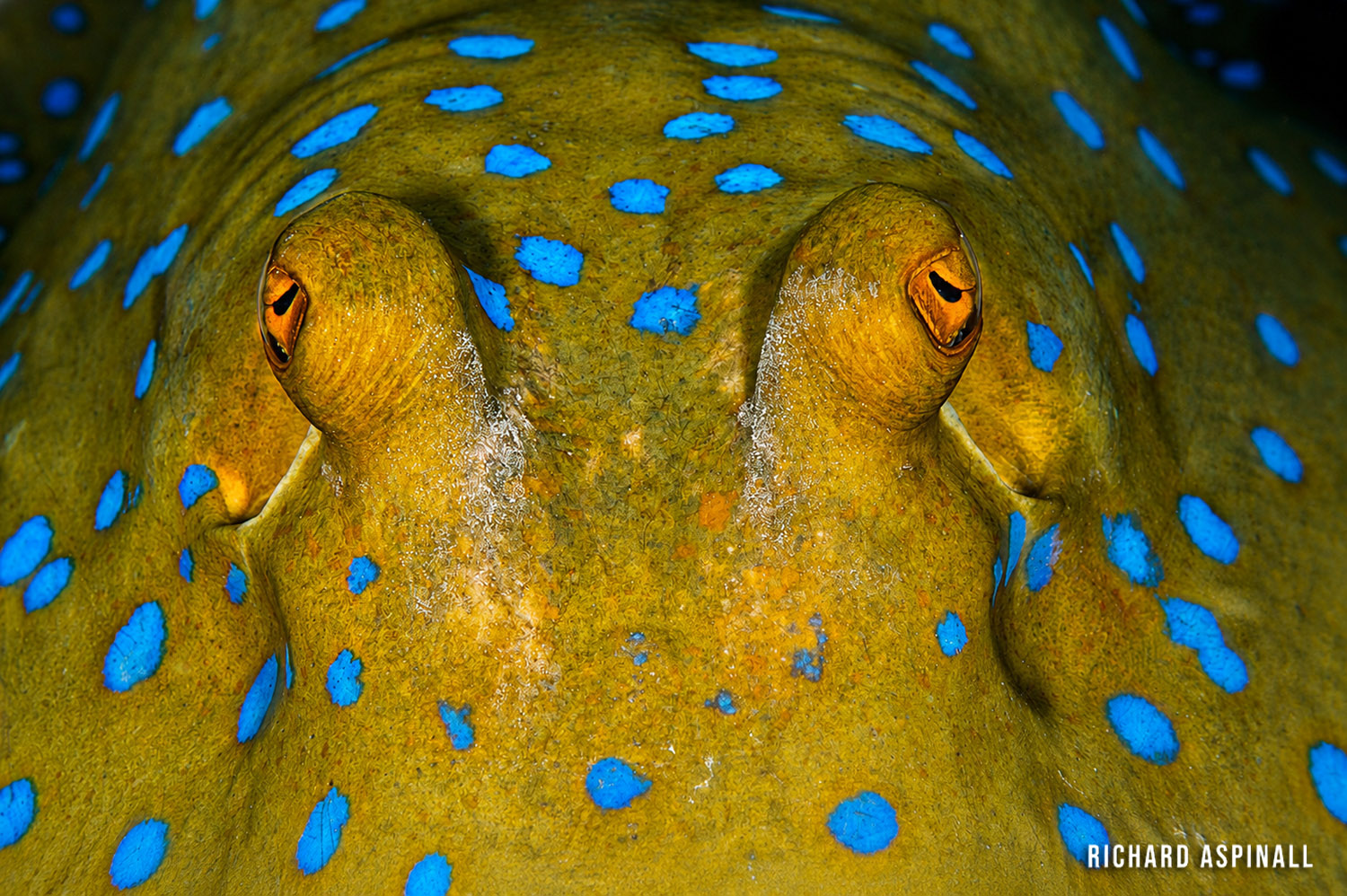
A close-up reveals the striking eyes of a Blue-spotted Ribbontail Ray (Taeniura lymma) resting on the seabed in the Red Sea, Egypt. Positioned high on the ray's flattened body, the eyes provide an excellent view of approaching predators while the spiracles just behind them draw water over the gills as the ray lies partially buried in the sand, waiting to ambush unsuspecting prey.
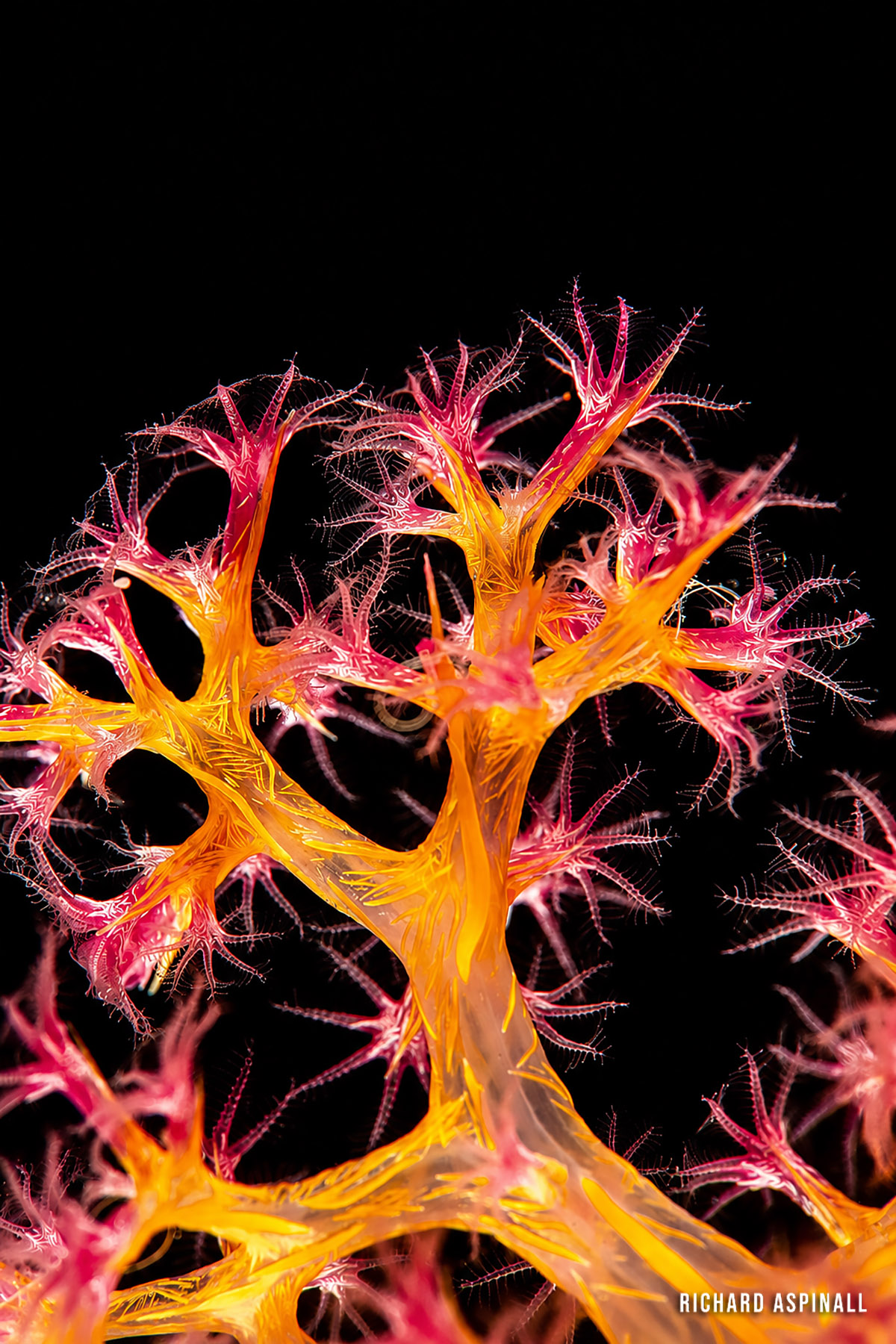
A super macro view reveals the intricate beauty of Dendronephthya soft coral in the Red Sea, Egypt. Thousands of delicate flower-like polyps extend into the current to capture microscopic plankton, creating a dazzling display of color and texture. Unlike reef-building hard corals, these soft corals lack a limestone skeleton and depend entirely on nutrient-rich currents for their survival.
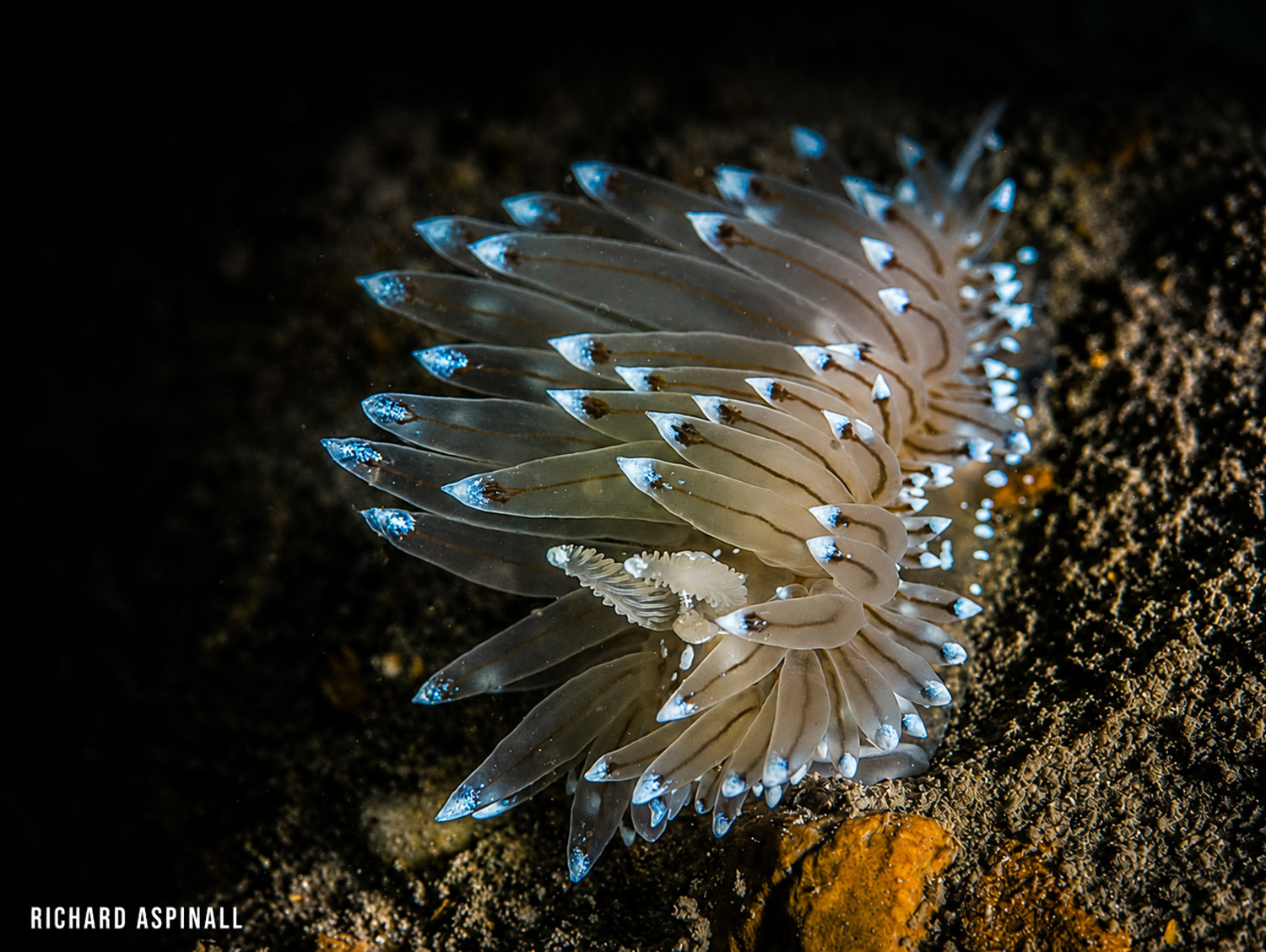
A delicate Crested Aeolid (Antiopella cristata) crawls across a steel spar on a wreck in the North Sea, England, revealing its intricate cerata in stunning macro detail. This beautiful nudibranch feeds primarily on hydroids, storing their stinging cells within the tips of its cerata and reusing them as a highly effective defense against predators.
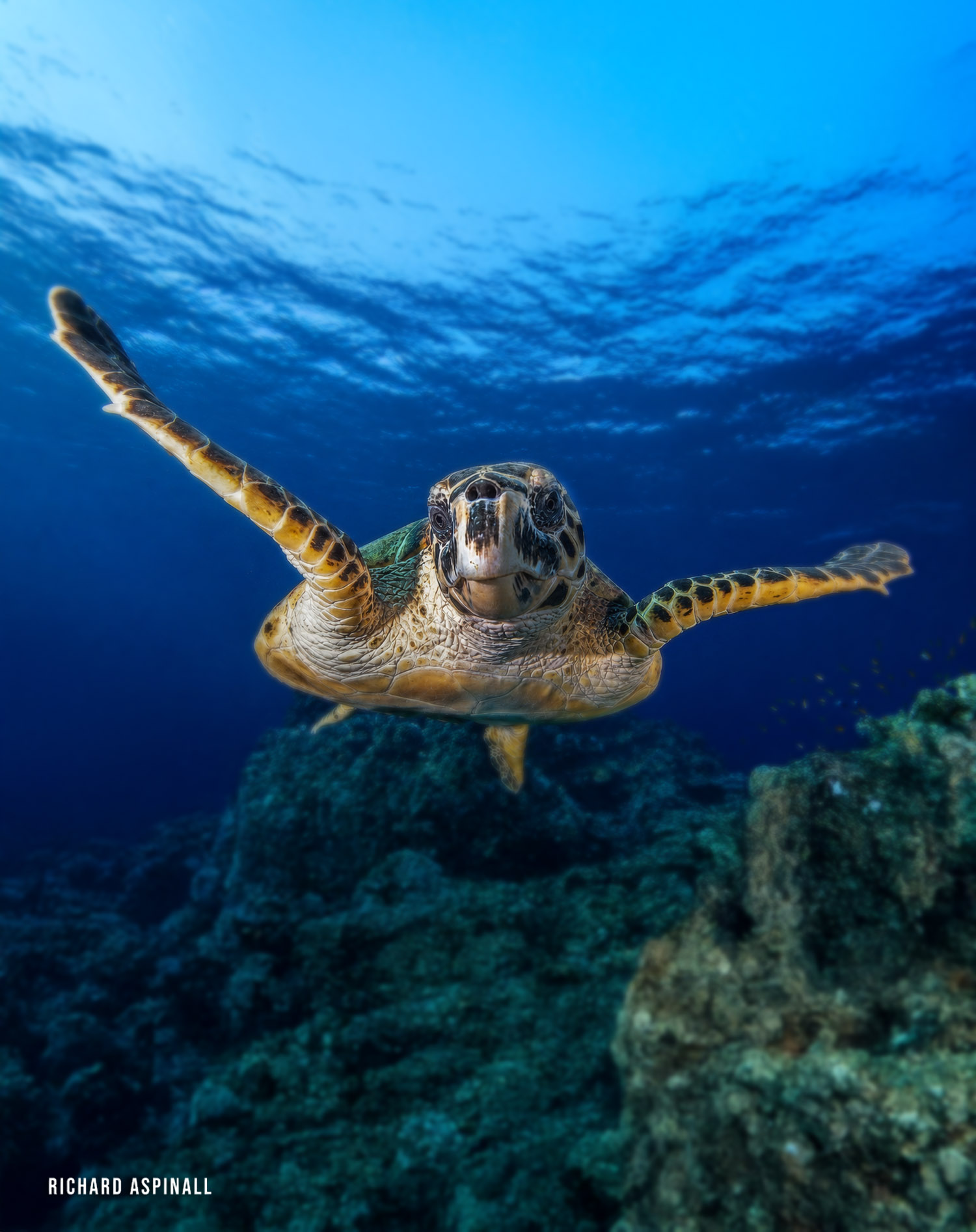
A graceful Hawksbill Turtle (Eretmochelys imbricata) glides effortlessly above the coral reefs of the Red Sea, Egypt. Recognized by its beautifully patterned shell and distinctive hooked beak, this critically endangered sea turtle feeds primarily on sponges, playing an important role in maintaining the health and diversity of coral reef ecosystems.






 My fascination with the underwater world began during family holidays along England's northeast coast in the 1970s. Hours spent exploring rocky tide pools in search of starfish, crabs, and small fish sparked a lifelong curiosity about marine life. The remarkable diversity and intricate beauty of these coastal ecosystems ultimately led me to study conservation biology at university.