 |
|
|
|
|
 |
|
| Steven J. Auer Cave Photography |
|
by: ADM |
|
|
| That first year, I was equipped with only a Nikonos-5 camera, 15mm lens, and a single 100-watt strobe. At that time, only one or two shots per roll of 36 was worth 'a look. ' The remainder of the photos wound up in the trash. I was not satisfied with just a 'look,' and so, I continued to work at becoming skilled until I created images worthy of peoples' attention. Eventually, I refocused my diving and I gave up diving along with a camera, to diving always with a camera. I no longer was getting just those two shots a roll. I was able to capture three great shots per roll and not trashing the remainder of the photos. |
|
|
 |
|
| \Beacon Woods Cave Exploration |
|
by: Tony Hyatt |
|
|
In Pasco County, early 1978, Will Walters, cave explorer in the Tampa Bay area, discovered a series of small sinks in the Beacon Woods housing development. For the next year, Jay Friend, Bob Gomez, Paul Heinreth, Bill Fehing, Walthers, and a few others made exploratory dives in these sinks. The first surface entrance, located next to the housing development clubhouse and pool, was named Nexus. The exploration of this sink led to the discovery of both an upstream and downstream passage. U.S.G.S. research material on 'Spring and Sink Reconnaissance' showed a further upstream sink, which the team explored and subsequently named Round Sink. The same U.S.G.S. material also indicated that Round Sink had been dye traced to the Gulf of Mexico.
|
|
|
 |
|
| Diving into the Kauhako Crater Lake |
|
by: Michael and Sherry Garman
|
|
|
| Kauhako Crater is located on north side of the island of Molokai in the Kalaupapa district of the Makanalua Peninsula. This is a land of geologic extremes. The southern edge of the Peninsula consists of dramatic sea cliffs, the tallest in the world. Additionally, with a surface area of less than an acre and a depth in excess of 800 feet, the crater lake is proportionately (surface area to depth ratio) one of the steepest and also, deepest lakes in the world. Unfortunately, Kalaupapa is best known for its reputation as home to patients with Hansen's disease, more commonly known as leprosy. This remote peninsula was the location to which King Kamehameha exiled Hawaiians suffering from the disease. |
|
|
 |
|
| Dzonote Maya |
|
by: Curt Bowen |
|
|
Advanced Diver Magazine's staff member, Jim Rozzi, questioned Tony DeRosa, during a previous cave diving trip to Villa DeRosa's, about any deeper systems that may lie further inland. Tony introduced Jim to Hilario Hiler, who has lived and breathed the Mayan culture for the last 32 years. Fluent in Spanish, English, and Mayan, Hilario has escorted many cave explorers, photographers, and archeologist throughout the Quintana Roo and Yucatan peninsulas in search of new discoveries. Jim quickly hired Hilario for a quick pre-exploration look into Mexico's deeper interior and its hidden secrets.
|
|
|
 |
|
| ADM Gas Fill Charts |
|
by:ADM |
|
|
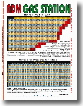
| Mixed gas fill charts for nitrox, heliair and trimix |
|
|
 |
|
| GUE Global Underwater Explorers |
|
by: Tina Rhea |
|
|
Global Underwater Explorers was founded by a group of dedicated divers committed to providing the highest quality of teaching. As sound environmentalists, their goal is to help train the best divers in our waters. Founder Jarrod Jablonski gains his rewards from '...fostering a stewardship of the environment and the development of and adherence to more stringent and responsible training.' Evidence of this can be seen in GUE's desire to make a positive difference in the diving community by building upon Cousteau's efforts of exploration, research, and conservation. GUE does this by extending those efforts, while remaining a voice for uncompromising standards in the diving industry.
|
|
|
 |
|
| Journey Beneath Jurassic Park |
|
by: Michael Salvarezza & Christopher Weaver |
|
|
| It was raining again. Not a light springtime rain echoing sweet fragrances of wildflowers, but a heavy earthy rain, permeating everything in continuous torrents. We had just surfaced from the final dive of the expedition. The waves rose and fell in large windblown swells as we waited patiently for the Zodiac to retrieve us. With the Okeanos Aggressor far in the distance and no sign yet of the Zodiac, minutes grew into hours. |
|
|
 |
|
| Lowrance Pompano Beach Florida |
|
by: Curt Bowen |
|
|
| Yet, not all is so simple and easy in the warm waters off Pompano. The Gulf Stream, the world's second largest moving body of water, passes very close to the beaches. This giant river constantly batters the deeper reefs and wrecks, making them a gamble t |
|
|
 |
|
| Featured Photographer William M. Mercadante |
|
by: ADM |
|
|
While scientists study phenomenon in the laboratory, they are often unable to take the next step to assess the validity of the results in an uncontrolled natural environment. As a photographer, I hope to impact the scientific community, by conducting experimentation in a controlled environment, and then substantiating the results through observation in the natural environment. I have been an observer of the natural underwater world through the use of scuba diving for fifteen years. Moreover, for the past ten years, I have been documenting observations on film and video. My images have been featured in Nature Conservancy, Divers Alert Network, Performance Diver, Photo Techniques, as well as other nature-oriented publications and organizations.
|
|
|
 |
|
| Neon Photography Shedding New Light on the Reef |
|
by: ADM |
|
|
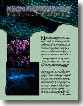
| Now available: a new frontier of underwater exploration and photography for night divers. Photographers can literally see the undersea world in a different light through the use of specialized lights used at night to stimulate fluorescence. Shine a blue light on most objects and one gets blue light back. Shine the right blue light on many corals and greens, yellows, oranges, or reds are seen. Fluorescence is an almost magical effect that transforms one color of light into another. NightSea is a new company in the dive industry, founded to build on underwater fluorescence research and offer lighting and photography products to the general dive community. |
|
|
 |
|
| The Pit Sistema Dos Ojos |
|
by: Jill Heinerth |
|
|
As the caves sprawled into becoming the two longest underwater systems in the world, exploration had an easy blueprint. Each outing, divers would carry another stage bottle, drop another scooter, attempt to find a new opening, and continue to watch the map grow. The most limiting factor was experience. There was no room for nagging thoughts of being far from home base. Divers needed to be comfortable with six to eight hour dives and tough hikes with little or no support. Buddy Quattlebaum was coordinating exploration efforts from a roadside shanty dive shop. Although it looked crude from the outside, this shop housed a tremendous amount of local knowledge and ability. If Buddy couldn't come up with the money necessary to build something, he would manage with baling wire and bubble gum.
|
|
|
 |
|
| RESOR New Jersey Shipwreck |
|
by: ADM |
|
|
| Towards the end of February 1942, the R.P.Resor was on her way north toward the port of Fall River, Massachusetts. Several days earlier, she parted the great state of Texas with her holds containing over 78,000 barrels of black gold, Texas tea, oil that is. Captain F. Marcus manned her helm. Despite the ongoing world war, Resor's passage north was a calm and uneventful one. It was just another day at sea for the crew of the doomed tanker. None aboard were aware of the events that would violently unfold later that night. |
|
|
|
