 |
|
|
|
|
 |
|
| N.E.S.T. |
|
by: Joseph Kaffl |
|
|
| On June 12, 1999 NEST (Northeast Sump Exploration Team) members Eric Tensau and myself returned to the Locust Creek cave system in West Virginia to continue our exploration efforts. NEST is a formally recognized project of the NSS consisting of a team of sump divers and support personnel who pursue explorations at cave systems in the PA, VA, and WV areas. We at NEST survey and document these sites with still and video techniques and also engage in biological surveys, and water sampling. |
|
|
 |
|
| XlacahExploration |
|
by: Jesse Armantrout |
|
|
| 'We're 1000 feet out, the tunnel is big bore, headed for the coast and it's turned deep,' said the e-mail from Brett Dobson.' Do you think a couple of the guys from the WKPP could help us push this thing?' Brett, a graduate student, some would teasingly say a 'professional student', in marine biology under Dr. Thomas Illiffe of Texas A&M, Galveston, had come to know the WKPP in a way familiar to many of us. He had been hammered on the net by project director George Irvine. Fortunately, Brett was able to realize that the 'hammering' was a result of Irvine's passion for safety in diving and, instead of being offended, decided to listen to the message. Knowing my name from when I had lived in Texas, Brett began asking me dozens of questions about how the WKPP does things. |
|
|
 |
|
| Tank Marking for Multiple Mixtures |
|
by: Jarrod Jablonski & George Irvine |
|
|
| When individuals think of underwater fatalities they typically envision some extraordinary situation. However, fatalities very rarely result from an equipment failure or other dramatic situation. In fact, open water accidents are most common in seemingly |
|
|
 |
|
| Hydro Atlantic |
|
by: Jarrod Jablonski |
|
|
| Resting upright on the sandy bottom at 172 feet, the Hydro Atlantic points into the nutrient rich waters of the Gulf Stream. Her deck is still crowded with equipment. Pipes that traverse the old hull from one pump to another. Cranes and giant winches still laden with cable. Barely recognizable, they are all covered with a thick blanket of coral and sponge. Thousands of tropical fish dart in and out of every pipe and porthole seeking shelter from predators, while barracuda and shark lurk in the distant shadows. Rope, cable and fishing line cover almost every inch of the wreck. |
|
|
 |
|
| Lake Invaders |
|
by: Joe Rojas |
|
|
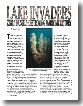
| The Great Lakes have a nasty reputation as being some of the most treacherous waters to shipping in the entire world. In the 150 years that modern man has been navigating the lakes there have been an estimated 10,000 shipwrecks. These waters have everything from old wooden sailing ships to modern freighters scattered across the bottom. The fresh water and cold temperatures of the area preserve these wrecks in prisitne conditon, but just like the aritificial reefs of the open oceans, shipwrecks of the Great Lakes become a home for many living organisims. Non-native zebra mussels, freshwater sponges, hydroids, byrozoans, and other aquatic life forms inhabit each piece of maritime history on the bottom of the lakes. |
|
|
 |
|
| Beneath Cloud Mountain |
|
by: Jim Bowden & Ann Kristovich |
|
|
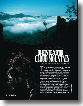
| The entrance to El Sotano de Las Calenturas is a funnel shaped pit with a 140 foot vertical drop into the side of a mountain, a part of the Sierra Madres Oriental in northeastern Mexico. Calenturas is a portion of an expansive cave system known as Sistema Purification which could rival the Mammoth Cave system of Kentucky in linear distance. Work by cavers, exploration, mapping, and surveying, has been ongoing since the late sixties in this region. Exploration of the sumps began in 1987 when Jim Bowden and Karen Hohle made preliminary dives in Blazer sump. This beautiful cave is in the northern most part of the ecological wonder known as El Cielo, the Cloud Forest. |
|
|
 |
|
| Truk |
|
by: Andrew White & Curt Bowen |
|
|
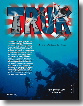
| In the Pacific Theater of World War II, the Japanese-held Truk Lagoon was regarded by Allied forces as an almost mystical fortress. This atoll deep behind enemy lines had a well-deserved reputation as being one of Japan's strongest holds in the Pacific. The area had been sealed off to outsiders for nearly 25 years which led to uncertainty and near legend regarding its geography and the development of its defenses. The media of the time had fostered these myths of Truk referring to it in such terms as 'Japan's impregnable bastion of the Pacific.' As the legend grew, the Allies came to view the naval base at Truk with respect and more than a little fear. |
|
|
 |
|
| World Record Traverse 14,000 feet |
|
by: ADM |
|
|
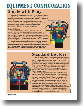
| The Woodville Karst Plain Project and Global Underwater Explorers continued their quest to expand our understanding of the unique hydrogeology of Florida's Woodville Karst Plain by completing the traverse between Big Dismal and Cheryl sinks. |
|
|
 |
|
| Equipment Configuration |
|
by: ADM |
|
|
| Equipment configuration is one of, if not the most important thing in diving. Poor configuration can cause confusion when trying to find personal items, frustration when items are not easily accessible, increased risk of entanglement, unpreparedness for emergency situations, increased drag causing heavier work loads and just all around discomfort. |
|
|
 |
|
| Northern Lights - Key Largo Florida |
|
by: ADM |
|
|
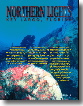
| The 299-foot freighter Northern Lights was built in Cleveland, Ohio in 1888. It was considered a large ship for the time, so large that it could not fit through the lock system that connects the Great Lakes with the Atlantic Ocean. As such, the Northern Lights was limited to duty within the Great Lakes shipping lanes for the next 29 years. |
|
|
 |
|
| Drift Decompression |
|
by: Curt Bowen |
|
|
| Deeper sites that require extended decompression many items are located in areas of strong currents, such as the Gulf Stream off the southeastern coast of the United States. Strong currents can turn an otherwise easy dive into a grueling experience, greatly increasing the diver’s gas consumption rates. |
|
|
|
|
